Two houses can be built from the same plan, in the same tract, in the same year, and sell apart because of where they sit. Siting is one of the most consistently underweighted variables in a homeowner's own analysis, and one of the first things an experienced local buyer registers.
The reason is simple. A buyer does not experience a floor plan from a listing; they experience a street from a car, a front door from a sidewalk, and a yard from a back step. Position governs all three.
Corner lots: a genuine trade, not a rank
Corner lots attract strong opinions in both directions, which usually means the honest answer is that they trade advantages for disadvantages.
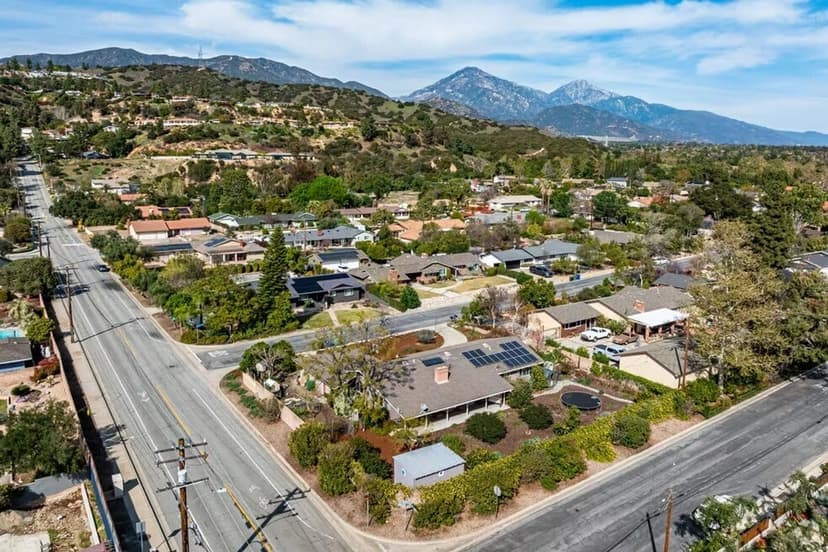
What a corner offers: more frontage and often a wider or more open feel, more light from a second exposure, easier access and sometimes a second driveway option, a lot shape that can accommodate a detached structure or an accessory dwelling unit more comfortably, and on a well-treed street, real presence.
What a corner costs: exposure on two sides, which reduces backyard privacy, more traffic passing closer to living space, more sidewalk and parkway to maintain, headlights sweeping the house on one exposure, and setbacks on two street frontages that can constrain what can be built or added.
Which side of that ledger dominates is specific to the corner. A quiet residential intersection reads very differently from a corner where a neighborhood street meets a route people use to get somewhere, and a corner with mature planting for screening reads differently from a bare one. Anyone who tells you corner lots are simply worth less has not looked at the corner.
Cul-de-sacs: usually favored, occasionally not
Cul-de-sac positions tend to appeal, and the reasons are consistent: no through traffic, a quieter street with a defined identity, a lot that often widens toward the rear, and a setting families read as safer for children. That combination is durable, and it is the sort of preference that persists across market conditions.
There are real qualifications. Bulb lots can have awkward geometry, with a narrow street frontage that limits parking and a pie shape that is harder to plan around. Guest parking is often tight, which matters to households that entertain. Turning traffic and service vehicles concentrate at the bulb. And the street's small population is a social variable that cuts both ways, since a handful of neighbors set the tone of the whole street.
The positions people forget to weigh
- Interior mid-block. The quiet default, and often the best pure balance of privacy and access. It rarely excites anyone, and it rarely costs anything either.
- Facing a busier street. Frontage on a route people use to get somewhere is a real and steady factor. Sound, headlights, and the character of the approach all register, and no amount of interior finish fully offsets a front room that faces traffic. Mature planting and modern windows soften it; they do not erase it.
- Backing to something. A commercial rear boundary, a school, a wash, or an open space each changes the property's character in a way buyers weigh very differently. Some pay a premium to back to open ground; others rule out the same lot for the noise cycle behind it.
- Flag and rear lots. Privacy and quiet in exchange for a long approach, limited presence from the street, and shared access questions worth confirming in the title record before assuming.
- Slope and orientation. On the hillside streets, position determines outlook, sun exposure, and how much of the parcel is genuinely usable. Two lots a few doors apart can differ enormously.
How siting shows up in a valuation
Siting is rarely adjusted as a labeled line. It shows up in comparable selection and in demand: a home in a favored position competes from a stronger footing, and a home in a compromised one draws a narrower field.
The methodological point matters for anyone reading their own comps. If a nearby sale sits in a materially different position, either weight it down or bracket it against a sale that shares your position, rather than treating the two as interchangeable because the houses match. This is one of the most common ways a homeowner's own analysis goes wrong, and it is covered further in reading Claremont comps.
It is also a place where automated estimates are structurally weak. A model can see an address and a parcel outline; it cannot register that the front rooms face a cut-through, or that the cul-de-sac bulb is where every service vehicle turns around, or that the corner lot's second exposure faces a quiet lane with a mature hedge.
What to do with a position you cannot change
Siting is fixed, so the work is presentation and evidence. Screening, planting, fencing, window treatment, and where outdoor living is placed on the lot all change how a position is experienced. Buyers respond to what the property feels like, and a well-handled corner or a thoughtfully screened frontage can present far better than its raw description suggests.
Then price against the honest competitive set, which means homes a buyer would genuinely consider instead of yours, in comparable positions, rather than the whole tract. Start at the Claremont home values hub, then read how buyers weigh lot and living area. Call (909) 731-5374 to have your position read as part of a real valuation. Anthony Grynchal has been licensed in California since November 2009.
Frequently asked questions
Are corner lots worth less in Claremont?
Not automatically. A corner trades extra frontage, light and access flexibility against reduced backyard privacy, closer traffic and setbacks on two street frontages. Whether that helps or hurts depends on the specific corner, how the intersection behaves, and how well the lot is screened.
Do cul-de-sac homes sell better?
They generally appeal, because there is no through traffic and the street has a defined character. The qualifications are real though: bulb lots can be awkwardly shaped with narrow frontage, guest parking is often tight, and turning traffic concentrates at the end of the street.
How much does facing a busy street matter?
It is a steady factor rather than an occasional one, affecting sound, light from passing traffic and the character of the approach. Mature planting and modern windows reduce the effect but do not remove it, and it should be reflected in which sales are treated as comparable.
Will an automated estimate account for my lot's position?
Not meaningfully. A model can read an address and a parcel outline but not how a street behaves, where service traffic turns, or what a second exposure actually faces. Siting is one of several local variables that make online estimates inconsistent in Claremont.

Written by
Anthony Grynchal
Anthony Grynchal is a California real estate professional with eXp Realty, licensed since November 2009 (California DRE# 01873626), and the Designated Local Expert™ for Claremont — where he has lived for more than 33 years.
More about AnthonyPublished · Updated