Claremont's Local Businesses: The Fabric of a Walkable Town

Claremont's independent business character, from the Village to the Sunday farmers market, and what a healthy local scene signals to homeowners.

Some towns have businesses; Claremont has a business character. The difference is easy to feel and worth taking seriously. In much of Southern California, commerce means the same rotation of national logos arranged along an arterial. In Claremont's core, it means storefronts with owners in them — shops that have been family projects for decades sitting beside newer ventures trying to earn their own decades — arranged along sidewalks that people actually use. This page is about that fabric: where it came from, what it signals, and why it belongs on a real estate site at all. Like every page in this hyperlocal series, it deliberately names no individual private business as open or best — businesses change too fast for that to be honest — and instead describes the durable pattern a resident actually lives with.

Where the independent character comes from

Claremont's commercial fabric is a direct inheritance from its street grid. The town was laid out in the railroad era around a depot and a walkable core, and that core — today's Village — kept its original scale while the region around it reorganized for the automobile. Small storefronts on small blocks favor small operators: the economics of a compact space near foot traffic suit an independent owner in a way that a big-box pad never will. Add the Claremont Colleges next door, supplying a steady, curious, walking population, and you get the conditions independent business needs — which is why Claremont kept a Main Street culture through decades that erased it elsewhere. The town's history, told in the Claremont history guide, is visible in its shop windows.

What a healthy local business scene actually signals

For anyone weighing a move here, the independent scene is not just charming — it is evidence. A district of viable owner-operated businesses tells you several things at once about a town, all of them relevant to a housing decision:

  • Foot traffic is real. Independents live and die on people walking past. A thriving storefront district means the sidewalks work — which is the same infrastructure that makes daily life pleasant for residents.
  • The local economy has a floor. Businesses that survive across economic cycles imply a customer base with staying power, which in Claremont's case is anchored by the Colleges and by long-tenure homeownership.
  • The town defends its character. A core this intact is not an accident; it reflects decades of civic choices about scale, trees, and land use. A town that protects its Main Street tends to protect its neighborhoods with the same seriousness — a factor that runs quietly under home values.
  • Community has venues. Owner-operated shops double as social infrastructure: the places where the town recognizes itself. That is hard to measure and easy to feel within a week of living here.

The inverse reading is just as useful when comparing towns generally: a commercial district of vacancies and churn is a leading indicator worth taking seriously, however good the housing stock looks. Storefronts respond to a town's health faster than home prices do, because leases turn over faster than deeds. Claremont's core has stayed occupied and owner-operated across decades of regional upheaval, and that persistence — not any single beloved shop — is the real credential. It is the sort of evidence a careful buyer weighs alongside the inspection report: harder to quantify, but no less real.

The institutions that anchor the fabric

While individual shops turn over, a handful of Claremont institutions are durable enough to name, and they anchor the scene the way old trees anchor a street. The Village itself is the first: a district, not a mall, with the town's civic and commercial life braided together. The Sunday farmers market is the second — a weekly institution where buying vegetables is the pretext and seeing the town is the point. The Folk Music Center, a landmark of Claremont's cultural life for generations, is the kind of business that long ago stopped being merely a business and became part of the town's identity. And the restored citrus-era packing architecture at the Village's edge shows the town's knack for keeping its history employed rather than embalmed. These anchors give the fabric continuity while the individual threads change — the same continuity a resident feels year over year.

The everyday economy beyond the core

The Village carries the town's identity, but daily life runs on a wider grid. Claremont's practical commerce — the grocery runs, hardware questions, car repairs, and appointments that make up an ordinary week — organizes itself along the town's main corridors: the old Route 66 alignment of Foothill Boulevard, with its own layered history as a business street, and the north–south spine of Indian Hill Boulevard connecting the freeway to the foothills. This everyday layer matters to a homeowner at least as much as the charming one. A town where the practical errands are close, competent, and human-scaled is a town that is easy to live in, and Claremont's version of that layer retains more independent operators than most — the shop that has serviced the same families' cars for a generation, the trades and services that survive on reputation in a town small enough for reputation to function. For new owners, this is also where the house itself gets supported: assembling a reliable roster of local trades is one of the quiet projects of the first year, and the home maintenance guide argues for starting it before anything breaks. The corridors will never make a postcard, but they are half the answer to whether a town works — and Claremont's do.

Local commerce and choosing where to live

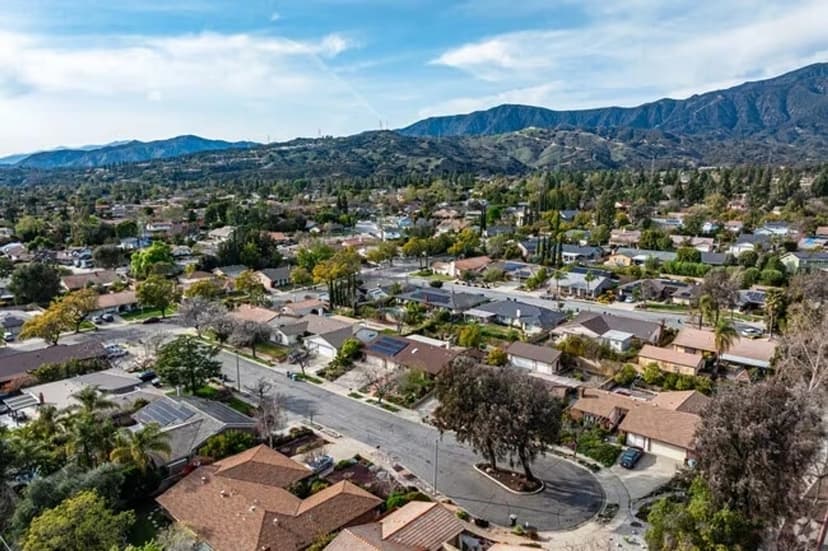
The practical question for a buyer is proximity: which addresses put this fabric within reach of daily life? Walkable local commerce behaves like a park or a good school in the housing calculus — a genuine amenity that differentiates otherwise similar homes. The neighborhoods nearest the core, profiled in the neighborhood guide and in the living in Claremont overview, offer errands-on-foot living that is scarce in the region; neighborhoods farther out trade that immediacy for other virtues — larger lots, foothill views, quieter streets. Neither trade is wrong, but it should be made consciously. A useful exercise for any address you are considering: walk from the front door to a cup of coffee, and notice everything about the route — shade, sidewalks, crossings, distance. That walk is a preview of years of your life.

Settling in: building your own local roster

For newcomers, one of the underrated pleasures of a town like this is assembling your own roster — the coffee place that knows your order, the shop that repairs instead of replaces, the vendors at the market whose names you learn. It takes a season, not a weekend, and the moving guide makes the case for treating it as part of the move itself — budgeting real calendar time for wandering the core, trying the corridors, and letting the market introduce you to the vendors who will still be greeting you by name a decade on. The honest way to stay current is to use live sources — the town's own listings, the local press, and your own feet — rather than any fixed directory, this page included. The fabric rewards participation: Claremont's independents exist because generations of residents decided, purchase by purchase, that they should. Moving here makes you part of that decision.

There is also a practical payoff to the roster beyond sentiment. In a town where shopkeepers know their customers, information travels: the person behind a counter has often heard which street is getting sewer work, which contractor showed up on time, and which block has a house quietly coming to market before any listing exists. Small-town commercial life doubles as a news network, and newcomers who participate in it plug into the town years faster than those who treat Claremont as a bedroom. It is not a coincidence that longtime residents navigate the town partly by relationships — and that the transition from customer to regular to neighbor is, in a real sense, the transition into belonging here.

Anthony Grynchal has been licensed in California since November 2009 and has watched clients fall for Claremont in a shop doorway as often as in a living room. If a walkable, independent town is what you are looking for, that preference has a geography — and it is one of the most useful things you can tell your agent.

Frequently asked questions

What makes Claremont's business scene different from neighboring towns?

The pattern: an intact, walkable core of small storefronts favoring independent owner-operators, anchored by the Village, the Sunday farmers market, and the steady population of the Claremont Colleges. Much of the region organizes commerce around arterials and national chains; Claremont kept a Main Street culture.

Why does a real estate site cover local businesses?

Because walkable local commerce is a housing amenity. A viable storefront district signals working sidewalks, a resilient local economy, and a town that defends its character — all evidence relevant to choosing an address, and all part of what buyers are actually purchasing alongside the house.

Which Claremont neighborhoods are closest to the Village shops?

The historic neighborhoods around the town core put the Village within a comfortable walk, while areas farther north and south trade that immediacy for larger lots and foothill proximity. The neighborhood guide on this site maps the trade-offs; walking the actual route from any address you are considering is the best single test.

How do I find out which Claremont shops are currently open?

Use live sources — current local listings, the town's own communications, and the storefronts themselves. Individual businesses change faster than any permanent guide can honestly track, which is why this page describes the durable character of the scene rather than naming a directory.