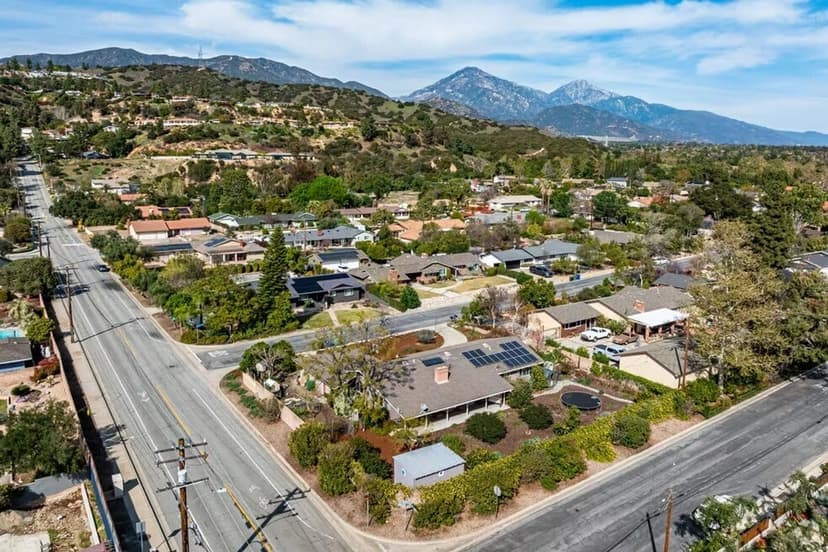
The single largest structural change to the economy east of Claremont over the past few decades has been the growth of goods movement: the warehouses, distribution centers, rail yards, and truck corridors that connect the ports to the rest of the country. None of that industry sits in Claremont, and all of it affects Claremont. This article traces the channels honestly, including the uncomfortable ones. It extends the local-economy guide and holds its rule: the pattern is teachable, the counts and measurements belong to live public sources.
Why the industry is where it is
Goods movement follows geography and land. The region's ports handle an enormous volume of imported goods, and those goods need to be broken down, stored, sorted, and shipped onward. That work requires large flat parcels near rail and freeway infrastructure, and the inland valleys east of Los Angeles County had exactly that combination of land and access at a moment when the coastal basin had neither.
The result is a corridor of distribution facilities running east and south from Claremont's edge, tied together by interstate freeways and rail lines that pass close to or through this part of the county. Claremont did not participate in that buildout because it had no land to offer and no appetite to change its character, as the town's own modest industrial edge attests.
Channel one: employment
The most direct channel is jobs. Logistics employs at scale, across a wide range: warehouse and fulfillment work, transportation and drayage, equipment operation and maintenance, logistics coordination, planning and management, and the construction that builds the facilities in the first place.
Some of those paychecks come home to Claremont. The sector spans a wide pay range, and its upper reaches, operations management, supply chain planning, and the professional and technical work around them, clear the local cost of entry comfortably. The lower reaches generally do not, which means the sector reaches this town's housing market unevenly. The employment map article makes the general version of that point; it applies with unusual force here because the sector's pay dispersion is so wide.
The sector is also more cyclical than education or healthcare. Goods movement tracks trade volumes, consumer demand, and inventory cycles, and it can contract sharply. A household earning from logistics carries a different risk profile than one earning from a school district, and that difference matters when underwriting a long hold.
Channel two: traffic and freight movement
Distribution generates truck traffic, and truck traffic uses the same freeways Claremont households commute on. That is a cost paid daily by anyone whose commute runs through the corridor, and it accumulates as congestion in a way that shows up in household decisions about where to live and how far to drive.
Rail movement is the other half. Freight rail lines run through this part of the county, and proximity to an active line means noise, crossing activity, and vibration at specific addresses. This is a property-level variable, not a town-level one: two homes a mile apart can have entirely different exposure.
Channel three: air quality
Concentrated diesel activity has known air quality implications, and the inland valleys have long-documented regional air quality challenges driven by geography as well as by industry. Mountains trap air; a basin holds what is emitted into it. This is a regional condition rather than something any one facility creates, and it predates the logistics buildout.
The honest position for a homebuyer is that this is a real and researchable factor, that regional air quality agencies publish current monitoring data and health guidance, and that a person with respiratory sensitivities should consult that data and their physician rather than take any general reassurance from a real estate page. Nothing here is medical or environmental advice.
Channel four: housing demand and the price gradient
The less obvious channel is that the logistics economy has helped populate the inland corridor, which has shaped the regional housing ladder Claremont sits on. Growth east of here has added households, added competition for regional infrastructure, and reinforced the price gradient described in the Inland Empire position article.
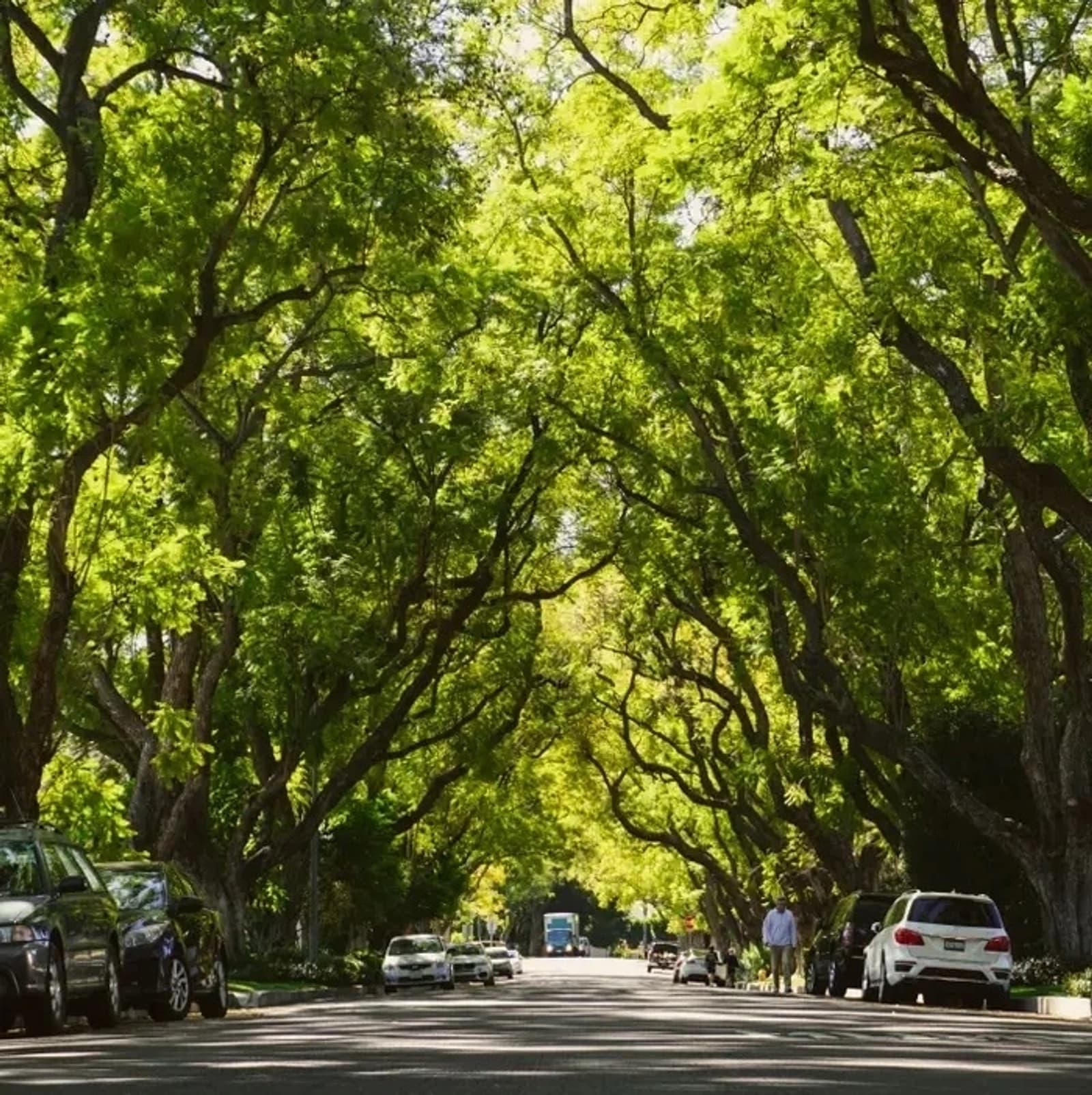
For Claremont this cuts both ways. It broadens the pool of households who might eventually move up into this town, and it means an established, canopied, walkable community becomes MORE differentiated as its surroundings develop in a different pattern. Scarcity of a type is one of the most durable sources of value a town can have, and the contrast with the corridor's newer development sharpens it.
What a buyer should actually do
Three concrete steps, none of which requires a statistic from this page.
Assess the specific ADDRESS, not the town. Freight rail proximity, truck route exposure, and freeway noise vary enormously street by street. Visit at different hours, including early morning and evening, and check what runs nearby.
Look up the DATA yourself. Regional air quality agencies publish monitoring by location. Transportation agencies publish traffic and freight corridor information. County and city planning materials show what is entitled nearby and what is proposed.
Weigh it honestly against what you are buying. Every location in a large metropolitan region carries regional conditions. The question is not whether they exist but whether the trade a specific property offers works for a specific household over a specific horizon.
Where the current information lives
This page names no employment counts, no traffic volumes, and no air quality measurements, because all of them are measured continuously and any figure printed here would date. State and county labor agencies publish sector employment. Regional air quality agencies publish monitoring data and forecasts. Transportation agencies publish corridor data and project plans. Local planning departments publish entitlements and proposals.
Anthony Grynchal has been licensed in California since November 2009, and the growth of the corridor east of this town has been one of the defining regional stories of that period. Buyers who researched their specific address, rather than reasoning from the region in general, consistently made better decisions. For the wider frame, start at the local-economy hub and read the border position article.
Frequently asked questions
Are there warehouses in Claremont?
The distribution corridor sits east and south of the town rather than in it. Claremont has only a modest industrial edge, because it had no large flat parcels to offer during the buildout and a long civic preference for its residential character. The effects reach the town through commuting, traffic, and regional conditions.
Does logistics employment support Claremont home prices?
Partly and unevenly. The sector spans a very wide pay range: its operations, planning, and professional tiers clear the local cost of entry, while its lower tiers generally do not. It is also more cyclical than education or healthcare, which matters when underwriting a long hold.
Should I worry about air quality when buying here?
It is a real, researchable regional factor driven by geography as well as industry, and it predates the logistics buildout. Regional air quality agencies publish current monitoring data and health guidance. Anyone with respiratory sensitivities should consult that data and their physician rather than rely on general reassurance.
How do I check freight and rail exposure for a specific home?
Assess the address rather than the town, because exposure varies street by street. Visit at different hours including early morning and evening, check what rail lines and truck routes run nearby, and review transportation agency corridor data and local planning materials for what is entitled or proposed.

Written by
Anthony Grynchal
Anthony Grynchal is a California real estate professional with eXp Realty, licensed since November 2009 (California DRE# 01873626), and the Designated Local Expert™ for Claremont — where he has lived for more than 33 years.
More about AnthonyPublished · Updated