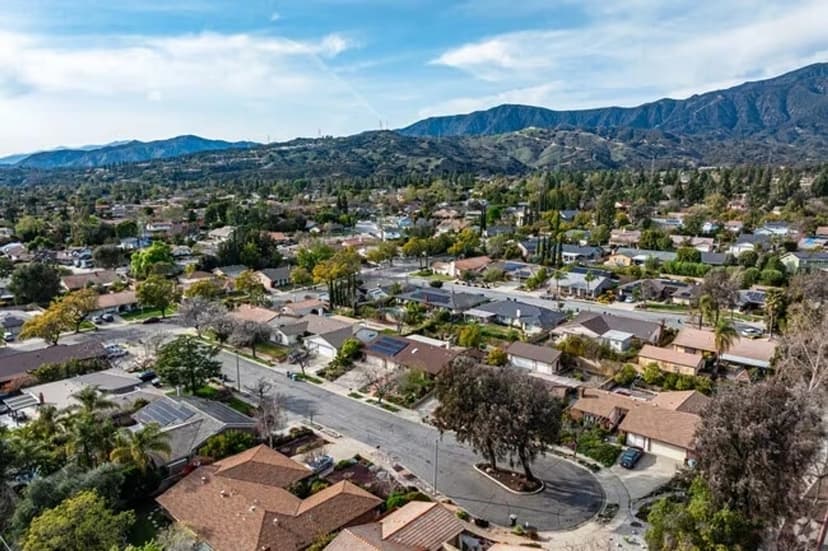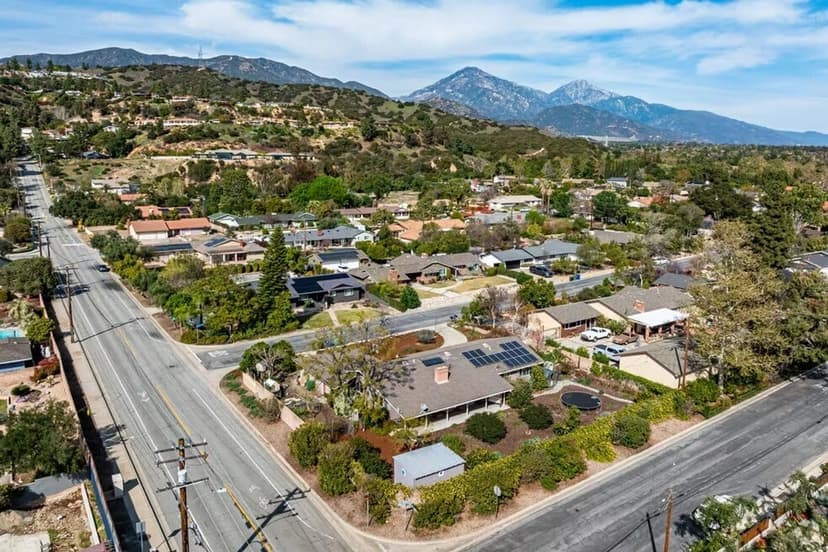
Claremont sits at the eastern edge of Los Angeles County, which puts it directly on the seam between two very different regional economies. To the west lies the mature Los Angeles basin. To the east and south lies the Inland Empire, which has been among the faster-growing parts of Southern California for a long while. A border town belongs partly to both, and understanding that position explains a surprising amount about how this market behaves. This article works out the structure, extending the local-economy guide and keeping its rule of pattern over figures.
Two economies, one seam
The two sides differ in kind, not merely in size.
The basin economy to the west is mature, dense, and diverse: entertainment, trade, finance, professional services, healthcare, education, and government, on a built-out map where land is scarce and expensive and where growth mostly means intensification rather than expansion.
The inland economy to the east is younger and more land-driven: logistics and distribution, manufacturing, construction, healthcare, education, and public sector employment, on a map where developable land existed within recent memory and where growth has meant new rooftops and new facilities at scale.
Claremont sits where those two systems meet, with the county line at its edge, freeway corridors running both directions, and a rail connection at its center. Very few towns of this size have that position.
What the border position gives the town
Three real advantages follow, and they compound.
ACCESS IN BOTH DIRECTIONS. A household here can reach basin employment and inland employment from the same driveway. That doubles the effective labor market a Claremont address opens onto, which is the structural basis for the diversification the commuter economy article describes. A town whose residents can earn from two different regional systems is less exposed to either one.
A PRICE GRADIENT AT THE DOOR. Housing costs generally decline moving inland from the coast, and Claremont sits near the transition. That has two consequences: households moving outward from the basin encounter this town early in their search and find it comparatively attainable relative to where they started, while households moving up from inland communities see it as a step up. Demand arrives from both directions, which is unusual.
DIFFERENTIATION. Claremont's character, its canopy, its historic core, its education anchor, is distinct from the newer, larger-lot, subdivision-built pattern common in much of the growth area. A town offering something structurally different from its neighbors competes on quality rather than on price, which is a durable position.
What the position costs
Honesty requires the other side of the ledger.
Growth next door arrives with traffic, freight movement, and air quality effects that do not respect a county line. The regional transportation network absorbs the growth of an entire inland corridor, and every household commuting through it pays part of that cost in time.
Competition is also real. Inland communities offer more house and more land per dollar, and for households whose priority is space, that comparison frequently wins. Claremont's answer is not price; it is everything else the town offers, which means the town's competitive position depends on continuing to be worth the difference.
And a border town inherits the volatility of whichever side is moving. Inland economies driven by land development and logistics have historically been more cyclical than mature diversified ones, which means the eastern half of Claremont's opportunity set fluctuates more than the western half. The employment map article is the place to see how those channels distribute across actual households.
How the seam reaches the housing market
Four translations.
The buyer pool is assembled from both regions, which broadens it and makes it less dependent on the fortunes of any one employment center.
The town functions as a step in a regional housing ladder, receiving households moving outward for affordability and households moving up from inland communities for character and schools. Both flows are structural rather than episodic.
Commute geography segments the buyer pool internally, since a household oriented westward weighs rail and freeway access differently than one working inland. That quietly shapes which parts of town appeal to which buyers.
And regional infrastructure decisions, transportation in particular, are a live variable for a border town in a way they are not for an interior one, because the value of the position depends on the connections staying usable.
The rail connection, and why it still matters
One piece of the border position deserves its own note, because it is easy to take for granted. A commuter rail station sits at the town's historic center, which is unusual for a community of this size and is a genuine piece of regional infrastructure rather than a civic ornament.
What it does economically is give a subset of households a westward commute that does not depend on freeway conditions. That matters more in a border town than it would elsewhere, because the freeway corridors here absorb the growth of an entire inland region, and any option that routes around them holds its value as that growth continues. It also concentrates a specific kind of demand: households that intend to use rail weight proximity to the station heavily, which is a durable preference rather than a passing one.
The honest caveat is that rail serves one direction well and others less so, and schedules and service levels change. A household counting on it should test the actual trip at the actual hour before it becomes an assumption in a housing decision.
Reading the current picture
No growth rates, employment counts, or price comparisons appear here by policy. For live data, state and county labor agencies publish employment by county and metropolitan area, federal census products publish population, household, and commuting data, and regional planning bodies publish growth forecasts and transportation plans. Read for direction and composition: which side is adding employment, whether commute times are lengthening, whether the price gradient is widening or compressing.
Anthony Grynchal has been licensed in California since November 2009 and has watched buyers arrive at this town from both directions across that whole stretch, for reasons that reliably differ depending on which way they came. If that is your own situation, start at the local-economy hub for the structural picture, then read the commuter economy article for the household-level arithmetic.
Frequently asked questions
Is Claremont part of the Inland Empire?
No. Claremont is in Los Angeles County, at its eastern edge, on the seam between the Los Angeles basin and the inland region. That border position is the point: households here can reach employment in both regional systems from the same address, which broadens the labor market a Claremont home opens onto.
Why does inland growth matter to Claremont homeowners?
It arrives through several channels: employment access for residents commuting east and south, competition from communities offering more space per dollar, and shared regional costs in traffic, freight movement, and air quality that do not respect a county line. Growth next door is both an opportunity and a cost.
How does Claremont compete with newer inland communities?
Not on price. Inland communities generally offer more house and land per dollar. Claremont's position rests on being structurally different: an established canopy, a historic walkable core, an education anchor, and schools. That is a durable position only as long as the town keeps being worth the difference.
Where can I compare the two regional economies?
State and county labor agencies publish employment by county and metropolitan area, federal census products publish population, household, and commuting data, and regional planning bodies publish growth forecasts and transportation plans. Read for direction and composition rather than a single year's figures.

Written by
Anthony Grynchal
Anthony Grynchal is a California real estate professional with eXp Realty, licensed since November 2009 (California DRE# 01873626), and the Designated Local Expert™ for Claremont — where he has lived for more than 33 years.
More about AnthonyPublished · Updated