Rain in this part of California is not a season so much as an event. It arrives in concentrated stretches, does a lot at once, and then leaves for a long time.
That pattern has two consequences worth knowing. It changes where public life happens for a few weeks, and it tests a house in ways that a long dry stretch never will.
Both are useful to a buyer, and the second one is genuinely valuable.
What happens to a walkable town in the wet
Outdoor gathering pauses. Activity moves under cover and indoors, which in a town with a compact center means it concentrates rather than disperses.
The interesting effect is that the walkable core gets more important, not less. When you cannot be in a park, being able to walk two blocks to somewhere indoors is worth more than it was in June.
Residents who live farther out drive in or stay home. Residents near the center keep their routine. That gap is at its widest in the wet weeks, and it is one of the better arguments for proximity that nobody makes on a sunny tour.
The quiet advantage of the wet season
Fewer visitors, easier parking, and a town that belongs to the people who live in it.
The foothills are also at their best in this stretch. Air clears after a storm and views that are hazy most of the year are sharp for a day or two afterward. Long-term residents plan around this deliberately.
It is also the season that answers the loneliness question honestly. A place that still feels sociable in the rain, in the dark, in February, is a place that will feel sociable to you generally.
What rain exposes in a house
This is where the section earns its keep. Systems that are exercised a few times a year rather than continuously are exactly the systems that fail without warning.
Drainage and grading
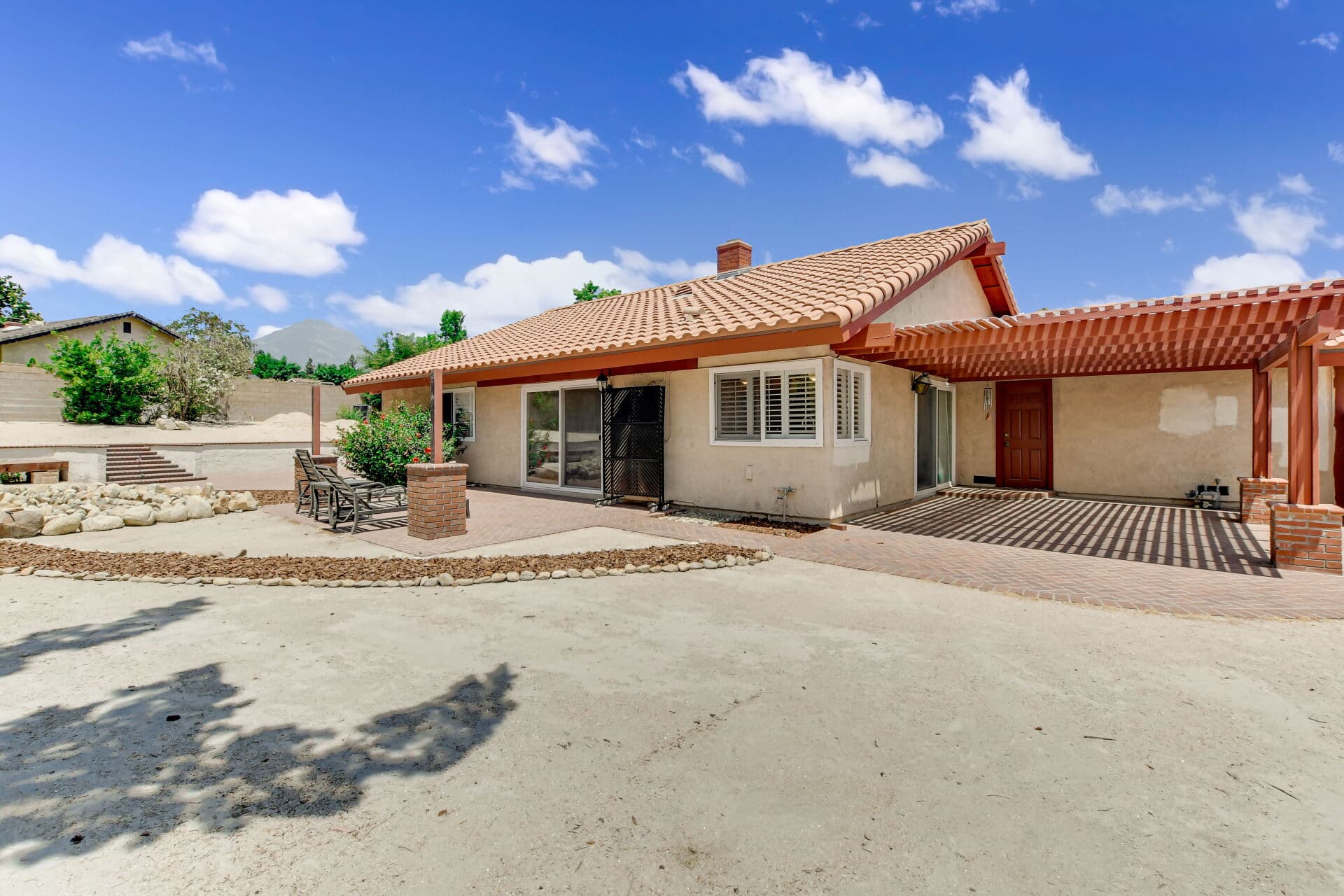
Where does water go when it leaves the roof, and where does it go when it hits the yard? Look for the direction of the slope near the foundation, for pooling in low spots, and for any sign that water has run toward the house rather than away from it.
Gutters and downspouts
Present is not the same as working. Look for staining on walls, erosion below a downspout, or a downspout that empties directly against the foundation.
Roof and flashing
The problem areas are almost always joints, valleys, and penetrations rather than the open field of the roof. This is an inspector's job, not a buyer's, but knowing where to point matters.
Windows and doors
Water intrusion around openings is common in older stock. Look at sills and the wall beneath them, inside and out.
Hillside and slope considerations
Properties near the foothills or on a slope have drainage and stability considerations that flat lots do not. Have those evaluated by a qualified professional and confirm any local requirements with the city rather than assuming.
Trees in wind and saturated ground
Mature trees are one of this town's best features and wet, windy conditions are when limb and stability issues appear. An arborist's look during inspection is worth it on a heavily treed lot.
Why touring in the rain is a rare opportunity
Most buyers cancel showings when it rains. That is a mistake, and it is one of the few genuine informational edges available in a home search.
In the wet you can see, in one visit, things that are otherwise invisible: whether water pools by the entry, whether the garage floor is damp at the edges, whether a room smells different, whether the street drains or holds water at the curb.
You also see the neighborhood at its least flattering, which is the correct baseline for a decision.
If it rains during your search window, go out. Every other buyer stayed home.
Living here through a wet stretch
The practical resident version is short.
- Clear gutters before the season rather than during it.
- Know where water goes on your own lot, and check it during the first real storm.
- Expect the town's outdoor rhythm to pause and pick back up quickly.
- Take the clear day after a storm and go look at the mountains. It is the best free thing available here.
What it means for a listing
A house shows differently in the wet, and mostly it shows harder. Short days mean showings near dusk, so lighting matters more than usual. Entry areas take a beating. A yard that is a selling point in May is a muddy negative in a storm.
None of that is a reason to avoid listing in the season. It is a reason to prepare for the conditions rather than the photographs: clear drainage, well-lit rooms, a dry and uncluttered entry, and honest answers ready for the questions a wet-weather buyer will think to ask.
Where to go next
For the shape of the town's year, start with the Claremont local events guide. If you are new here and looking for indoor ways to meet people, events that introduce you to Claremont is the practical starting point, and college events open to Claremont locals covers a large share of the indoor programming.
Confirm drainage requirements, permits, and anything property-specific with the City of Claremont and with qualified inspectors.
Anthony Grynchal has been licensed in California since November 2009.
Frequently asked questions
Should I tour homes in the rain?
Yes, and most buyers do the opposite. Wet weather reveals pooling at entries, damp garage edges, poor grading, and streets that hold water at the curb. It is one of the few informational advantages available in a home search.
What should an inspection focus on for the wet season?
Grading and drainage around the foundation, gutters and where downspouts discharge, roof joints and flashing rather than the open field, and water intrusion around windows and doors. Sloped or hillside lots need a qualified professional's evaluation.
Does public life stop when it rains in Claremont?
Outdoor gathering pauses and activity moves indoors and under cover, which concentrates it in the walkable center. Residents near the core keep their routine; those farther out tend to drive in or stay home.
Is the wet season a bad time to list a home here?
It is a harder time to photograph and an easier time to prove a house is sound. Prepare for the conditions instead of the pictures: clear drainage, strong lighting for dusk showings, and a dry, uncluttered entry.

Written by
Anthony Grynchal
Anthony Grynchal is a California real estate professional with eXp Realty, licensed since November 2009 (California DRE# 01873626), and the Designated Local Expert™ for Claremont — where he has lived for more than 33 years.
More about AnthonyPublished · Updated