There is a strip of ground between a public gathering and a private house, and it takes the contact.
Owners of homes that back onto or front a busy public space learn this quickly. The crowd is not hostile. It is just present, in volume, and volume does things to a property line that a quiet street never does.
None of it is dramatic. All of it is cumulative, and most of it is designable in advance if you know what is coming.
What actually happens at the edge
The recurring list is short and consistent.
- Cut-through. People take the shortest line between where they parked and where they are going. If that line crosses a corner of a lot, it will be crossed. Repeatedly. Grass does not survive a desire path.
- Sitting and leaning. A low wall, a raised planter, or a wide step is furniture to a tired stranger. It will be used as such.
- Litter. Not malice, mostly wind and hands full of things. It accumulates against fences and in hedges, which is why edges collect more of it than open ground.
- Parkway wear. The strip between sidewalk and curb takes car doors, feet, and occasionally a wheel. It is usually city-controlled ground that the adjacent owner is expected to maintain, which is an awkward combination.
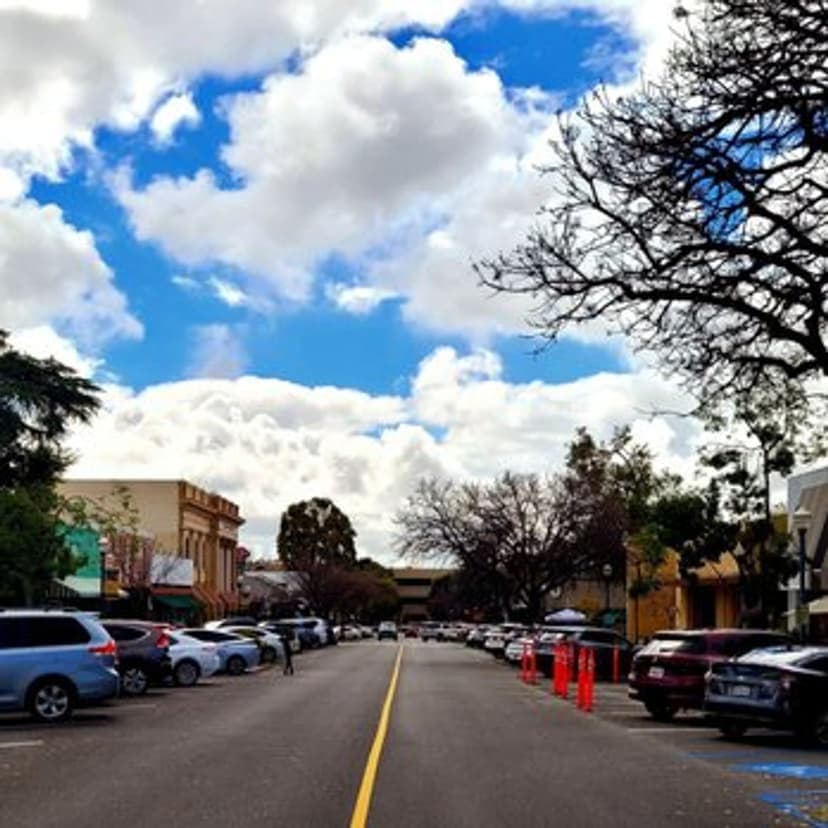
- Driveway blocking. The single most reported irritation on any street near an attractor, and the one residents build defenses against first.
Read a block for these signs and you learn its history, which is the underlying method in judging a Claremont street by how it handles a crowd.
Design decisions that hold up
Owners near public space tend to converge on similar solutions, which is a good sign that the solutions work.
Hard surface where feet go. Fighting a desire path with lawn is a losing campaign. Paving it, or planting something that tolerates traffic, converts a recurring repair into a one-time cost.
Corner treatment. The corner nearest the attractor takes the most abuse. A raised bed, a low wall, or a shrub mass at that corner redirects the line without needing a fence.
Planting that discourages sitting. Not thorns. Simply a bed rather than a ledge. Anything with a flat horizontal surface at seat height becomes seating.
Driveway visibility. A clearly delineated apron, unobstructed sightlines, and where appropriate a permitted marking. Rules on what may be painted or posted on a public curb come from the City of Claremont, and improvised markings are not the same as authorized ones.
Fencing at the right height for the job. A tall fence stops sightlines and headlights. A low fence stops cut-through and does almost nothing else. Know which problem you are solving, and check the applicable height and setback rules before building.
The parkway is the awkward one
The strip in front of the sidewalk is usually public right of way, maintained in practice by the adjoining owner, and subject to rules about what may be planted or built there.
Near a busy district it takes disproportionate wear, and the owner is the one looking at it. That is a maintenance obligation buyers rarely price and sellers rarely mention. Ask what has been planted there, what has died there, and whether anything in it required approval. The city sets the standards, and they are worth reading before you plan anything ambitious.
Trespass, in the ordinary sense
Almost none of this is a legal problem. It is a wear-and-tear problem with an occasional exception.
The exceptions worth knowing about: someone injured on your property, damage to your fence or vehicle, and a persistent pattern rather than an occasional incident. Those are questions for your insurer and, where a real dispute develops, for a California attorney. What matters here is that adjacency to public space is a risk profile worth mentioning to your insurance professional rather than discovering after a claim.
That is a different question from what you take on when you invite people yourself, which is set out in liability and insurance for a Claremont gathering.
The upside nobody lists
It would be dishonest to write only the cost side.
Homes adjacent to well-used public space enjoy things that inland lots generally do not: an unbuildable view corridor, mature planting maintained by someone else, continuous informal surveillance, and a walk to somewhere worth walking to. Those are durable characteristics, and they are part of why a walkable center supports the values around it.
The trade is that the edge condition is real and you are the one maintaining it. Buyers who understand the trade tend to be happy. Buyers who expected a quiet suburban lot with a park view tend not to be.
How to inspect the edge before you buy
Walk the property line, slowly, and look for the evidence.
- Bare tracks across a corner of lawn. That is a desire path and it will continue.
- Wear on a wall cap or a step at seat height.
- Fresh sod or new planting in one spot only, which usually means something keeps failing there.
- Improvised deterrents: planters set out, cones, chains, hand-lettered signs.
- Fence condition on the public side versus the private side.
Then ask the seller directly what they do differently on busy days. A specific routine is an honest answer about frequency.
Where to take it next
The local events and civic life hub collects the rest of these questions, from parking pressure to noise paths to timing a sale.
Rules about fences, parkways, curb markings, and what may be placed in the public right of way come from the City of Claremont, and they change, so verify current standards before you build anything at the edge of a lot. Anthony Grynchal has been licensed in California since November 2009.
Frequently asked questions
Who maintains the parkway strip in front of my house?
In most California cities the strip is public right of way maintained in practice by the adjoining property owner, with rules about what may be planted or built there. Confirm the current standards with the City of Claremont before planning anything for that space.
Can I put out cones or signs to stop people parking across my driveway?
Placing objects in the public right of way is regulated, and a hand-lettered sign carries no authority. If driveway blocking is persistent, the city is the correct route, since it controls curb markings and enforcement.
Does living beside public space affect my insurance?
It can change the risk picture, particularly around liability at the property line. Discuss the adjacency with your insurance professional when you place or renew coverage rather than assuming a standard policy addresses it.
Is a lot next to a park or plaza worth less?
Not inherently. The adjacency brings a protected outlook, mature landscaping, and walkability alongside real edge maintenance. How a specific property is affected is a valuation question for a licensed appraiser or a market analysis on that address.

Written by
Anthony Grynchal
Anthony Grynchal is a California real estate professional with eXp Realty, licensed since November 2009 (California DRE# 01873626), and the Designated Local Expert™ for Claremont — where he has lived for more than 33 years.
More about AnthonyPublished · Updated