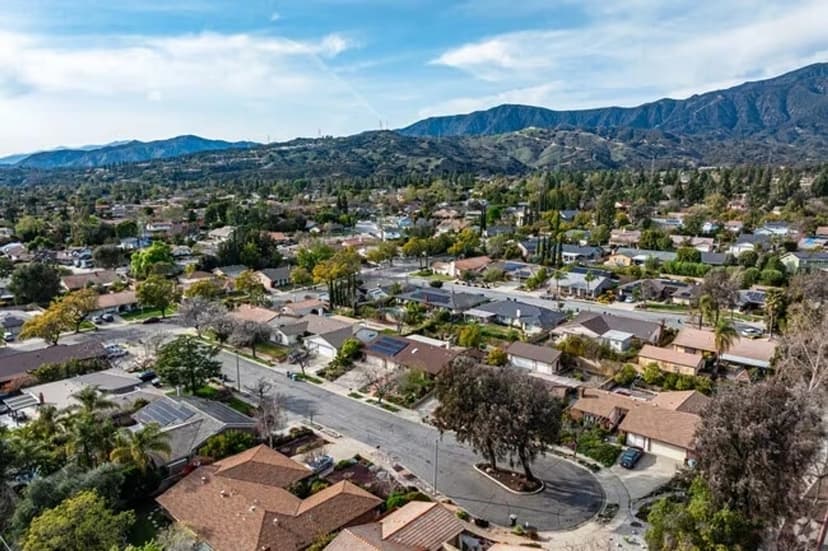
Ask how to find a lot in Claremont and the honest first answer is that you probably will not find one the way you find a house. Claremont is close to built out. There is no inventory of empty parcels waiting for a search alert.
That does not mean people stop building here. It means building sites arrive through different doors than listings do, and the buyers who get them are the ones who understood that before they started looking.
Where building sites actually come from
Four sources, and only one of them looks like a normal purchase.
A GENUINELY VACANT PARCEL. These exist, and they exist for a reason. A parcel that has stayed empty in a built-out city while everything around it was developed is usually carrying a constraint: slope, access, drainage, an easement, an unresolved title question, or a shape that will not hold a house anyone wants. That is not a reason to walk away, but it is the correct starting assumption. Something kept it empty. Find out what.
A HOUSE WORTH LESS THAN THE GROUND. The most common path in a mature city. The buyer is purchasing a site, and the existing structure is a cost rather than an asset. The economics of that decision are set out in Claremont teardowns: when the lot is worth more.
A PARCEL THAT DOES NOT EXIST YET. A large lot that could be divided, or an assemblage of adjoining ownerships. This path has the longest timeline and the most process, and it is described in newly created parcels: title questions worth asking.
THE LOT YOU ALREADY OWN. If you own a house here, the site question may already be answered. Whether the right move is to rebuild it or work with it is covered in remodel or rebuild: reading your house's bones.
Searching, when the thing you want does not list
Standard property searches will surface the small number of vacant parcels on the market. Run those alerts, but do not build a plan around them.
The wider search is different in kind. You are looking for HOUSES that are candidates: older, smaller, or functionally obsolete structures on parcels whose size, shape, and location would support the house you want. Those show up in ordinary listing searches, priced as houses, and most buyers looking at them are looking at the house.
Then there is the market that never lists. Owners of long-held property, estates and trusts working through a disposition, and properties sitting in a condition that makes a conventional sale awkward. Reaching that market is direct, patient, and unglamorous work: identifying candidate parcels by their characteristics, finding the ownership, and making contact respectfully.
That work is also where representation earns its keep, because the search criteria are parcel characteristics rather than bedroom counts, and because the approach to an owner who is not selling is a different conversation than an offer on a listing.
What to check before you fall in love with a parcel
Buildable is not a property of a lot. It is a conclusion you reach after asking a specific list of questions, and the full list is set out in what makes a Claremont lot buildable.
The short version, in the order that kills deals fastest:
ZONING AND ENVELOPE. What the parcel is allowed to hold, and what approval path a project on it would follow. That answer comes from the City of Claremont planning counter with the parcel number in hand, and it is the single most valuable hour in the whole exercise.
ACCESS. Legal access and physical access are two different questions, and a parcel can pass one and fail the other.
UTILITIES. Not whether service exists in the street, but what it takes in money and months to bring each service to a building on this parcel. Ask each provider about the specific parcel and keep the answers in writing.
GROUND AND SLOPE. Soil decides the foundation, and on sloped sites it decides a great deal more. If the parcel is on a hillside, read hillside building in Claremont before you calculate anything.
TREES. Claremont takes its canopy seriously, and mature trees are a design constraint rather than a landscaping preference. See building around protected trees on a Claremont lot.
TITLE. Easements, rights of way, and recorded restrictions can shape where a building may sit as firmly as any setback.
Structure the purchase so the checking happens before you own it
This is the difference between buying a site and buying a problem.
A land purchase should give you enough time and enough access to answer the questions above BEFORE your money becomes non-refundable. That means a contingency period long enough to visit the planning counter, get answers from utility providers, and get a geotechnical investigation done, plus the right to enter the property to do that work.
On a difficult parcel, the more protective structure is a longer investigation period with clearly defined conditions, so that a genuine dead end returns your deposit rather than converting into a lesson. What happens to deposits when a deal does not close is worth understanding in advance, and the mechanics are described in what happens to your deposit if you cannot close.
Sellers of land are often less accommodating than sellers of houses, and on a competitive parcel you may be trading investigation time for a better chance of winning. Make that trade knowingly rather than by accident.
Financing land is not financing a house
Expect different terms, different underwriting, and a different lender conversation than a home purchase. Many buyers of building sites plan for the land and the construction as one financing question rather than two, and that structure is covered in construction loans for Claremont projects.
Have that conversation before you write an offer. A financing plan discovered during escrow is how a good parcel gets lost.
Move like someone who has already done the homework
Because sites are scarce and irregular here, the successful buyers are usually the ones who did their learning before the opportunity appeared rather than after.
Know your envelope requirements in general terms. Know your builder and your designer, or at least know who you would call. Know your financing structure. Have your geotechnical and survey professionals identified so that a thirty-day investigation period is actually thirty working days rather than three weeks of scheduling.
Then, when a candidate appears, you are evaluating rather than starting.
Be honest about the alternative
Sometimes the right answer is that a suitable site is not going to appear on your timeline, and the better path is buying a house that mostly works and changing it. That is not a failure. In a built-out city it is frequently the more rational route to the same outcome.
The comparison is laid out in new construction vs. resale in Claremont. Read it before you spend a year looking for dirt.
For the wider process, start at the new construction guide.
Anthony Grynchal has been licensed in California since November 2009.
Frequently asked questions
Are there vacant lots for sale in Claremont?
Occasionally, but the city is close to built out, so vacant parcels are scarce and usually carry a constraint that kept them empty. Most building sites here come from a house worth less than its ground, or from a parcel created by dividing or assembling land.
How do I find a lot that is not listed?
By searching for parcel characteristics rather than house features, identifying candidate properties, finding the ownership, and making contact directly. It is patient work, and it is where an agent representing you, rather than a seller, is genuinely useful.
What should I check before buying land in Claremont?
Zoning and building envelope, legal and physical access, what it costs to bring each utility to the parcel, soil and slope, protected trees, and title items such as easements. Start at the City of Claremont planning counter with the parcel number.
Can I make a land offer contingent on finding out if it is buildable?
You can, and you should try. Structure the purchase with an investigation period long enough to reach the planning counter, the utility providers, and a geotechnical investigation, plus the right to enter the property, before your deposit becomes non-refundable.

Written by
Anthony Grynchal
Anthony Grynchal is a California real estate professional with eXp Realty, licensed since November 2009 (California DRE# 01873626), and the Designated Local Expert™ for Claremont — where he has lived for more than 33 years.
More about AnthonyPublished · Updated