Green is not free in Southern California. Every lawn in a Claremont park, every parkway strip and every private back yard represents a standing water bill and a standing decision, and both have been under pressure for years.
That matters to a buyer for two connected reasons. The public landscape you are buying proximity to is subject to change, and the private landscape you are buying outright comes with a cost and a rule set that many buyers never price.
This guide belongs to the parks and recreation cluster and covers the water side of green space: what drives it, what it looks like when it changes, and how to read a yard and a park with an honest eye.
Why turf is the pressure point
Conventional lawn is thirsty, and it is thirsty in the season when supply is tightest. It is also the single most flexible line in a landscape budget, public or private, which is why it is always the first thing examined when water gets expensive or restricted.
The tension is that turf is not decoration. Open, level, walkable grass is the most USED surface in a park system. You cannot play catch on decomposed granite. You cannot spread a blanket on gravel. A park that converts all of its lawn to low-water planting has saved water and lost function.
So cities balance it: keep turf where people actually play on it, convert turf where it exists only to be looked at. That is the pattern to look for when you walk any park in town.
What conversion looks like on the ground
Landscape change in a park system rarely happens all at once. It shows up as a project here and a project there, and if you are touring on a weekend you may walk straight past the evidence.
Signs a section has been converted or is queued for it: fenced-off ground with new drip line visible, mulch over a shape that was clearly a lawn, young shrubs on wide spacing, signage explaining a demonstration planting, or plain bare earth that has been graded and is waiting.
Signs the turf is staying: irrigation heads on a tight grid, marked fields, wear patterns from actual use, a maintenance schedule you can see the results of. The operational machinery behind all this is described in the guide to how a city keeps its parks working.
Do not read summer dormancy as neglect. Warm-season grass browning in the heat and greening again with the rain is normal behavior, not a failing park.
The trees are the part that cannot be replaced
If there is one thing worth protecting in a dry landscape, it is the mature canopy, and this is where water policy gets genuinely serious.
A lawn that is removed can be replanted in a season. A mature tree that dies from irrigation being cut back around it cannot be replaced in a lifetime. When turf is converted, established trees have to keep receiving water at their root zone, on a different system than the one that was watering the grass. Where that step is skipped, trees decline slowly and nobody connects the two events for years.
The value of Claremont's canopy, and why it is treated as infrastructure rather than ornament, is covered in the guide to Claremont's urban forest. The related question of what shade does for the walkability of a summer street is covered in shade is infrastructure.
What this means for the yard you are buying
Now the private side, which is where the buyer's money actually goes.
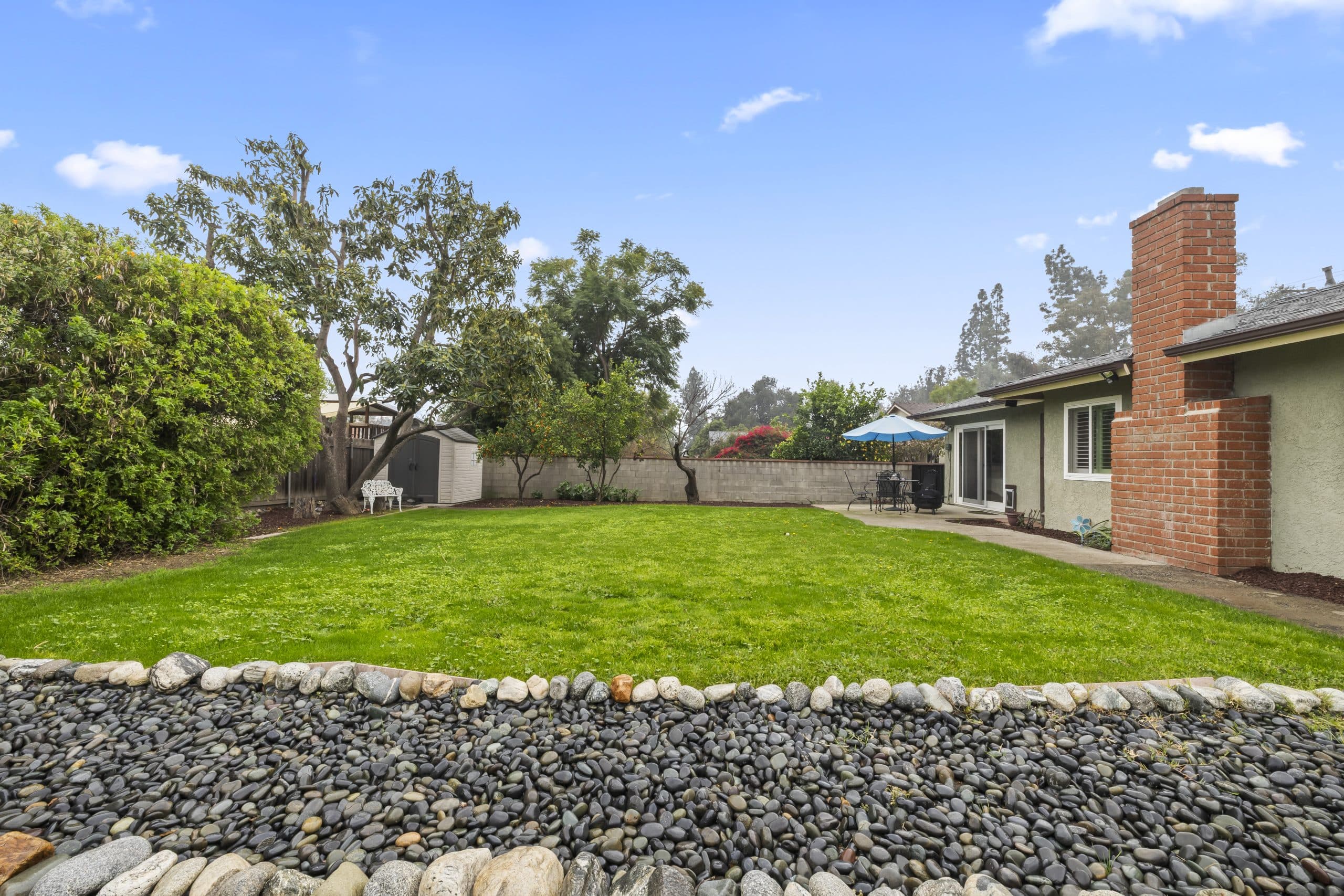
Walk the yard and ask what it costs to keep looking like this. A large conventional lawn on spray irrigation in this climate is a standing monthly obligation, and it does not get cheaper. Low-water planting costs more to install and much less to run, and it takes a few seasons to look established.
Check the irrigation itself. Is there a controller, and does it work? Are there separate valves for lawn, shrubs and trees, or is everything on one zone? A single zone watering turf and trees together is the setup that makes any future conversion awkward and expensive.
Look for the signs of a system that has been neglected: heads buried under growth, wet patches suggesting a break, dry corners suggesting poor coverage, drip line lying on the surface and cracked by sun.
Rules, rebates and restrictions
Several layers of rule may apply to what you do with a Claremont landscape: the water provider's conservation rules, city landscape and tree standards, and where applicable a homeowners association's own requirements.
Those layers change, sometimes quickly, in response to conditions. Never take a watering schedule, a rebate program, a turf-removal incentive or a planting restriction from a guide like this one. Confirm the current position directly with your water provider, the City of Claremont and the association if there is one, in writing, before you plan a landscape project or price a yard.
Two specific things worth asking about at the diligence stage: whether any tree on the property is protected in a way that limits removal or pruning, and whether an association has approved plant lists or a design review that applies to front-yard changes.
The stormwater side of the same coin
Water policy is not only about supply. It is also about what happens to the water that arrives all at once.
Basins, channels and permeable ground across town do double duty as open space and as flood management, which is why some of the green you see is not really a park at all. Reading that landscape correctly is covered in the guide on reading water in the Claremont landscape, and it is directly relevant to any lot near a wash or below open ground.
On a private lot, the same logic applies at small scale. Hard surface sheds water toward somewhere. Where does yours go, and is that somewhere your neighbor?
How to think about it as a buyer
Three practical positions.
First, buy the trees, not the lawn. Canopy is the scarce, slow, valuable asset in this landscape, and it is the thing you cannot install.
Second, price the yard honestly. Ask the seller what the water bill runs in the hottest months and treat a large conventional lawn as a recurring cost rather than a free feature.
Third, treat public landscape as something that will keep evolving. The park across the street may not look the same in ten years, and the reason will usually be water. That is not a reason to avoid it, only a reason not to buy on the strength of a specific planting.
Where to go next
Look at the irrigation, look at the trees, and confirm current rules with the providers rather than with any guide. The rest of the parks and recreation cluster covers the places themselves, and the guide to the park-rich neighborhoods of Claremont shows how green space is distributed across town. For a candid read on what a specific yard will cost to keep, ask someone who has seen a lot of them. Anthony Grynchal has been licensed in California since November 2009.
Frequently asked questions
Are Claremont parks removing their lawns?
Landscape change happens project by project rather than all at once, and the usual pattern is to keep turf where it is actively used and convert turf that exists only to be looked at. Ask the City of Claremont about any specific site.
Is brown grass in a park a sign of neglect?
Not necessarily. Warm-season turf going dormant in heat and recovering with rain is normal. Look instead at whether the irrigation is functioning, the trees are healthy and the wear patterns show real use.
What should I check about irrigation when buying a home?
Whether the controller works, whether lawn, shrubs and trees are on separate valves, and whether coverage is even. A single zone serving both turf and mature trees makes any future landscape change harder and more expensive.
Are there rules about what I can plant or remove?
There can be, through water-provider conservation rules, city tree and landscape standards, and any homeowners association. These change over time, so confirm the current requirements in writing before planning work.

Written by
Anthony Grynchal
Anthony Grynchal is a California real estate professional with eXp Realty, licensed since November 2009 (California DRE# 01873626), and the Designated Local Expert™ for Claremont — where he has lived for more than 33 years.
More about AnthonyPublished · Updated