
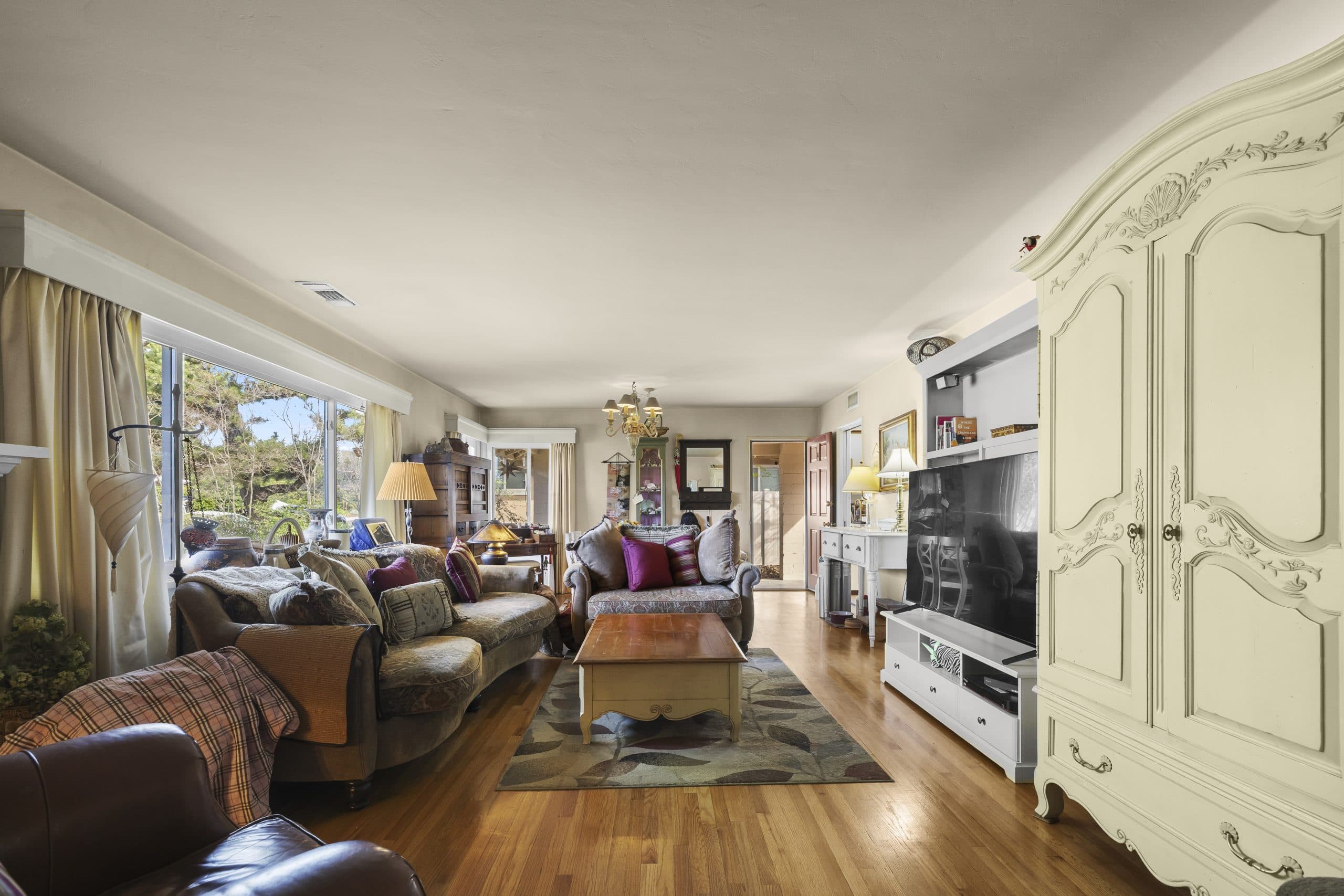
A house that has been lived in continuously for decades becomes, in a single week, an empty building. Nobody collects the mail. Nobody hears the water heater start to fail. Nobody turns a light on at dusk. Families in the middle of an estate rarely think about this first, and understandably so — but of all the practical problems an inherited Claremont home presents, the vacant period is the one that quietly does the most damage.
This article covers what changes when a home goes empty: the insurance question that catches most families off guard, the physical risks that matter in this climate, and the routine that keeps a house intact while the estate does its work. It deepens the probate guide, and it assumes the groundwork covered in the first steps guide. General information only. Your insurance carrier and the estate's attorney govern the specifics.
The insurance problem nobody warns you about
Start here, because this is the item most likely to be missed and most expensive to miss. A standard homeowners policy is written for an OCCUPIED dwelling. Most policies contain provisions addressing what happens when a home stands vacant or unoccupied beyond a defined period, and coverage for some categories of loss can be limited or excluded once that point passes. The specifics vary by carrier and by policy — which is exactly why this cannot be resolved by reading an article.
What to do instead is simple and should happen early: CALL THE CARRIER, in writing where possible, and tell them the truth. The owner has died. The home is unoccupied. Who the named insured should now be. Ask directly what the policy provides in that state and what endorsement or separate vacant-property policy the carrier offers. Ask what the policy requires of you — many require the utilities kept on, or periodic inspections, or specific winterizing steps — because a requirement you did not know about is a claim you may not win.
Two related points. The named insured may need to change once a personal representative is appointed; the attorney and the carrier should coordinate that, not the family alone. And a lapse for non-payment is the worst outcome available here, so whoever is handling estate bills should confirm the premium is being paid from the first week, not the first month.
What actually goes wrong in an empty house
WATER is the leading cause of avoidable loss in a vacant home, and it does not announce itself. A supply line to a washing machine, a toilet fill valve, a water heater at the end of its life, an irrigation valve stuck open — any of these can run for weeks into an empty house. If the property will be unoccupied for an extended stretch and nobody is visiting weekly, ask a plumber whether shutting the main and draining the system makes sense for this particular house, and coordinate that decision with what the insurance policy requires.
LANDSCAPE AND EXTERIOR come next, and in this part of Southern California they carry real weight. A dead lawn and an overgrown yard are the clearest possible signal that nobody is watching a house. Beyond appearance, dry brush against a structure and a roof full of leaf litter are fire-risk items in a region where that risk is taken seriously; the preparation guide treats yard work as one of the few expenditures that reliably earns its place, and safety is part of why.
PESTS AND SYSTEMS follow. Empty houses invite rodents, and rodents find wiring and insulation. HVAC that never runs can seize. Refrigerators left off with the door closed produce a problem the next visitor will not forget. Gutters, roof edges, and any deferred maintenance the owner had been living around all continue to age — and the longer the estate takes, the more of that aging lands on the eventual sale.
Security without theater
The risk here is not dramatic. It is opportunistic: an unlocked side gate, a spare key under a stone that half the neighborhood knows about, a garage door opener still clipped to a car that has been sold, contents visible through an uncovered window.
The proportionate response is unglamorous. Change or re-key the exterior locks once the personal representative has authority to do so, and account for every key and opener that ever existed. Stop the mail or forward it, and stop newspaper and package deliveries — an overflowing mailbox is an advertisement. Put a couple of interior lights and the exterior lights on timers. Trim the shrubs that screen the front door from the street. Tell a trusted neighbor what has happened and ask them to call if something looks wrong, which is worth more than most hardware. If the home has an alarm or camera system, find out whose account it is on and whether the monitoring is still active and still being paid.
And be deliberate about VALUABLES. Personal property in the home may be estate property, not items to be sorted informally by whoever has a key. Photograph rooms before anything moves, route anything of possible value past the attorney, and secure documents, jewelry, firearms, and collections early — both because they can walk and because the estate may need to account for them.
Who visits, and how often
The single most useful thing a family can set up is a ROUTINE: one named person, a regular interval, and a short written list. Walk the interior and look under every sink. Run water in each fixture. Check the water heater pan, the ceilings, and the garage floor for stains that were not there before. Confirm the HVAC runs. Look at the roofline and the gutters. Check that the yard is being maintained and that the irrigation is running as intended and not more. Note what changed, with dates.
Two reasons that log matters beyond the house itself. An insurance claim goes better when someone can show the property was being checked. And an estate's records benefit from the same discipline everything else in probate demands: a personal representative acts under fiduciary duty and is expected to preserve estate property with reasonable care, which is a great deal easier to demonstrate with a dated list than with a memory.
Where distance makes that routine impossible, it is a hiring problem rather than a heroism problem — a property manager, a bonded caretaker service, or a local family member with a written scope of what to check. Executors who live elsewhere face this in a sharper form; the remote executor guide covers running an estate from another state.
The honest trade-off
Every dollar the estate spends on carrying an empty house is a dollar that does not reach the heirs, and that argues for restraint. But the cost of a vacant house is not zero either way: it is either paid deliberately in insurance, utilities, and yard care, or paid involuntarily in a water loss, a denied claim, or a condition problem discovered by a buyer's inspector. The first is budgetable. The second is not.
This is also part of why the length of the process matters so much to families, and why the question of how long a house can reasonably sit is a real one rather than an impatient one. If keeping the home longer term is genuinely on the table, the carrying picture belongs in that conversation from the start — the renting guide works through what changes if the house is occupied by a tenant instead.
None of the above is legal, tax, or insurance advice. The estate's attorney directs the administration, and your carrier is the only source of truth about your policy. For the wider process, start at the probate sale process guide. Anthony Grynchal has been licensed in California since November 2009.
Frequently asked questions
Does homeowners insurance still cover a house after the owner dies?
It depends entirely on the policy and the carrier. Many policies treat a dwelling that has become vacant or unoccupied differently from an occupied one, and the named insured may also need to change once a personal representative is appointed. Contact the carrier in writing as early as possible, describe the situation accurately, and ask what the policy provides and what it requires of you.
Should we shut the water off at an empty inherited home?
Often it is worth doing, because undetected water loss is the most common serious problem in a vacant house. Whether to shut the main and drain the system depends on the house, how often someone visits, and what the insurance policy requires. Ask a plumber and confirm with the carrier before acting.
Can we start clearing out the house right away?
Wait for the personal representative to be appointed and for the attorney to confirm what that appointment allows. Personal property in the home may be estate property that has to be valued and accounted for, so photograph rooms before anything moves and route items of possible value past counsel first.
Who pays the utilities and insurance while probate runs?
Carrying costs on estate property are generally handled through the estate rather than out of one heir's pocket, but the mechanics and the record-keeping should be set up with the estate's attorney at the start. Keep receipts. A lapse in insurance for non-payment is the outcome most worth avoiding.

Written by
Anthony Grynchal
Anthony Grynchal is a California real estate professional with eXp Realty, licensed since November 2009 (California DRE# 01873626), and the Designated Local Expert™ for Claremont — where he has lived for more than 33 years.
More about AnthonyPublished · Updated