Claremont is a town of trees. The canopy is part of why people want to live here, and for a rental owner it is also a maintenance obligation that does not fit neatly into a lease clause about mowing.
The outside of a property produces a predictable set of arguments: dead lawn, unpruned shrubs, a water bill nobody expected, a limb that came down, a citation from the city. Nearly all of them come from the same root cause, which is that the lease said something vague about the tenant maintaining the yard and left it there.
Split the outside into three categories
ROUTINE UPKEEP. Mowing, edging, weeding beds, sweeping hardscape, removing leaves, keeping bins tidy. Weekly or fortnightly work with no skill barrier.
PERIODIC WORK. Shrub shaping, seasonal cleanup, irrigation checks and adjustments, fertilizing, gopher and pest management in the yard.
OWNER WORK. Tree pruning, tree removal, irrigation system repair, drainage, hardscape repair, retaining walls, fencing, and anything touching the structure or the parkway.
The first is reasonably assigned to a tenant. The second is negotiable and often better bought. The third is yours, and should never be delegated to an occupant regardless of what they volunteer.
Trees are not a tenant task
This is the one to be firm about. Mature trees are a liability item. A limb over a driveway, a root system near a foundation or a sewer lateral, a tree weakened by drought years: those are conditions an owner is expected to manage, and they are not managed by a tenant with a ladder and a hand saw.
Beyond the safety question, there is a local one. Street trees in the parkway and certain protected trees are subject to city rules, and pruning or removing the wrong tree without approval can produce a citation and a replacement obligation. Confirm the current rules with the City of Claremont for the specific tree before any work is scheduled, and never let a tenant or a general gardener decide.
Put it in the lease explicitly: the tenant does not prune, top, or remove trees, and reports any damaged or hanging limb promptly.
Water is a policy decision, not an afterthought
Landscape irrigation is the piece where responsibility and cost most often come apart.
If the tenant pays the water bill and is also responsible for keeping the landscape alive, you have set up a conflict: every gallon that keeps your plants healthy costs them money. In a drought year, or under watering restrictions, that conflict resolves in a predictable direction and you get the yard back dead.
There are three honest structures. The owner pays for water and retains landscape responsibility. The tenant pays for water and is responsible only for basic tidiness while the owner maintains the planting and the irrigation. Or the owner contracts a gardener and builds the cost into the arrangement, which is the cleanest option for a property with real landscaping.
Whichever you choose, write it down and make the metering position explicit, because shared meters cause their own trouble. That subject is worked through in the utilities article.
Watering restrictions in this region have been in force in various forms and have changed repeatedly. Do not write a lease clause that requires a tenant to water in a way that may conflict with rules in effect at the time. Require reasonable care and keep the obligation flexible.
Irrigation systems need an owner
Sprinkler timers, valves, and drip lines fail quietly. A broken valve waters a fence for a month. A timer resets after a power cut and nothing runs for three weeks.
Assign the system to yourself. Show the tenant where the controller is and how to shut it off, ask them to report obvious faults, and inspect it seasonally. A tenant asked to maintain irrigation will generally be blamed later for a failure they had no way to diagnose.
Fire clearance at the north edge
Properties toward the foothills sit in a different context. Vegetation clearance requirements around structures apply in designated hazard areas, and those designations in this region have been revised more than once.
Clearance is an owner obligation, not something to leave to a household's judgment about how tidy the slope looks. Confirm the current designation and the current requirements for the specific parcel with the city and the fire authority, and schedule the work rather than reacting to a notice.
Write the clause so it can be enforced
A clause saying the tenant shall maintain the landscaping is unenforceable in practice because nobody can say what maintained means.
Write specifics instead. Lawn mowed to a stated frequency. Beds kept clear of weeds. Leaves cleared from walkways and drains. Bins stored in a stated location between collections. Nothing planted or removed without written consent. No trees touched at all. Report irrigation faults, standing water, and damaged limbs promptly.
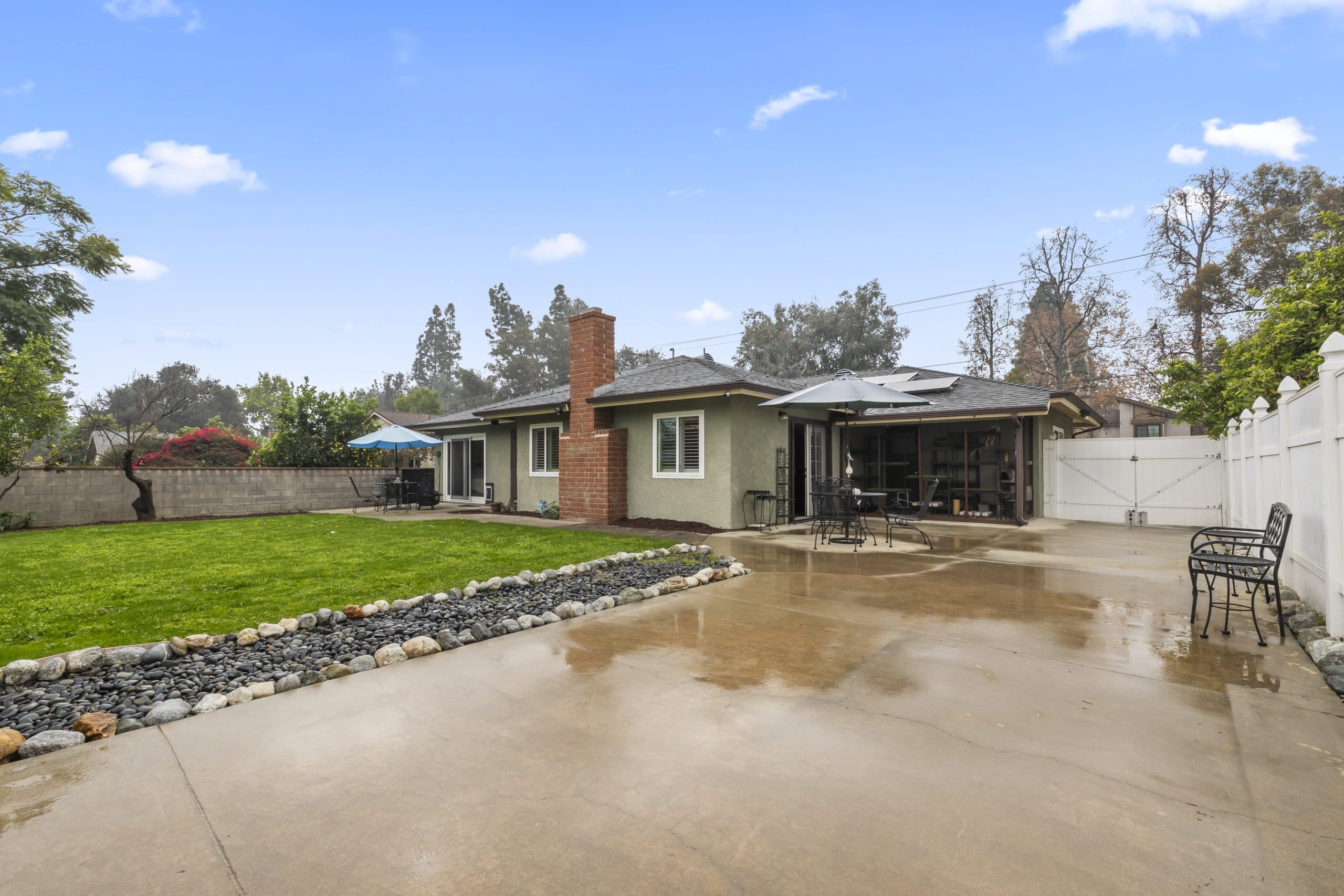
Then record the condition at move-in the way you record the interior: photographs of the lawn, the beds, the trees, the fences, and the hardscape, dated and acknowledged. Without that, a dispute at move-out about a dead lawn has no starting point, and the general principle is the one set out in the wear versus damage article. Plants die for reasons other than neglect, and a photographic record is what separates the two.
The case for buying the service
For most Claremont rentals with established landscaping, contracting a gardener yourself is the better arrangement. You get a consistent standard, you keep control of the plant material you own, you get regular eyes on the property from someone who will tell you about a leaning fence or a wet patch, and you remove an entire category of dispute.
It also protects the asset. Established planting and mature trees carry real value in this town, and a few years of poor care is expensive to reverse.
Set the vendor visit schedule so the tenant knows when someone will be on site, and treat it as a scheduled service rather than an entry into the dwelling.
The summary
Assign routine tidiness to the tenant if you like. Keep trees, irrigation, drainage, and fire clearance for yourself, always. Align who pays for water with who is responsible for keeping things alive. Write specifics rather than a general obligation. Photograph the outside at move-in. Confirm anything touching a street tree or a protected tree with the city first.
Start at the rental properties hub for the full operating picture, and read the maintenance duties article next, since the outside is one part of a wider standard. Anthony Grynchal has been licensed in California since November 2009.
Frequently asked questions
Can I make my tenant responsible for the yard?
You can reasonably assign routine tidiness such as mowing, weeding, and clearing leaves, written as specific tasks rather than a general obligation to maintain. Trees, irrigation systems, drainage, and fire clearance should stay with the owner.
Who should pay for irrigation water?
Align it with responsibility. If the tenant pays for water and is also responsible for keeping plants alive, the incentive works against the landscape, particularly under watering restrictions. Many owners pay for irrigation water or contract the gardening themselves.
Can my tenant prune the trees?
No, and the lease should say so. Tree work is a liability and skill question, and street trees and certain protected trees are subject to city rules. Confirm the position with the City of Claremont before any tree work is scheduled.
What if the lawn dies during the tenancy?
It depends on why, which is why a dated photographic record of the outside at move-in matters as much as the interior one. Drought, restrictions, irrigation failure, and disease are not neglect, and without a starting record the dispute has no facts in it.
Do fire clearance requirements apply to my rental?
They may, particularly toward the foothills, and hazard designations in this region have been revised more than once. Confirm the current designation and requirements for your specific parcel with the city and the fire authority, and treat the work as an owner obligation.

Written by
Anthony Grynchal
Anthony Grynchal is a California real estate professional with eXp Realty, licensed since November 2009 (California DRE# 01873626), and the Designated Local Expert™ for Claremont — where he has lived for more than 33 years.
More about AnthonyPublished · Updated