Sellers who are moving anyway have a scheduling question they usually treat as a logistics problem: do we move out first and sell the house empty, or stay in it and sell around ourselves? It is not really logistics. It affects how the home shows, how many buyers get inside, what your insurance covers, and how much the whole process costs you in patience.
There is no universally right answer. There is a right answer for a particular house, a particular family, and a particular set of constraints. What follows is the honest case for each, and the specific traps on both sides. The full sequence this decision sits inside is in the guide to selling a home in Claremont from start to finish.
The case for selling empty
An empty house is easier to sell in almost every operational sense.
- Access is unlimited. Any buyer, any agent, any hour within the showing rules. This is the single largest advantage and it is the one sellers underestimate most. Showing volume is not a vanity metric; a home that is easy to see gets seen.
- Nothing gets in the way of the photographs. No cars in the driveway to shuffle, no waiting for the family to be out, no reshoots.
- Repairs and touch-ups are simple. Painters, floor crews, and inspectors can work without arranging around anyone's evening.
- No living out of a staged house. Anyone who has kept a home showing-ready with children or pets for six weeks understands what this is worth.
The case for selling lived-in
Against that, occupied homes have advantages that are real and often dismissed.
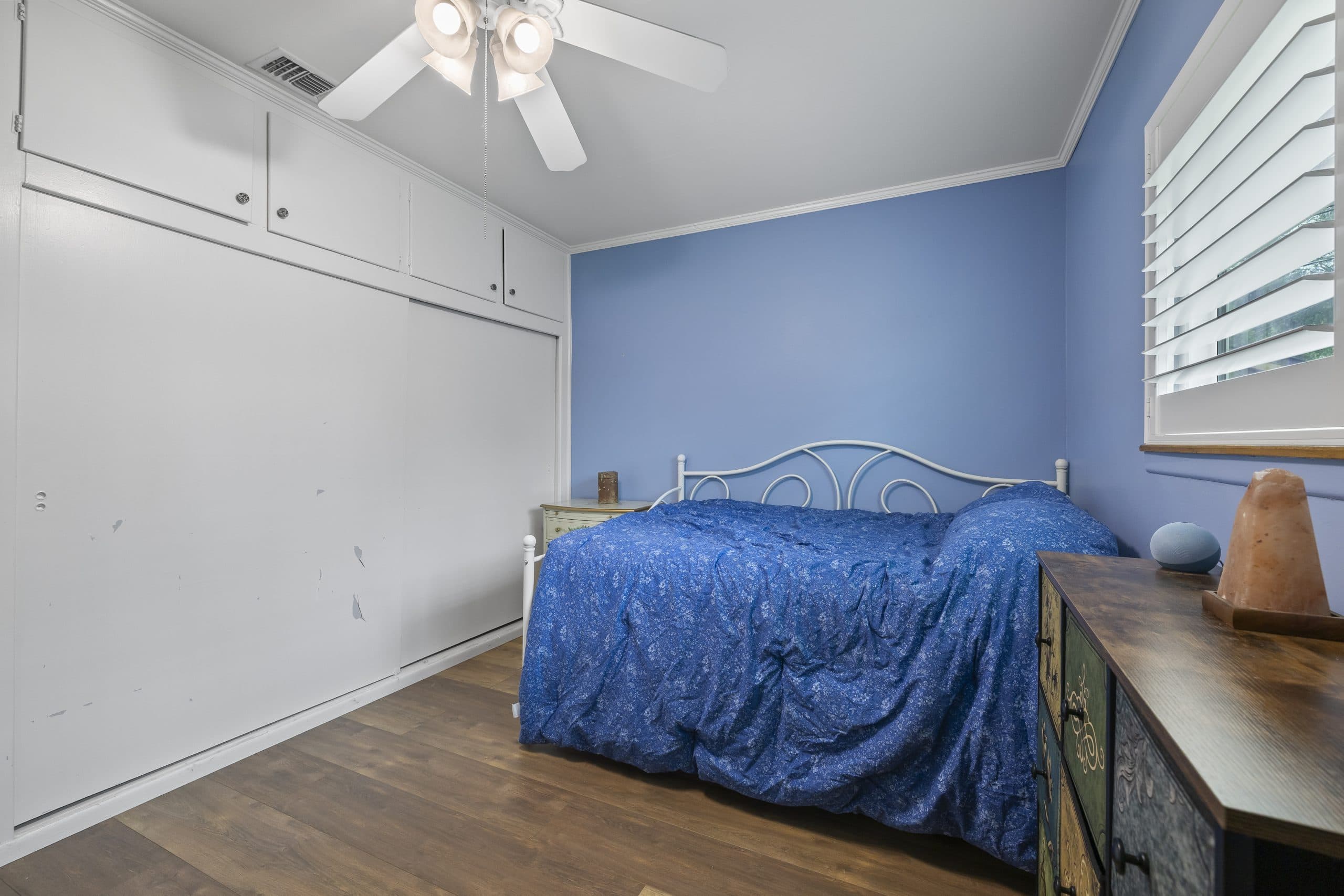
- Rooms read at their true size. This is counterintuitive and it is consistently true. Empty rooms look smaller than furnished ones because there is no scale reference, and buyers habitually misjudge whether their furniture will fit.
- Flaws are louder in an empty house. Every scuff, every patch, every worn floor board, every sound. There is nothing else to look at.
- The house feels like a home. Warmth is not a marketing abstraction. A lived-in house with good light and honest tidiness invites people to picture living there.
- No double carrying cost. You are not paying for two places at once, which for many sellers settles the question before any of the presentation arguments are heard.
Insurance: the item nearly everyone misses
This one deserves its own heading because it is where an ordinary decision quietly becomes an expensive one. Standard homeowners policies commonly restrict or exclude coverage once a property has been unoccupied or vacant for a stated period, and the definitions of unoccupied and vacant are not the same in every policy.
Do not assume you are covered because you are still paying the premium. Call your carrier before the moving truck arrives, tell them the house will be empty and that it is for sale, and ask what your policy actually says and what endorsement, if any, they want in place. Vandalism, water damage from a failed supply line, and theft are exactly the losses that vacancy provisions tend to touch, and they are exactly the losses an empty house is most exposed to.
Security and the practical care of an empty house
An unoccupied home on a quiet Claremont street is not a high-crime problem, but it is an opportunity for the opportunistic. A few sensible measures:
- Keep the landscaping maintained on the same schedule as when you lived there. Nothing announces a vacant house like a lawn that has stopped being mowed.
- Have mail and packages properly forwarded or held rather than accumulating.
- Put interior lighting on timers, and make sure exterior lighting works.
- Ask a neighbor to keep an eye out, and give them a number to call.
- Have someone walk the property regularly. A slow leak in an occupied house is a bad afternoon; in an empty one it can run for weeks.
Leave the utilities on. Water, gas, and electricity all need to be live for inspections, for the appraisal, and for buyers to test what they will want to test. Shutting them off to save money on a short listing period reliably costs more than it saves in delayed inspections and re-scheduled appointments.
If you sell empty, deal with the emptiness
An empty house is not neutral; it is a specific look, and it can be a cold one. The two common responses are staging the property, which addresses scale and warmth directly, and virtual staging on the photographs, which addresses the online impression but not the in-person one.
If you use virtual staging, it must be disclosed as virtually staged in the listing, plainly and every time. A buyer who arrives expecting the furnished room in the photograph and finds bare walls does not think the room is smaller than they hoped; they think they were misled, and that colors everything they see afterward.
Whatever you do, an empty house should be immaculately clean and freshly touched up. There is nowhere for dirt to hide.
If you sell lived-in, deal with the access
The occupied path costs you in showings, and the cost is manageable only if you plan for it. A house that is hard to see gets shown less, gets fewer offers, and leaves the seller concluding there was no demand when the truth is there was no opportunity. The working system for handling that, including notice windows, pets, and keeping a home presentable over weeks rather than days, is set out in showings without the stress.
The other half of living in a listed house is editing it. Occupied does not mean full. Depersonalize, thin out the furniture until rooms breathe, clear every horizontal surface, and get the excess into storage rather than into the garage where buyers will see all of it. Most sellers are astonished how much better their own house looks with a third of its contents removed.
The middle paths
The decision is not binary, and the practical answer is often somewhere between.
- Partial move-out. Take out the excess furniture, the wardrobe you do not need this season, and everything in the garage, then keep living there with what remains. This captures most of the presentation benefit without the vacancy exposure.
- Move out late. Stay through the marketing period and the offer, and move once you are in escrow and past the early contingencies. The house is occupied when it needs to feel warm and empty when the buyer walks it before closing.
- Rent-back. Sell, close, and stay for an agreed period afterward as a tenant of the new owner. It is a common arrangement, it is negotiated as part of the transaction, and it needs to be papered properly rather than agreed on a handshake. Raise it early, because it is a term the buyer weighs alongside price.
When the answer is obvious
A few situations settle themselves. A property that needs significant work before listing is almost always better empty, because the work goes faster and shows better. An owner selling from out of the area is dealing with a vacant house regardless and should plan for the insurance and maintenance items above. A tenant-occupied property is its own category entirely, with notice requirements and access rules that override presentation preferences, and that is covered in selling a Claremont rental.
And a seller who cannot carry two housing costs at once has already answered the question. That is not a compromise; it is a constraint, and the job is to sell well within it rather than to pretend it is not there.
Making the call
Ask three questions in order. What does this specific house need in order to show well? What can the household actually sustain for several weeks? And what does the insurance carrier say about the empty version? The answers usually converge, and where they do not, the presentation argument should give way to the practical one, because a plan nobody can keep to fails in week two.
Whatever you decide, decide it before the photographs, not after. The opening stretch of a listing does most of the work, as your first ten days on the Claremont market describes, and it is a poor moment to be moving furniture.
More seller guides are collected at the Claremont selling hub. Anthony Grynchal has been licensed in California since November 2009.
Frequently asked questions
Does an empty house sell for less in Claremont?
Not automatically, but an empty house presents differently. Rooms read smaller without a scale reference and flaws are more noticeable because there is nothing else to look at. Against that, a vacant home is far easier to show and to prepare. The usual answer is to sell empty only if the house is genuinely clean, touched up, and either staged or photographed with care.
Do I need to tell my insurer that my Claremont home is vacant?
Yes, and call before you move out rather than after. Standard homeowners policies commonly restrict or exclude coverage once a property has been unoccupied or vacant for a stated period, and the definitions vary between policies. Ask your carrier what your policy says and whether they want an endorsement in place. Vandalism, theft, and water damage are precisely the exposures those provisions tend to affect.
Should I shut off the utilities while my house is on the market?
No. Water, gas, and electricity need to be live for inspections, for the appraisal, and for buyers to test what they will want to test. Turning them off to save a small amount during a short listing period usually costs more in delays and rescheduled appointments than it ever saves.
Is virtual staging allowed when selling a vacant home?
It is used routinely, and it must be disclosed as virtually staged in the listing every time it appears. Undisclosed virtual staging damages trust the moment a buyer walks into a bare room expecting the photograph, and that reaction colors the entire showing. It also does nothing for the in-person impression, so it is a supplement to preparation rather than a replacement for it.
Can I stay in the house after it sells?
Sometimes, through a rent-back arrangement in which you remain for an agreed period after closing as a tenant of the new owner. It is common, it is negotiated as part of the transaction rather than agreed informally, and it should be documented properly. Raise it early, because the buyer weighs possession timing alongside price when deciding what to offer.

Written by
Anthony Grynchal
Anthony Grynchal is a California real estate professional with eXp Realty, licensed since November 2009 (California DRE# 01873626), and the Designated Local Expert™ for Claremont — where he has lived for more than 33 years.
More about AnthonyPublished · Updated