Most curb appeal advice was written for a subdivision with a young tree in the front yard and full sun on the facade at noon. Claremont is not that place. Large parts of this city sit under a mature canopy that is one of the reasons people move here, and that canopy changes the whole problem. A shaded street is beautiful in person and unforgiving in a photograph, and the gap between those two facts is where a lot of listing presentation goes wrong.
This is a preparation piece, not a renovation piece. The whole arc from preparation through closing sits in the guide to selling a home in Claremont; what follows is only the first fifteen seconds of it.
The first impression is not the house
A buyer forms an opinion before they reach the front step, and almost none of that opinion is architectural. It is made of light, tidiness, and whether the approach feels cared for. Buyers are not consciously grading your hedge. They are deciding, quickly and mostly without words, whether this is a house that has been looked after.
That is why the highest-value work out front is almost never the expensive work. Paint, pruning, cleaning, and repair read as care. A new water feature reads as spending.
The canopy problem, and what to do about it
Shade is an asset in July and a liability in a photograph. On a heavily canopied street the front of the house can sit in flat, blue-grey light most of the day while the sky behind it blows out to white. The house looks dim and slightly grim, and buyers scrolling listings register that as tired.
Some things that genuinely help:
- Lift the canopy where it is yours to lift. Raising the lowest limbs on a private tree opens the sight line to the front elevation without touching the tree's character. Street trees in the parkway are a different matter, discussed below.
- Cut back what hides the entry. Overgrown foundation shrubs swallow windows and doorways. Buyers read a hidden front door as a dark house.
- Shoot at the right time. This is a conversation with your photographer, not a landscaping job. A shaded elevation often photographs best in even overcast light or in the window when sun rakes down the street rather than straight at the facade.
- Add real light at the door. Working fixtures, matched bulbs, warm temperature, all of them on for evening showings. A dark porch at six o'clock costs you more than most sellers believe.
The parkway strip almost nobody addresses
The planted strip between sidewalk and curb is the first thing a buyer walks across, and it is the piece sellers most often ignore because they are unsure whether it is theirs. In many California cities the parkway and its street trees are subject to municipal control even where the adjacent owner is expected to maintain the ground cover, and pruning or removing a street tree can require city involvement.
Do not guess at this. Before anyone touches a street tree, check the current rules with the City of Claremont directly. What you can almost always do without a question is the unglamorous half: clear the debris, keep the strip watered or planted, edge the sidewalk, and remove the weeds that have colonized the seam where the concrete meets the asphalt.
Hardscape, because Claremont buyers look down
Older housing stock means older concrete. Lifted walkway slabs, spalled driveway edges, cracked steps, and a settled porch are the sort of thing a buyer photographs on their phone and hands to their inspector. Most of it is repairable rather than replaceable, and the repair reads as maintenance while the crack reads as deferral.
The same logic applies to gates, fence posts at the driveway line, and any railing a hand actually touches on the way to the door. Loose railings are a safety item, they will surface in inspection anyway, and they are cheap to make solid.
Water-wise front yards, done deliberately
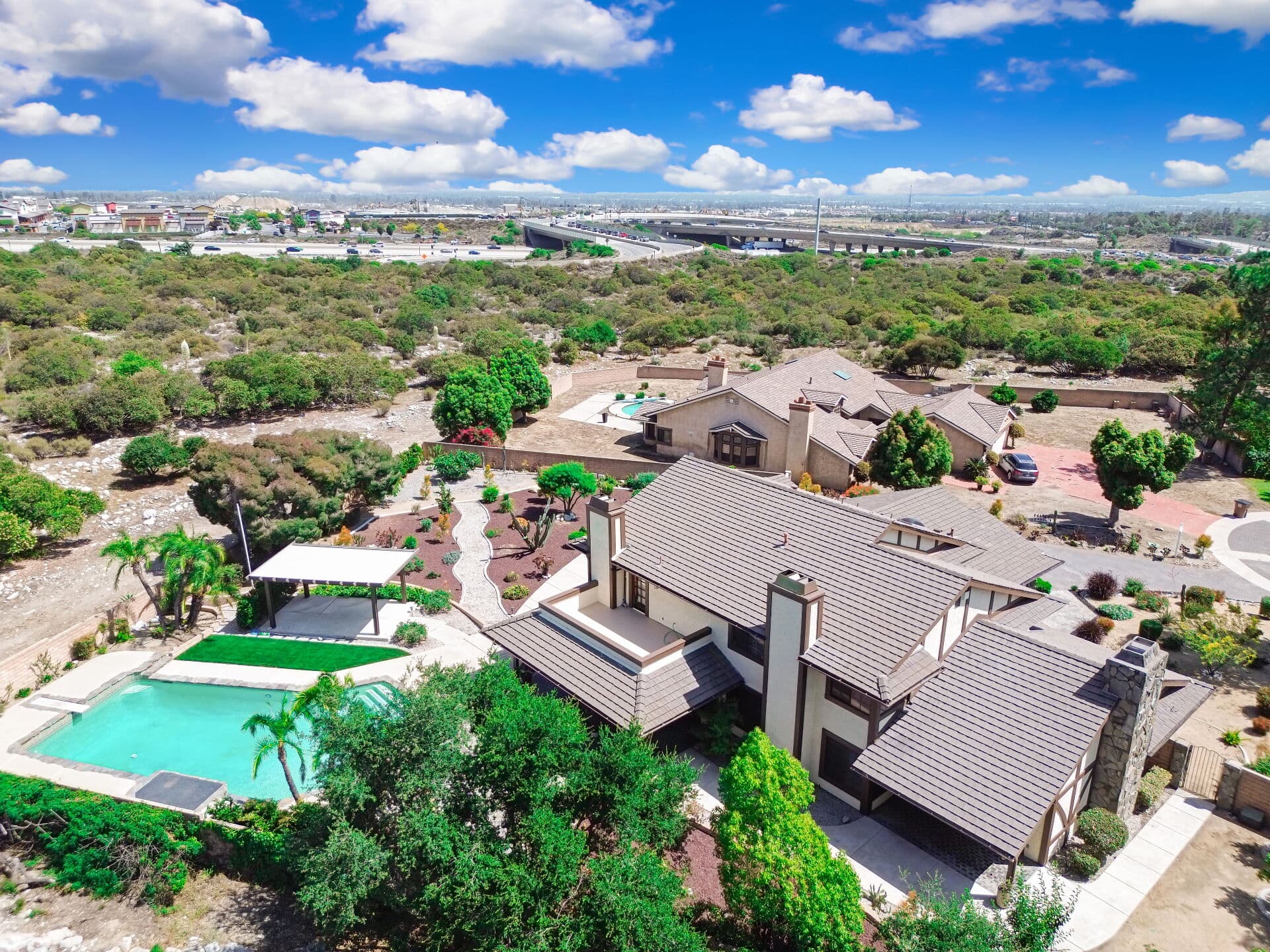
Drought-adapted front landscaping is now normal here and buyers do not penalize it. What buyers penalize is the halfway version: a lawn that died and was never replaced, decomposed granite spreading into the gutter, a drip line snaking across bare dirt. A deliberate low-water design with defined edges, healthy plants, and clean mulch presents better than a struggling lawn. An abandoned lawn presents worse than either.
If your irrigation was shut off during a dry stretch and the yard went with it, that is a preparation item to solve before photos, not a discount to absorb later. The same principle governs the interior work described in the guide to selling an outdated Claremont home on the open market: buyers forgive age far more readily than they forgive neglect.
The garage door question on ranch stock
On a lot of Claremont's mid-century single-story housing, the garage door is the single largest plane facing the street. If it is a dented, chalky, mismatched panel, it dominates the elevation whatever else you do. Painting it to match or complement the body color, or replacing a genuinely failed door, changes the whole front more than any planting will.
Same for the front door. It is small, it is the focal point, and refinishing it is one of the few visual moves that costs little and photographs immediately.
The small list that punches above its weight
- House numbers that are legible from the street and not painted over.
- A clean, undamaged mailbox on its own post if you have one.
- Windows and screens washed, and torn screens removed rather than left torn.
- Cobwebs cleared from the eaves and porch corners.
- Trash and recycling containers out of sight for every showing, without exception.
- Cars off the driveway and away from the front of the house for photography and for showings.
- Hose reeled, tools stored, seasonal decorations put away.
None of that is glamorous, all of it is visible, and the whole list can usually be done over a weekend.
What not to spend on
Be skeptical of anything sold with a promised return. Nobody can tell you what a particular front-yard project will recover in a particular Claremont sale, because the honest answer depends on the house, the street, and the buyers touring that month. Treat any specific payback figure you are quoted as marketing.
The pattern that holds up is simpler: repair before you replace, clean before you buy, and spend on what a buyer's eye lands on first. Wholesale front-yard reconstruction in the weeks before listing is where sellers most often overspend.
Keeping it up once you are live
Curb appeal is not an event. It has to survive several weeks of showings, which means a maintenance rhythm during the listing period rather than one heroic weekend before the photographs. That is the same discipline described in your first ten days on the Claremont market, when the largest share of serious buyers see the property for the first time and the front of the house is doing its hardest work.
Get the approach right and the rest of the showing starts from a good place. Get it wrong and you spend the whole tour recovering.
If you want a specific read on your own street and elevation, that is a walk-and-look conversation rather than a checklist. Start at the Claremont selling guides, and pair this with the piece on showings without the stress so the outside and the inside are working together. Anthony Grynchal has been licensed in California since November 2009.
Frequently asked questions
Can I prune or remove the street tree in front of my Claremont home before listing?
Do not assume you can. Street trees in the parkway strip are commonly subject to municipal control even where the adjacent owner maintains the ground around them, and pruning or removal can require city involvement. Check the current rules with the City of Claremont before any work. Clearing debris, weeding, edging, and keeping the strip presentable is a different matter and is almost always yours to do.
Does a shaded front yard hurt my listing photos?
It can, if nobody plans for it. A canopied elevation often sits in flat light while the sky behind blows out, which makes the house read dark online. The fixes are lifting private tree limbs, cutting back shrubs that hide the entry, and shooting at the time of day your photographer recommends for that specific street rather than at a default midday appointment.
Should I replace my dead lawn before selling?
Replace it or design it, but do not leave it half-finished. A deliberate low-water front yard with clean edges and healthy plants presents well to Claremont buyers. An abandoned lawn, or bare dirt with an exposed drip line, reads as neglect and follows you into every showing and every photograph.
What curb appeal work gives the best return?
Nobody can honestly quote you a return figure for a specific project, because it depends on the house, the street, and the buyers touring that month. The pattern that holds is to repair before replacing, clean before buying, and spend where a buyer's eye lands first: the entry, the front door, the garage door plane, lighting, and the walking approach.

Written by
Anthony Grynchal
Anthony Grynchal is a California real estate professional with eXp Realty, licensed since November 2009 (California DRE# 01873626), and the Designated Local Expert™ for Claremont — where he has lived for more than 33 years.
More about AnthonyPublished · Updated