
Once a Claremont homeowner decides to stay — the decision the aging-in-place guide walks through — the question becomes concrete: what actually gets changed, in what order, and what is each change really buying? This article ranks the work by what it accomplishes. Deliberately, you will find no price list here: modification costs swing widely with the house, the contractor, and the year, and a page that quoted figures would mislead someone the month it aged. What holds steady is the hierarchy — which changes are simple, which are real projects, and where safety value concentrates. Get bids from licensed contractors for your specific house; use this page to know what to ask for. It sits within the broader senior housing guide.
The simple tier: hardware, light, and grip
The highest-value tier is also the least dramatic — work measured in an afternoon, not a permit. Lever door handles replacing round knobs. Grab bars, properly anchored into studs, at the shower, the tub, the toilet. Brighter bulbs and added fixtures in hallways and stairways, with switches reachable at both ends. Non-slip treatment for the slick spots — the polished concrete step, the tile landing. Securing or retiring the rugs that wander. Raised toilet seats, handheld shower heads, a sturdy bench in the shower. None of this requires design taste or disruption, and together it addresses the single most common household hazard for older adults: the fall. If a family does nothing else this year, this tier is the year's work.
The middle tier: the bathroom, honestly
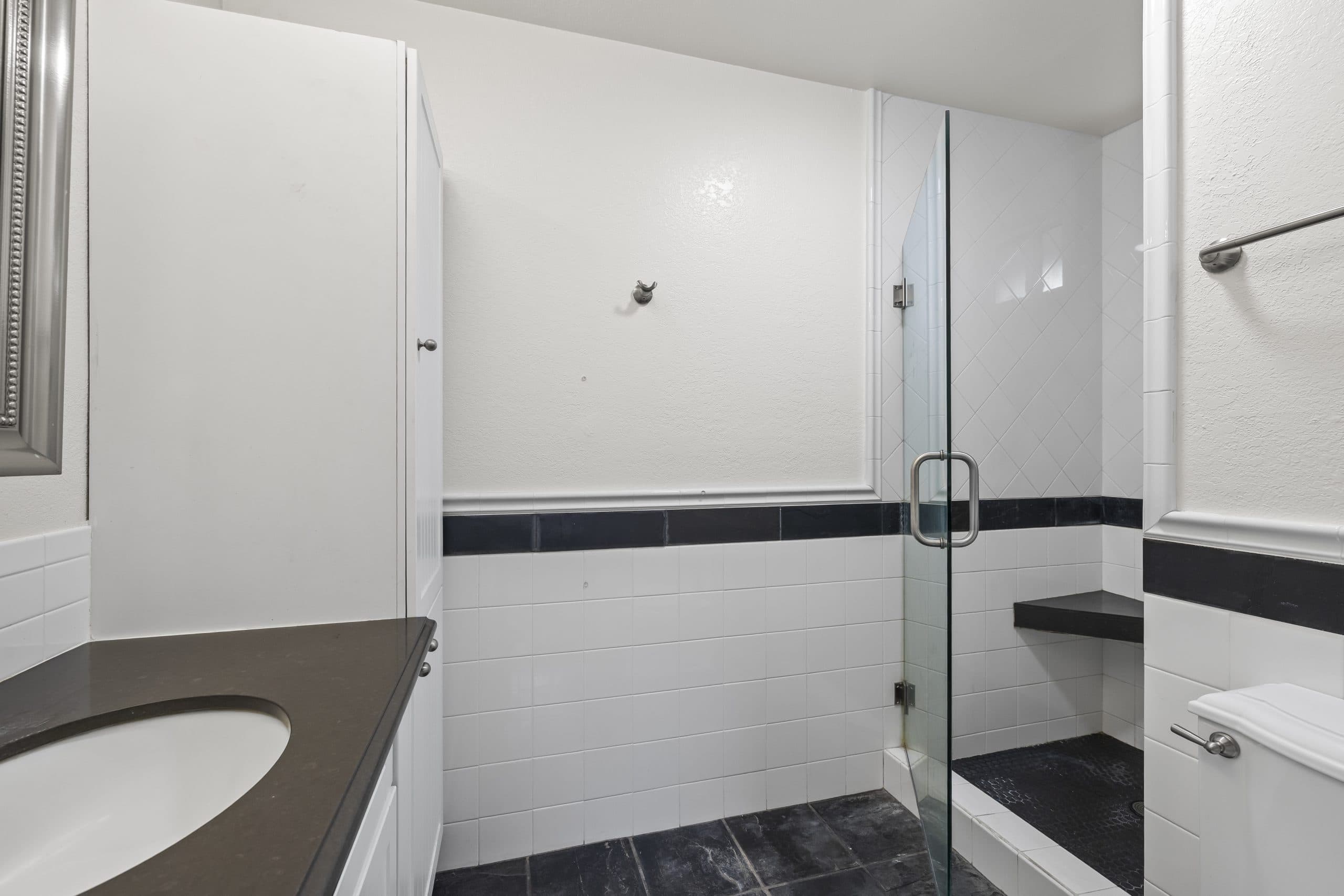
The bathroom is where aging-in-place budgets go to work, because it is where the highest-stakes daily maneuvering happens. The signature project is converting a step-over tub to a walk-in or roll-in shower — ideally curbless, with a built-in bench, a handheld head, and blocking behind the walls for grab bars wherever they might one day be wanted. Claremont's mid-century bathrooms are often compact, which makes layout creativity (and a contractor who has done this exact conversion before) worth seeking out. While the walls are open, it costs comparatively little to think ahead: reinforcement, moisture-proof lighting, a wider doorway if the framing allows. A well-executed bathroom conversion is also, not incidentally, one of the modifications that reads as an upgrade rather than a concession — a point the home value guide's logic supports: buyers of every age like walk-in showers.
The structural tier: doorways, ramps, and the ground floor
The projects that involve framing are fewer and should be sequenced thoughtfully. Widening key doorways for mobility equipment. A ramped or step-free entry — often achievable gracefully in Claremont's deep front yards, where a gentle grade can replace steps without announcing itself. And in two-story homes, the big one: establishing a full ground-floor living suite, whether by converting an existing room and bath or by an addition. This is the tier where the conversation should also touch the alternative structure entirely — Claremont's lot sizes make an ADU a genuine aging-in-place instrument, whether as ground-level living for the owner while family occupies the main house, or as caregiver quarters later. Structural work needs permits and a licensed contractor; unpermitted shortcuts resurface at sale time, as the town's transaction history keeps proving.
Sequencing the work: the honest order
- Do the simple tier now, regardless of health — it is cheap insurance and never regretted.
- Audit with a professional: an occupational therapist's home assessment (ask your physician or the city's senior services for current referral paths) turns generic lists into a plan for your body and your house.
- Do the bathroom while it is optional — chosen calmly, it is a renovation; deferred until required, it is a crisis purchase.
- Price the structural tier before you need it, even if you never pull the trigger — knowing the real number for the ground-floor suite makes every later decision, including the downsizing comparison and the community-living option, honest.
Paying for it sensibly
Approaches vary as much as houses do: savings, home equity structures, and family cost-sharing are the common paths, and some assistance programs for home safety modifications exist in various eras and jurisdictions — what is currently available is exactly the kind of moving target to verify through the city's senior services and your county's aging resources rather than any static page. Whatever the funding, the discipline is the same as any renovation: licensed and insured contractors, written scopes, permits where required, and references from jobs like yours. The result, done right, is the least visible renovation you will ever commission — a house that simply keeps working, year after year, for the person who loves it most.
Anthony Grynchal has been licensed in California since November 2009. If you are weighing modification costs against a move, that comparison — with real bids on one side and the market's honest answer on the other — is a conversation worth having early.
Frequently asked questions
Which senior home modifications matter most?
The simple tier first: properly anchored grab bars, lever handles, better lighting, and non-slip fixes — together they address fall risk, the highest-stakes hazard. The bathroom conversion (tub to walk-in shower) is the signature bigger project; structural work like ramps and ground-floor suites comes last.
How much do aging-in-place modifications cost in Claremont?
Honestly: it depends on the house, the scope, and the year, and quoting figures here would mislead you. Get bids from licensed contractors for your specific home; the durable guidance is the priority order — simple hardware first, the bathroom next, structural work priced before it is needed.
Do walk-in shower conversions hurt resale value?
Generally no — a well-executed curbless shower reads as an upgrade to buyers of every age. It is one of the few aging-in-place projects that serves the owner now and the sale later.
Who can assess what my home actually needs?
An occupational therapist's home assessment is the gold standard — it matches modifications to your specific body and house rather than a generic checklist. Ask your physician or the city's senior services for current referral options.

Written by
Anthony Grynchal
Anthony Grynchal is a California real estate professional with eXp Realty, licensed since November 2009 (California DRE# 01873626), and the Designated Local Expert™ for Claremont — where he has lived for more than 33 years.
More about AnthonyPublished · Updated