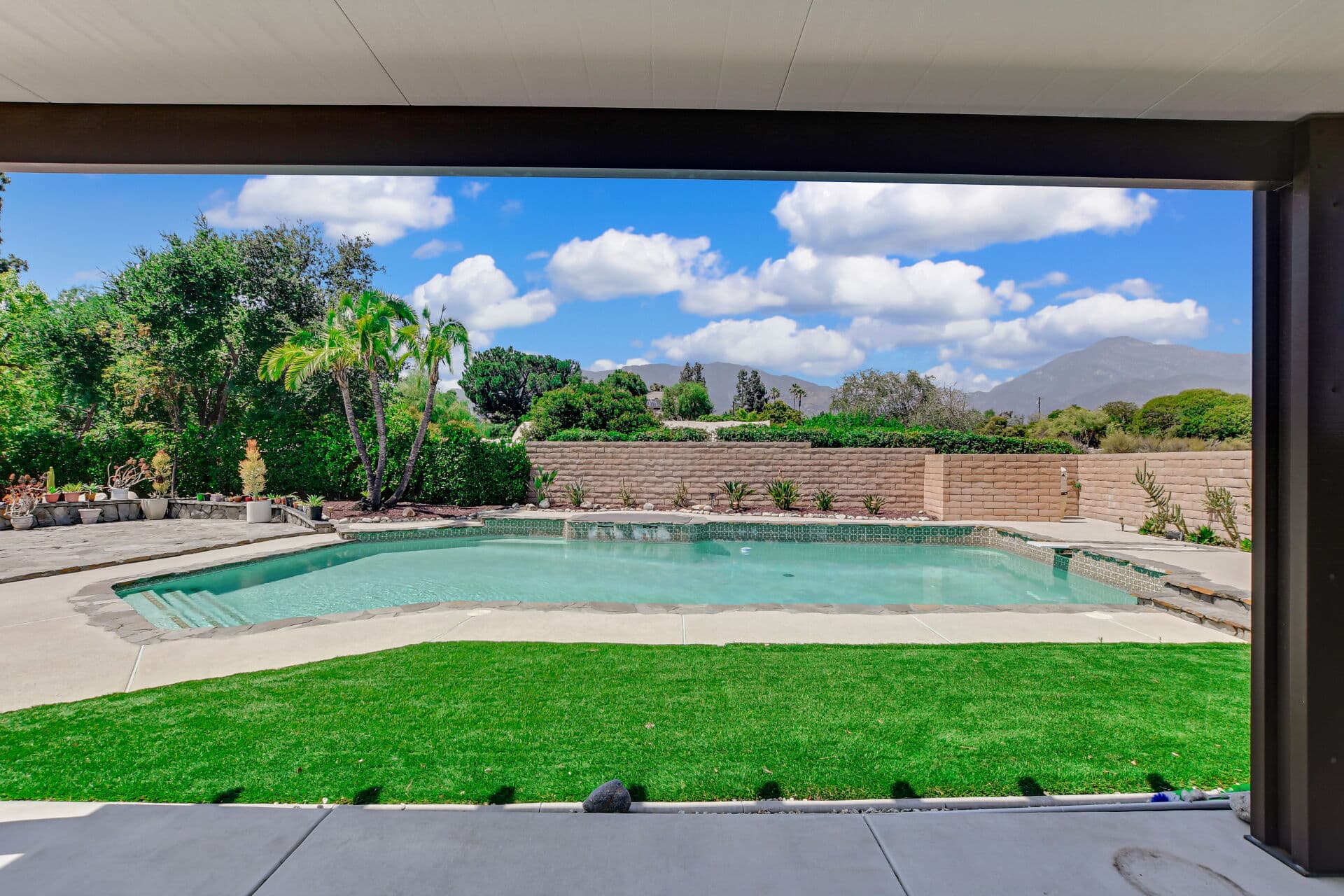
A view is a real asset and a fragile one. It can be permanent, it can be conditional, and it can disappear because a neighbor planted something or a lot two doors down got developed. Buyers routinely pay for a view without ever asking which kind they are getting.
Here is how views work in this city, where they occur, and what to verify before you treat one as a reason to write.
The geography, plainly
Claremont sits at the base of the San Gabriel Mountains. The land generally rises toward the north end of the city and falls southward. That single fact produces almost everything else about views here.
North-facing views of the mountains improve as you move up. South-facing views toward the valley and the city lights improve for the same reason. And elevation is not the only variable. A house one block lower with a clear sightline can have a better view than a house one block higher with a mature tree row across the street.
Where views actually occur
The hillside above the city. Claraboya is the enclave most people mean when they say view property in Claremont. Homes here trade substantially on the outlook, mountains behind and valley lights in front, and the product is genuinely different from the rest of the city. So is the due diligence, which is why hillside buyers should treat this as a distinct category rather than a nicer version of a normal purchase.
North Claremont generally. The tracts along the northern edge, near the foothills and the trail system, produce mountain views from streets, yards and upper-floor windows without necessarily being hillside lots. Towne Ranch and Blaisdell Ranch each have their own character and their own loyalists.
Individual lots anywhere. The city's canopy is dense, which means views in the flatter neighborhoods are usually a function of one specific lot rather than the whole street. A corner lot, a wider street, a gap in the tree line, a second story added at the right moment. These exist and they are not predictable from a map.
The question that matters: is the view protected?
This is where buyers get hurt.
In general, California does not give a property owner an automatic right to a view across someone else's land. Protection, where it exists, comes from something specific and recorded: a view easement, a covenant, a height restriction in a homeowners association's governing documents, or a local ordinance.
So the practical test is not whether the view is beautiful. It is whether anything in writing prevents it from changing.
Work through this before you rely on a view:
- Read the preliminary title report. Recorded easements and covenants show up there, and it is the single most under-read document in a residential purchase. The approach is in how to read a preliminary title report.
- Read the homeowners association documents if there is one. Height limits, landscaping rules and architectural review provisions are often where any real view protection lives.
- Look at what sits between you and the view. Not just today. A young tree is a future obstruction. A vacant or under-built parcel is a future structure. A single-story neighbor is a future two-story.
- Ask the city about the parcels in your sightline. Zoning and height limits are public information and the City of Claremont is the right source, not the listing.
If nothing in writing protects it, the view is a pleasure rather than a guarantee. That is fine. Just price it that way.
Hillside due diligence
Elevation buys the view and brings its own list. If you are buying on a slope, treat these as standard rather than optional.
Drainage and grading. Water moves downhill and it will find whatever path the grading gives it. Look at where the lot sheds water, where the neighbor above sheds water, and whether either path runs at the foundation. Look for silt lines, staining and patched hardscape.
Retaining walls. Look at every one on the property. Ask how old they are, whether they were permitted, and whether anyone has engineering documentation. A retaining wall is a structural element, not landscaping.
Slope stability and soils. A general home inspector is not a geotechnical engineer. On a meaningful slope, ask your inspector directly whether they recommend a specialist, and take the recommendation seriously. This is exactly the scenario the material in Claremont home inspections is about: the general report is a map of where to look harder.
Access and driveways. Steep driveways, tight turns and limited street parking are daily facts. Drive it in the car you actually own.
Insurance. Proximity to the foothills can affect availability and terms for hazard coverage. Get quotes early rather than late, and read earthquake insurance for Claremont homes for the related question of what standard policies do and do not cover.
How to shop for a view honestly
Photographs lie about views constantly, and not always on purpose. A wide lens exaggerates. A clear winter morning is not an August afternoon. A twilight shot of city lights is a completely different image than the same window at noon.
So go twice, at different hours, and stand where you would actually stand. In the kitchen. On the patio. At the primary bedroom window. A view you can only see from one corner of one room is worth less than one you live inside.
And separate the view from the house. A great outlook does not fix a bad floor plan, a failing system or a drainage problem. It also does not justify shortening your due diligence, which on a hillside is the last thing you want to shorten.
For the broader sequence, start at the Claremont home buying hub. If you are still deciding which part of town fits, the complete guide to buying a house in Claremont lays out the neighborhoods side by side. Anthony Grynchal has been licensed in California since November 2009.
Frequently asked questions
Is a mountain view in Claremont legally protected?
Usually not by itself. California generally does not grant an automatic right to a view across another owner's land. Protection comes from something recorded or adopted, such as a view easement, a covenant, an association height restriction or a local ordinance.
Which parts of Claremont have mountain views?
The hillside enclave of Claraboya and the north Claremont tracts near the foothills are where views are most consistent. Individual lots elsewhere can have them too, but in the flatter neighborhoods a view is usually a property-by-property fact rather than a street-wide one.
What extra due diligence does a hillside home need?
Drainage and grading, the condition and permit history of every retaining wall, a direct conversation with your inspector about whether a soils or geotechnical specialist is warranted, driveway access, and early insurance quotes.
How do I check whether something could be built in my sightline?
Zoning and height limits are public information. Ask the City of Claremont about the parcels between you and the view, and read the preliminary title report and any association documents for recorded restrictions.

Written by
Anthony Grynchal
Anthony Grynchal is a California real estate professional with eXp Realty, licensed since November 2009 (California DRE# 01873626), and the Designated Local Expert™ for Claremont — where he has lived for more than 33 years.
More about AnthonyPublished · Updated