A showing is not an inspection. You are not there to diagnose anything. You are there to decide whether this house earns a licensed inspector's time and your inspection period.
What follows is the walk I do, in the order I do it, tuned to what Claremont's housing stock and terrain actually produce. It is not a national checklist with the city name swapped in.
Before you go inside
Stand at the curb for a full minute before you touch the door. Most of what you will learn about a house is visible from the sidewalk, and it is the part buyers skip because the kitchen is waiting.
- Which way does the lot face. Afternoon sun on a west-facing living room is a summer cooling bill and a furniture-fading problem. Note it and come back at a different hour.
- Where does water go. Claremont slopes from the foothills southward. Look at where the ground falls relative to the foundation and whether the yard drains away from the house or toward it. Look for staining, silt lines and patched hardscape.
- The trees. Claremont's canopy is one of the reasons people move here and one of the reasons some houses cost more to own. Look up. A mature tree over the roof is shade in August and roof debris every year, and a street tree in the parkway usually belongs to the city rather than to you.
- Roof line and gutters. From the ground you can see sag, patchwork, mismatched tile or shingle, and whether downspouts discharge onto pavement or into planting.
- The neighbors' setback and grade. If the property next door sits higher, its runoff and its second-story windows both point at you.
- Noise. Stop talking and listen. Foothill and Indian Hill carry. So does the rail corridor. Neither is a defect, but both are facts you want to discover now rather than on a Tuesday morning in your own bed.
The envelope: age tells you what to expect
Claremont is essentially built out, so nearly everything you tour is a resale, and the construction era shapes the question list.
Pre-war and early Village-adjacent homes. Character, smaller rooms, original windows, and systems that may have been updated once or several times. Ask what was replaced and when. Look at the panel. Look for evidence of foundation work.
Mid-century tract homes. The bulk of the city's inventory. Slab construction, low-slope or gently pitched roofs, single-pane windows unless replaced, and original galvanized or copper supply lines in some. Check whether the electrical panel has been upgraded, because a lot of what buyers later want to add depends on it.
Later additions and permitted work. Almost every older Claremont house has been changed. The question is whether the changes were permitted. You cannot resolve that at a showing, but you can note anything that looks added and ask the listing agent whether permits exist. Unpermitted work is not automatically a disaster and it is always a topic.
Inside, room by room
Kitchen and baths
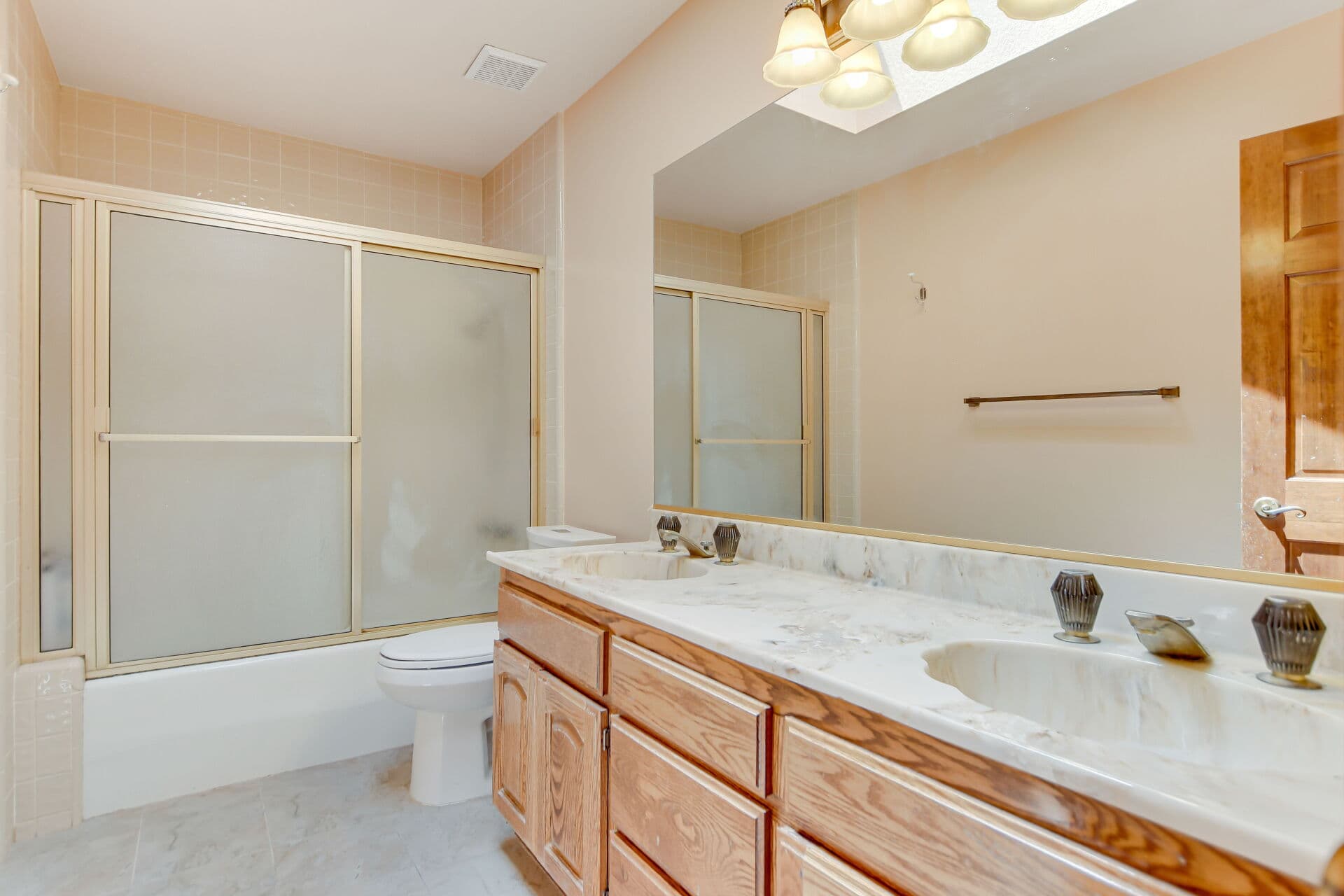
Open the cabinet under every sink. Feel the back of the cabinet floor. Look for a hard water line, a rust ring, a repaired trap, a slow drip. Run the faucets and watch how quickly hot water arrives.
In bathrooms, look at the grout at the tub-to-tile joint and at the flooring immediately in front of the toilet. Soft flooring there is the single most common quiet finding in older homes.
Windows and doors
Open several. Close them. A window that sticks in one corner of a house and nowhere else is worth a note. So is a door that will not latch without a shove.
Floors and walls
Walk the perimeter of each room rather than through the middle. You feel slope at the edges. Look at the corners where walls meet ceilings for cracking, and look at where an addition meets the original structure.
Systems
Find the furnace and the water heater and read the label. Manufacturers put a date code on it. Look at the electrical panel and photograph it. Look at where the main water shutoff is and whether you could reach it in a hurry. Note whether there is a gas shutoff wrench at the meter, which matters in this part of California and connects to the reasoning in earthquake insurance for Claremont homes.
Attic and garage
Look at the garage ceiling for staining. Look at the wall the garage shares with the house. In the attic access, if you can safely see it, look for daylight, for rodent evidence, and for whether insulation looks disturbed by prior work.
The lot, the pool and the extras
Walk the whole fence line. Look at where the fence sits relative to the property line as you understand it, and note any structure, planting or paving that appears to cross it. Encroachments and easements are a title question, and the reasoning is in how to read a preliminary title report.
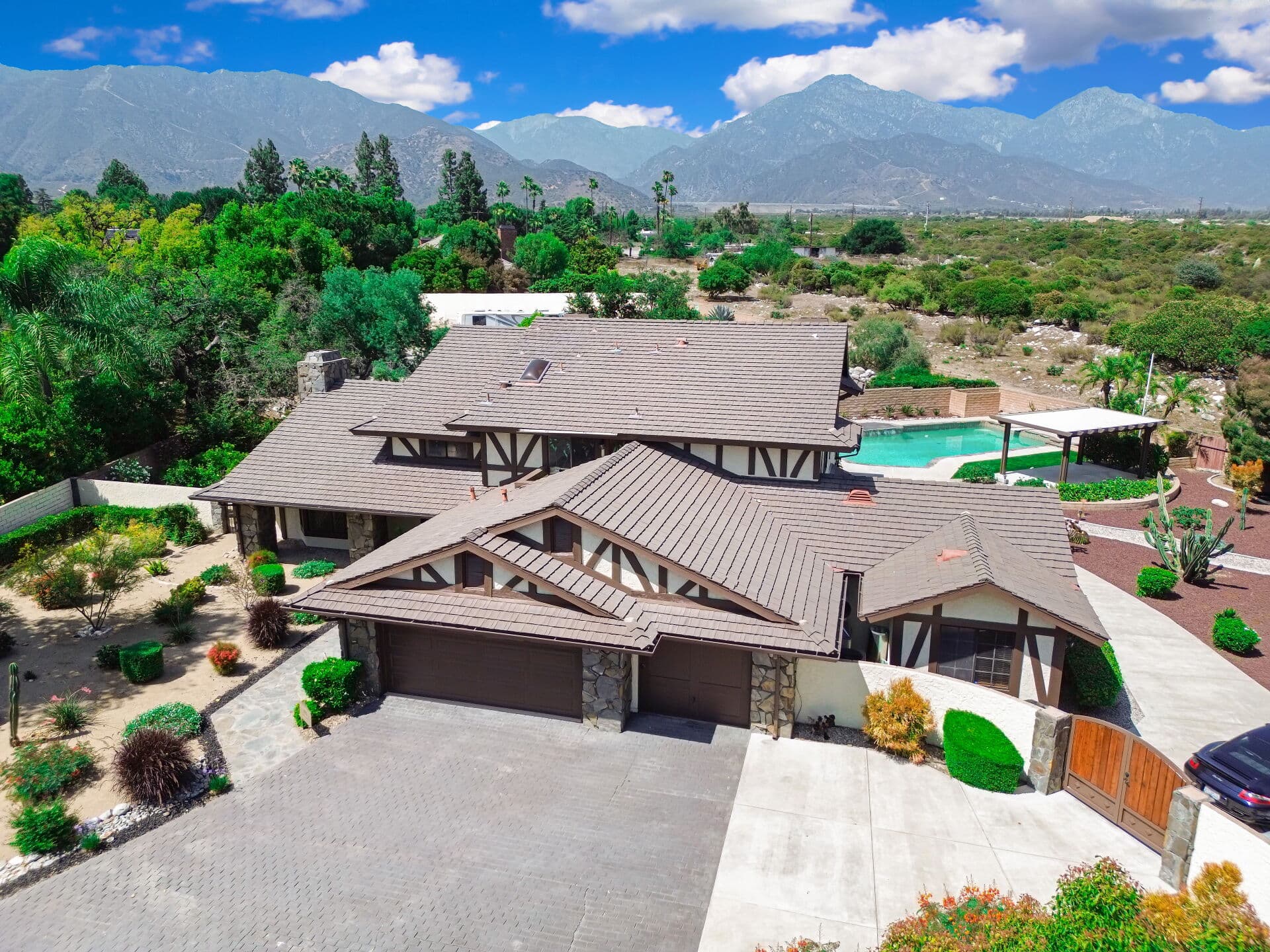
If there is a pool, it changes your due diligence materially. Equipment age, surface condition, decking cracks and safety compliance all belong on a separate list, covered in buying a Claremont home with a pool.
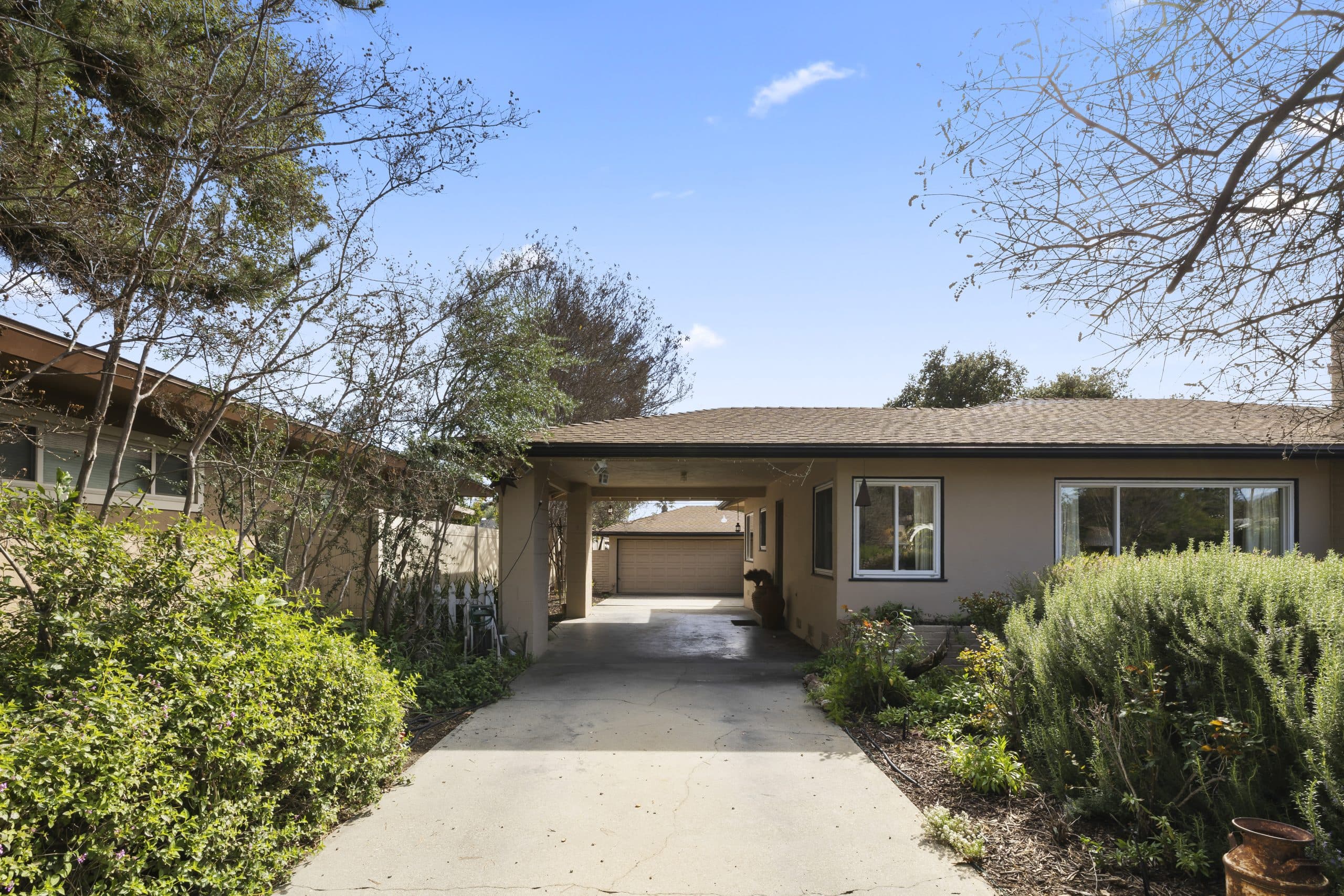
If there is a detached structure, ask what it is legally. A converted garage, a studio, a permitted accessory dwelling unit and an unpermitted room addition all look similar from the yard and are entirely different things on paper.
How to behave while you do all this
Be courteous, follow the host's instructions, and keep your commentary to yourself until you are back in the car. What you say inside the house can travel back to the seller, and open house conduct has its own rules covered in Claremont open house etiquette.
Photograph everything you flagged. Not the staging, the findings. Panels, labels, stains, cracks, the drainage at the side yard. You will not remember which house had which problem after your fourth Saturday.
What this checklist is for
None of it replaces a licensed inspector, and none of it is a basis for a conclusion. Its only job is to help you decide which houses deserve a real inspection and which questions to put in front of the professionals. When you do get to that stage, the reports and how to respond to them are covered in Claremont home inspections.
Start with the Claremont home buying hub for the wider sequence. Anthony Grynchal has been licensed in California since November 2009.
Frequently asked questions
How long should a first showing take?
Long enough to walk the exterior, the perimeter of every room, the garage and the fence line. If you leave without having looked under a sink or read the label on the water heater, you toured the staging rather than the house.
Can I open cabinets and closets at a showing?
Cabinets, closets and appliance doors are generally reasonable to open when you are viewing a home for sale. Drawers, medicine cabinets and anything marked private are not. When in doubt, ask the host agent first.
Does this checklist replace a home inspection?
No. Nothing you observe at a showing is a diagnosis. The checklist exists to decide which homes earn a licensed inspector's time and which questions to hand that inspector when you get there.
What Claremont-specific things do buyers miss most?
Drainage on a lot that slopes down from the foothills, mature trees over the roof, unpermitted additions on older tract homes, and the difference between a garage conversion and a permitted accessory dwelling unit.

Written by
Anthony Grynchal
Anthony Grynchal is a California real estate professional with eXp Realty, licensed since November 2009 (California DRE# 01873626), and the Designated Local Expert™ for Claremont — where he has lived for more than 33 years.
More about AnthonyPublished · Updated