Two people say "we want to downsize" and mean completely different things.
One means: this house has more rooms than we use, and we would like to stop heating and cleaning and paying for them.
The other means: this house takes too much work, and we would like our weekends back.
Those sound like the same complaint and they lead to different houses. Confusing them is one of the most common reasons a downsize disappoints - somebody solves the wrong problem and cannot work out why they still feel the same.
The two problems are not correlated
Here is what makes this tricky. Square footage and workload do not track each other reliably.
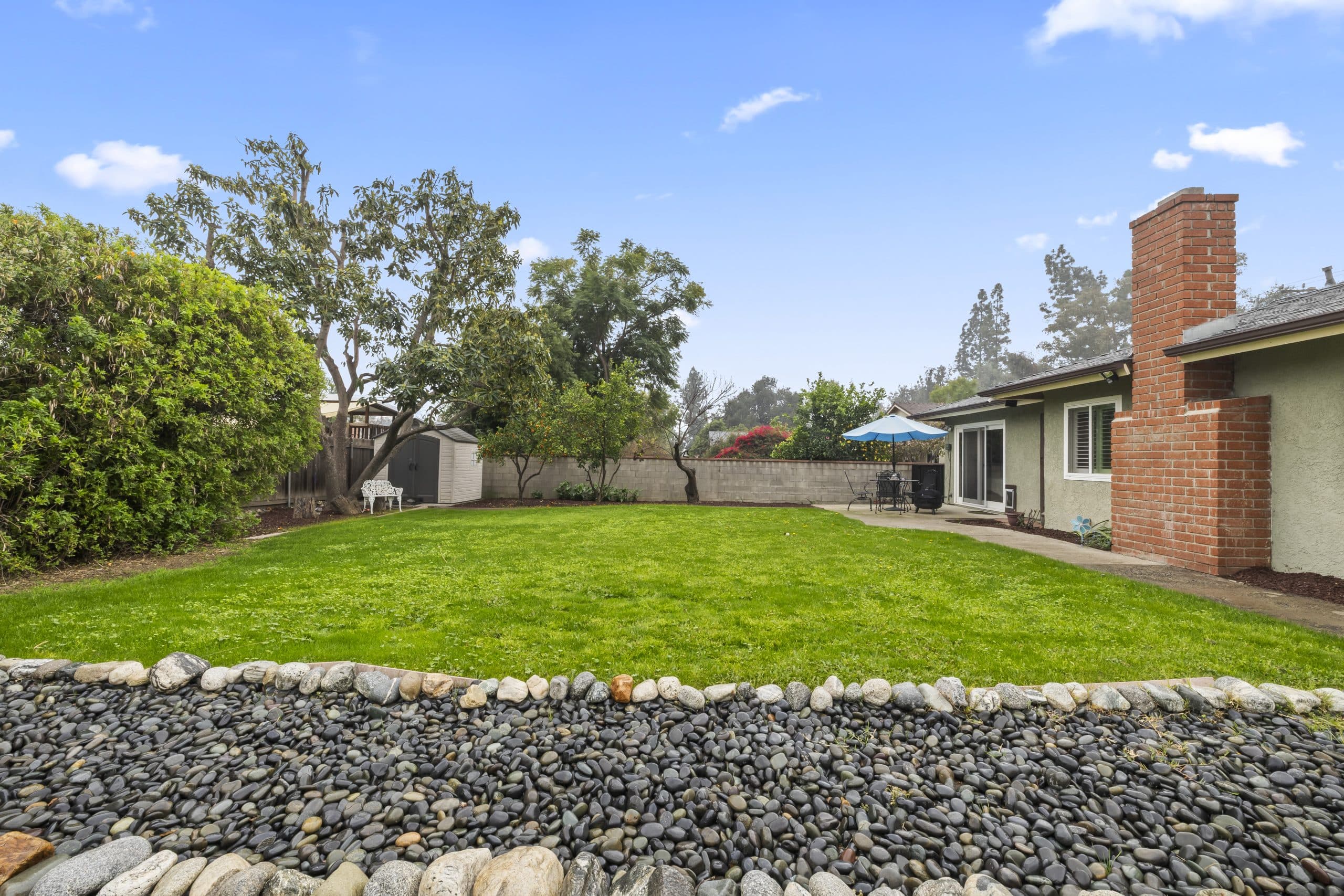
A compact single-story house on a large lot with mature landscaping, a pool, and a long fence line is small and it is a lot of work. A larger house on a small lot, recently updated, with a modest garden, can be genuinely easy.
Interior square footage is close to the least important variable in how much a property demands of you. What actually drives workload is the lot, the age of the systems, the number of exterior surfaces, and whether there is anything on the property with moving parts.
So a household that solves the room problem may find their Saturdays unchanged. And a household that solves the workload problem may end up with a house that is not much smaller at all, and be perfectly happy.
Diagnosing which one you have
Do this in two lists over one week.
List one: every room you entered, and what for. This measures the room problem. If half the house appears with no entry or "storage" next to it, you have a room problem.
List two: every hour spent maintaining the property, or thinking about maintaining it, or paying someone else to. Include the calls, the waiting for the contractor, the trip to the hardware store. This measures the upkeep problem.
Most people find one list is dramatically longer than the other. That is your answer, and it should drive the search.
A useful shortcut question: if a service came tomorrow and took over every outdoor and maintenance task at a price you could accept, would this house be fine? If yes, you have an upkeep problem and it may not require a move at all. If the house would still feel wrong, you have a room problem or a fit problem, and no amount of help solves it.
If it is the room problem
Then the search is about interior efficiency and you can be relaxed about the lot.
What you want is a plan where every room does something. Fewer rooms, better used, usually feels larger than more rooms half-used - a compact home with good storage and one genuinely comfortable living space beats a bigger one with a formal dining room nobody enters.
Be honest about the rooms you would keep. Almost everyone needs somewhere to put a guest occasionally, and almost everyone underestimates how much they want a second space to retreat to. Two bedrooms plus something with a door is the configuration that satisfies most households, and it does not require much footprint.
The trap here is buying purely on bedroom count. A three-bedroom with no storage and one living area can be less workable than a two-bedroom with a den and real closets.
If it is the upkeep problem
Then the lot and the systems are the search, and interior size is nearly irrelevant.
Look at the exterior surfaces first. How much fence, how much paint, how much roof. Look at the landscaping and ask what it requires rather than what it looks like - mature trees are beautiful and they are a recurring expense with a ladder attached. Look for anything with a pump or a motor: pools, spas, water features, irrigation. Each one is a small ongoing obligation.
Then the systems. The age of the roof, the HVAC, the water heater, the electrical panel, the main line. A house with recently replaced systems has years of quiet ahead of it. A house with everything at end of life has a decade of projects regardless of its size.
The association option deserves a real look here, because it is the most complete answer to an upkeep problem. Handing the roof, the paint, and the landscaping to a monthly assessment is exactly what a lot of tired homeowners want. The trade is a permanent monthly obligation, rules you agree to live under, and less control. Some people find that liberating and some find it grating, and it is worth knowing which you are before you commit.
The various shapes of that trade are compared in the options for downsizing without leaving Claremont.
The third problem hiding behind both
Sometimes neither list is long and people still want to move. That usually means the real issue is the shape of the house, not its size or its workload.
Stairs. A bathroom that will not work in ten years. A laundry in the wrong place. A kitchen you have to cross the house to reach with groceries. These are fit problems, and they masquerade as size problems because "we need something smaller" is an easier sentence than "this house is going to become difficult."
Fit problems are worth naming precisely, because they often have solutions short of a move, and where they do not, they produce a very specific and much easier search. The physical requirements are set out in the one-level living wish list.
The answer is sometimes: keep the house, buy the help
Worth saying plainly because it is the outcome I see undervalued most.
If the diagnosis is an upkeep problem and the house is otherwise right, the arithmetic frequently favors hiring rather than moving. A gardener, a window cleaner twice a year, someone on retainer for the small repairs, and a service contract on the systems - measured against the total cost of selling, buying, and moving, plus the disruption, plus the risk of getting the new house wrong.
People resist this, usually out of a sense that they should still be doing it themselves. That is a fine thing to examine, but it is not a housing argument.
Staying is a legitimate result of this exercise and it is a frequent one.
Running the search once you know
Whichever problem you have, write it at the top of the requirements and let it break ties.
Room problem: prioritize plan efficiency, storage, and at least one door-closing retreat. Be flexible about lot and location.
Upkeep problem: prioritize small or simple lot, updated systems, few exterior surfaces, nothing with a pump. Be flexible about square footage, which may barely change.
Fit problem: prioritize the specific physical requirement and treat everything else as negotiable.
Naming this before you shop is worth more than any number of showings, because a requirement written in advance survives the house you fall for on a Sunday.
For the rest of the cluster, start at the Claremont downsizing guide. If you want a second opinion on which problem a specific house would actually solve, I am glad to walk it and tell you honestly.
Anthony Grynchal has been licensed in California since November 2009.
Frequently asked questions
Does a smaller house always mean less maintenance?
No. Workload is driven by the lot, the age of the systems, the number of exterior surfaces, and anything with a pump or motor - not by interior square footage. A compact house on a large landscaped lot with a pool is small and demanding; a larger house on a small updated lot can be easy.
How do I tell whether I have a room problem or an upkeep problem?
Keep two lists for a week: every room you entered and what for, and every hour spent maintaining the property or arranging for it to be maintained. One list is usually far longer than the other, and that is the problem to solve.
What is the quickest diagnostic question?
If a service took over every maintenance task tomorrow at a price you could accept, would this house be fine? If yes, you have an upkeep problem that may not require a move. If it would still feel wrong, the issue is the rooms or the shape of the house.
Is hiring help instead of moving a reasonable answer?
Frequently, yes. A gardener, periodic cleaning, someone for small repairs, and service contracts on the systems can cost far less than selling, buying, and moving, with none of the disruption or the risk of choosing the wrong home.

Written by
Anthony Grynchal
Anthony Grynchal is a California real estate professional with eXp Realty, licensed since November 2009 (California DRE# 01873626), and the Designated Local Expert™ for Claremont — where he has lived for more than 33 years.
More about AnthonyPublished · Updated