
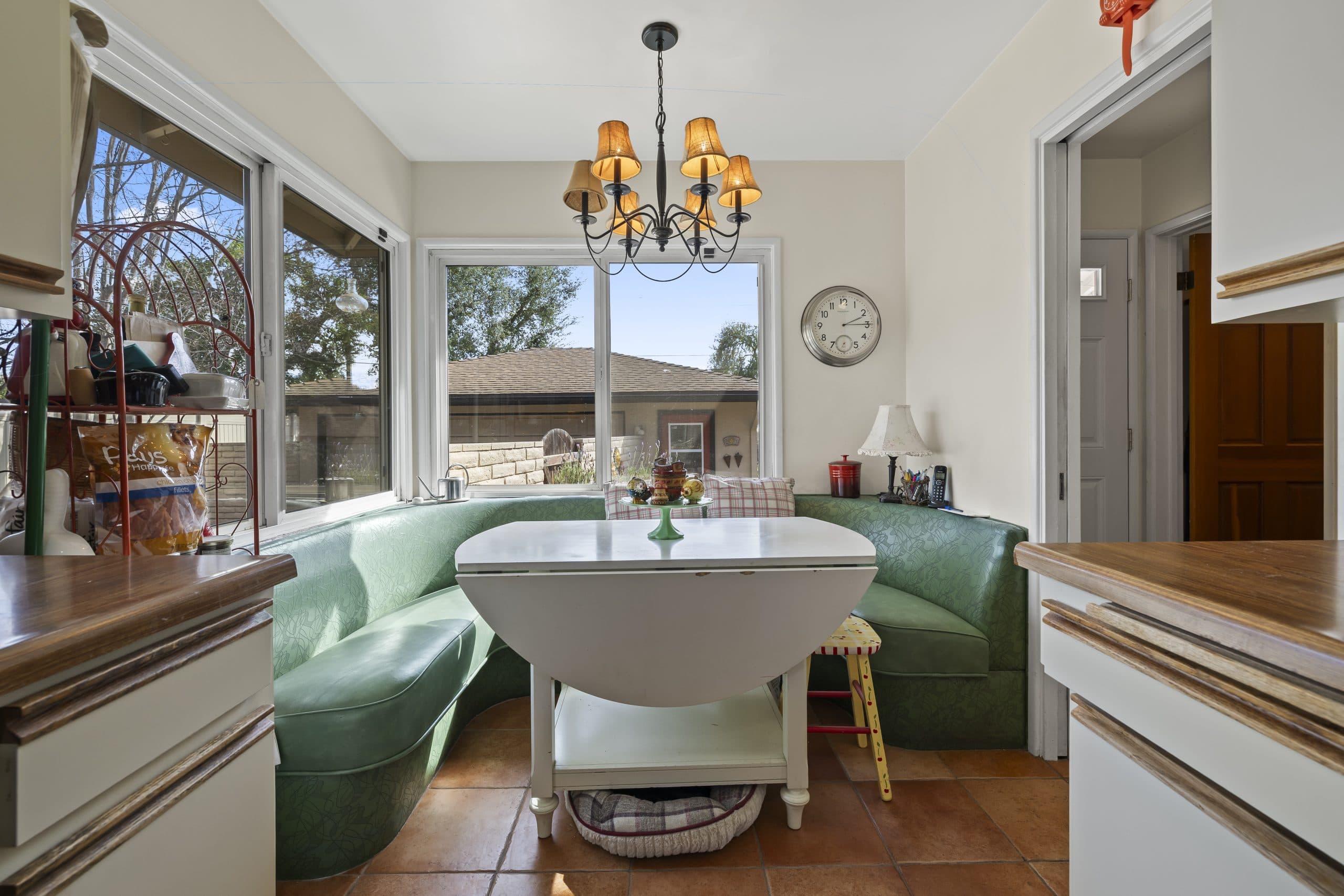
Downsizing in Claremont is rarely about a smaller house. It is about a different life: less maintenance, fewer stairs, money unlocked after decades of ownership, and, for most of the people I sit down with, a way to stay in the town they love while letting go of a house that has quietly become a second job. Claremont holds an unusual number of people standing at exactly this decision, because Claremont is a city of long tenure: families bought into the big North Claremont tracts, in neighborhoods like Towne Ranch and Blaisdell Ranch, raised whole childhoods there, and now live in houses that are heavier than the lives inside them need. This page is the unhurried version of the conversation: how to know when it is time, what the equity really means, where downsizers land without leaving town, the buy-first-or-sell-first puzzle, and what to do about thirty years of stuff.
One promise up front: there is no urgency on this page. Downsizing is measured in seasons, not weekends, and the worst outcomes I have seen all share a single cause, a rushed decision made on somebody else's timeline. I am Anthony Grynchal, Mr. Claremont, licensed in California since November 2009, and the no-pressure version of this conversation is genuinely how I work: many of my downsizing clients first talked with me a year or more before a sign ever went up.
How to know it is time
Nobody needs permission to stay in a house they love. But there are honest signals, and most downsizers recognize themselves in two or three of them: rooms that nobody has entered in months; a pool serviced all year for swimmers who visit twice; a ladder you know you should no longer be on; a garden that has crossed from joy into labor; the quiet awareness that a large share of your net worth is parked in square footage you no longer use. The phrase I hear most often, usually said with a laugh that is not entirely a laugh, is some version of: the house needs me more than I need it.
The counter-signals deserve equal respect. If the house still fits the life, if the grandchildren fill it monthly, if the garden is the hobby and not the burden, then the right decision may be to stay, and part of an honest downsizing conversation is hearing exactly that. The point of thinking early is not to leave sooner; it is to make the eventual choice from strength instead of from a health event or a deadline.
The equity, stated plainly
Decades of Claremont ownership have, for most long-tenure owners, built substantial equity, and downsizing is the moment that equity stops being a number on paper. Depending on your situation it can become a smaller home owned outright, a funded retirement, help for children or grandchildren facing this region's housing math, or the entrance path to a senior community later if that is ever wanted. I publish no figures here because your numbers are your own; the starting point is a current, honest read on what the house would actually bring, and the logic of what drives value block by block in this town lives in the Claremont home values guide.
Two tax concepts belong on your questions list before any decision, with the specifics left to professionals. First, capital gains: after decades of appreciation, the gain on a long-held Claremont home can exceed the federal exclusion available on a primary residence, and the right time to understand that is before listing, with a CPA. Second, property taxes: California's Proposition 19 allows homeowners who are fifty-five or older to transfer their existing assessed value to a replacement home within the state under certain conditions, which can matter enormously to a downsizer's monthly math. The conditions have real specifics, and the rules deserve current confirmation, so verify how they apply to you with the Los Angeles County assessor before the plan leans on them. Neither concept should be assumed; both should be asked about.
Staying in Claremont: where downsizers actually land
- The Village and its condos and townhomes. Walkable mornings, the Sunday farmers market, coffee and the Metrolink depot within a stroll, and a lock-and-leave life that makes travel simple. For downsizers who want their week to run on foot, this is the destination, and it is exactly why these homes are sought after.
- Single-story South Claremont. The postwar stock south of the center is disproportionately one-level, on manageable lots, which makes it the natural answer to the downsizer's most common wish list: one story, a smaller garden, a real neighborhood. It is also, typically, the most attainable part of town, which leaves more of the equity free for the life it is meant to fund.
- A smaller North Claremont home. Some downsizers move three blocks, not three miles: same neighborhood, same neighbors, smaller footprint. In a town where community runs this deep, staying inside your own daily geography is a legitimate strategy, not a failure of imagination.
- The senior communities, later if ever. Claremont's well-known communities, Pilgrim Place, Claremont Manor, Mt. San Antonio Gardens, are a further step some downsizers eventually take, and knowing they exist takes pressure off today's decision: the smaller house does not have to be the last decision, just the right next one.
- Renting for a season. Selling first and renting while you choose calmly is underrated, especially after decades in one house. It converts the equity, removes the time pressure, and lets you test a walkable Village winter before committing to one.
Buy first or sell first
The downsizer's dilemma is real: the equity is in the current house, but the right smaller home may appear before the big one sells. Selling first brings certainty, you know exactly what you have, and a negotiated rent-back after closing can buy time to shop without moving twice. Buying first requires bridging the gap, with a home-equity line opened well before listing, a bridge loan, or family resources, and each path has costs and qualifying realities a lender should reality-check early; the moving parts live in the Claremont financing guide. Making an offer contingent on selling your current home is the weakest position in a competitive market, and in Claremont's thinner seasons it often simply loses.
For most downsizers here, the calm sequence is: prepare the big house without listing it, get the value read, line up the financing question in advance, then sell with a rent-back and buy from the certainty of funds in hand. The mechanics of each half live in the Claremont selling guide and the Claremont buying guide; the downsizer's version simply runs them in a deliberate order instead of all at once.
Thirty years of stuff
The house is not the hard part. The garage is. A long-tenure Claremont home holds an archaeology of family life, and the single biggest favor you can do yourself is to start the sorting long before any decision about selling: it is the one piece of downsizing that cannot be compressed without pain. The method that works is passes, not marathons. First pass, the rooms nobody lives in, where the easy decisions are. Second pass, duplicates and furniture, measured honestly against the smaller home you actually intend to buy, because the sofa should fit the future, not the past. Third pass, the sentimental layer, last, slowest, with family involved. Estate sale companies, consignment, and donation runs handle the rest, and a gentle warning built from experience: the children usually do not want the china, and it is kinder to everyone to ask them early instead of assuming.
My local observation, offered with affection: I have walked North Claremont garages that still held every science-fair project since the Ford administration, shelved above a workbench with tools organized to the quarter inch. Those garages belong to people who took care of things for forty years, and the same care, pointed at the sorting a season early, is what makes a downsize feel like a choice instead of an evacuation.
The unhurried twelve-month plan
- Season one: conversations. The family talk, the value read on the current house, the first honest look at where you would actually want to land, and the CPA and assessor questions opened.
- Season two: the sort. Passes one and two through the house, small repairs done at leisure instead of under escrow deadlines, and a lender conversation if buying first is on the table.
- Season three: the decision. Choose the destination, Village condo, single-story South Claremont, a smaller place three blocks away, and get the current home fully ready to show.
- Season four: the move. List, sell with a rent-back cushion, buy from strength, and move once, calmly.
If part of the family conversation is whether to stay in Claremont at all or move nearer to children elsewhere, the honest comparison framework in the Claremont relocation guide works in both directions; plenty of downsizers run it and conclude the town is exactly why they are staying. Whenever you are ready for the first conversation, or just want the value read that makes every other decision easier, call me at (909) 731-5374. A year early is exactly on time, and no sign goes up until you say so.
Frequently asked questions
Will I lose my low property taxes if I downsize in Claremont?
Not necessarily. California's Proposition 19 allows homeowners fifty-five or older to transfer their existing assessed value to a replacement home in the state under certain conditions, which can protect much of the low tax base built up over decades of ownership. The conditions have real specifics, and rules deserve current confirmation, so verify how they apply to your situation with the Los Angeles County assessor before your plan depends on them.
Should I sell my Claremont house before buying the smaller one?
For most downsizers, yes: selling first converts the equity into certainty, and a negotiated rent-back after closing buys time to shop calmly without moving twice. Buying first is workable with a home-equity line opened before listing or a bridge loan, but each has costs and qualifying realities a lender should confirm early. An offer contingent on selling your current home is the weakest position in a competitive Claremont market.
Do I need to renovate a long-held home before selling it?
Usually not the way owners fear. Buyers for original-condition Claremont homes genuinely exist, and a full remodel before selling rarely returns its cost or its stress. The better conversation is a walk-through that separates what actually moves the outcome, usually cleaning, decluttering, and selective repairs, from what merely spends money and time. The right answer is specific to the house and the season, which is exactly what a pre-listing consultation is for.
How long does downsizing actually take?
Measured honestly, about a year from the first serious conversation to the move, and that pace is a feature rather than a flaw. The sale and purchase themselves run on ordinary market timelines; the long pole is everything around them, sorting decades of belongings, choosing where to land, and settling the tax and financing questions. Compressing it all into a rushed season is possible, but it is the single most common downsizing regret.

Written by
Anthony Grynchal
Anthony Grynchal is a California real estate professional with eXp Realty, licensed since November 2009 (California DRE# 01873626), and the Designated Local Expert™ for Claremont — where he has lived for more than 33 years.
More about AnthonyPublished · Updated