Do not assume yes. In the City of Trees, tree removal is a REGULATED question rather than a purely private one, and the fact that a trunk stands inside your property line does not by itself settle it.
I am not going to quote you an ordinance section, because tree rules change and because the answer depends on the specific tree, its location and its species. What I can do is tell you which questions decide it, who answers each one, and where this goes wrong in a real transaction. Take the specifics to the City of Claremont before a saw touches anything.
First, work out whose tree it actually is
Three categories, and people confuse them constantly.
STREET TREES. The trees in the parkway strip between the sidewalk and the curb are generally the city's, even though they sit in front of your house and you may be the one raking the leaves. Those are municipal assets, maintained on a municipal schedule, and removing or heavily pruning one without authorization is not a private decision. If a parkway tree is lifting your sidewalk or dropping limbs, the call goes to the city, not to a tree service.
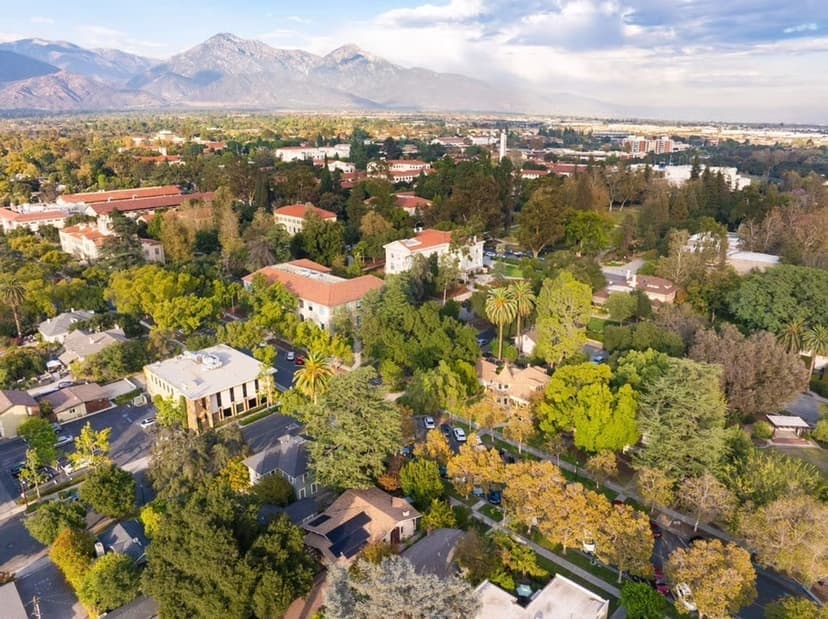
TREES ON YOUR LOT. These are yours, but ownership and unrestricted removal are different things. Cities that value their canopy commonly regulate removal of certain trees on private property, typically by species, by size, or by a designation such as heritage or protected. Claremont's canopy is not decorative to this city; it is part of the identity described in why Claremont is called the City of Trees and PhDs, and cities that build an identity around a canopy tend to protect it in writing.
BOUNDARY AND NEIGHBOR TREES. A trunk straddling a property line, or a neighbor's tree with branches over your yard, is a separate area of law with its own rules about what you may cut and what you may not. That is an ATTORNEY question, not an agent question, and it is a genuinely common source of neighbor disputes. Get advice before you act rather than after.
What to verify before you remove anything
Call or visit the city and ask five things about your specific tree.
Is a permit required to remove a tree of this species and size at this location. Is the tree protected, designated, or otherwise subject to special review. Is it in the parkway or on private property, according to the city's own records rather than my guess at where the line runs. What documentation is expected, which frequently means an arborist report. And whether replacement planting is required as a condition of approval.
ASK IN WRITING, AND KEEP THE ANSWER. A verbal reassurance from someone at a counter is worth very little if a code enforcement question arises later, and it is worth nothing at all when a future buyer's inspector asks about a fresh stump.
Dead, dying and hazardous trees
This is where owners feel most certain and are most likely to get it wrong. A tree that is genuinely dead, diseased or hazardous is often treated differently from a healthy one, and there are usually provisions for emergencies. But "I think it is dying" is an opinion, and the record you want is a certified arborist's assessment, made before removal, not a photograph taken afterwards.
The cost of an arborist report is small compared with the cost of removing a protected tree without authorization. If a tree threatens your house or a person right now, that is a safety call and an emergency call, and you document it as you go.
Why this matters in a sale
Three ways this shows up in a transaction, and they are all avoidable.
A seller removes a tree to tidy up before listing. Perfectly well intentioned, and occasionally an unpermitted removal that becomes a disclosure problem and a possible enforcement problem. If you are preparing to sell, ask the city before you clear anything. What a California seller has to reveal is set out in the seller disclosure guide, and a known code issue is not something you get to leave out of the conversation.
A buyer plans to remove a tree and does not check first. I hear this on tours regularly: the pool goes there, so the tree comes out. Maybe. Find out during your contingency period, while you still have the ability to act on the answer, rather than after you own it. A tree you cannot remove can genuinely change whether a lot works for your plan.
An ADU or addition runs into a tree. Setbacks, access and root zones interact with what you can build. If the point of the purchase is to add a unit, the tree question belongs in the same conversation as the zoning question. The short version of what is possible on a lot is in can I build an ADU on my Claremont lot.
The practical sequence
If you want a tree gone, do it in this order. Identify the species and measure the trunk. Establish whether it is on private property or in the parkway. Ask the city, in writing, what applies. If a report is required, hire a certified arborist. Apply for whatever permit is required and wait for it. Then hire a licensed, insured tree service, and confirm they carry their own coverage rather than assuming.
If the tree is in an association-governed community, add one more step: check the governing documents, because an association can have its own landscaping rules on top of the city's. Where associations exist here is covered in does Claremont have HOAs everywhere.
The honest summary
Sometimes yes, sometimes only with a permit, sometimes not at all, and occasionally with a replacement tree required as a condition. Nobody can tell you which of those applies from a description over the phone, including me.
What I can tell you is that the canopy is one of the reasons buyers pay what they pay for a Claremont street, and that the rules exist because of that. Treat a mature tree as an asset with paperwork attached rather than as an obstacle, and check before you cut.
More local questions are answered on the Claremont FAQ hub. Anthony Grynchal has been licensed in California since November 2009. He is a licensed real estate salesperson, not an arborist, attorney or city official; verify current tree regulations, permit requirements and protected designations directly with the City of Claremont before removing or pruning any tree.
Frequently asked questions
Can I remove a tree on my own property in Claremont?
Not automatically. Ownership of the land and unrestricted removal are different things, and cities that protect a canopy commonly regulate removal of certain trees on private property by species, size or designation. Verify the rules for your specific tree with the City of Claremont before removing it.
Who owns the tree in the parkway strip?
Parkway trees between the sidewalk and the curb are generally city trees even though they stand in front of your house. Removal or heavy pruning is a call to the city rather than a private decision.
What about a dead or hazardous tree?
Dead, diseased and hazardous trees are often treated differently, and emergency provisions usually exist, but your opinion is not the record. Get a certified arborist's assessment before removal so the condition is documented rather than argued about afterwards.
Does an unpermitted tree removal affect a home sale?
It can. A known code issue is something a California seller has to address in disclosure, and a fresh stump invites questions from buyers and inspectors. Ask the city before clearing anything in preparation for listing.

Written by
Anthony Grynchal
Anthony Grynchal is a California real estate professional with eXp Realty, licensed since November 2009 (California DRE# 01873626), and the Designated Local Expert™ for Claremont — where he has lived for more than 33 years.
More about AnthonyPublished · Updated