The tree is usually the reason people fall for the house. It is also the largest thing on the property that you cannot move, cannot easily remove, and did not choose.
Claremont's canopy is the town's most recognizable physical asset, and buying here frequently means taking custody of a piece of it. That is mostly a gift. It is also a set of obligations that nobody mentions during the tour, and they are worth understanding before you own them.
Who actually owns the tree
Start here, because buyers routinely get it wrong.
A tree in the parkway - the strip between the sidewalk and the curb - is generally a public street tree rather than yours, even though it shades your house and drops its leaves on your driveway. Street trees are managed by the city, which means the city sets the rules on pruning and removal and handles the work.
A tree inside your property line is yours, with the maintenance and liability that implies. And a tree near a boundary may be shared in a legal sense, which is a genuinely complicated area and one where a fence line is not the same thing as a property line.
WHAT THIS MEANS PRACTICALLY: before assuming you can prune, top, or remove anything, confirm which category the tree falls into and what the current city requirements are. Rules governing street trees and protected species change over time, and this is a call to the city rather than a guess. It is a short conversation and it prevents an expensive mistake.
The maintenance that actually shows up
Four recurring costs, in rough order of how often owners meet them.
LEAF AND DEBRIS LOAD. A mature canopy fills gutters, covers a pool surface, and packs an organics container faster than newcomers expect. The general rhythm is laid out in the yard calendar, and the container side of the problem is covered in where the bins go. Neither is dramatic. Both are weekly.
PRUNING. Large trees need periodic work by somebody qualified, and this is not a ladder-and-a-Saturday job once the limbs are over the roof. Budget for it as a recurring line item rather than an emergency.
ROOTS. The most expensive category. Mature roots lift sidewalks and driveways, push at foundations and hardscape, and find sewer laterals - particularly older clay laterals, which are common in the older neighborhoods. A slow drain in an old house with a big tree in the yard is a specific and familiar story.
STORM AND WIND EVENTS. Limbs come down in the wind, and the north end gets it hardest. The behavior of a blowing night is described in the wind-season guide; the tree-specific version is that a limb over a roof or a parked car is a different risk profile from the same limb over a lawn.
What the tree gives back
Now the other side, and it is substantial enough that most owners keep the tree even after reading the list above.
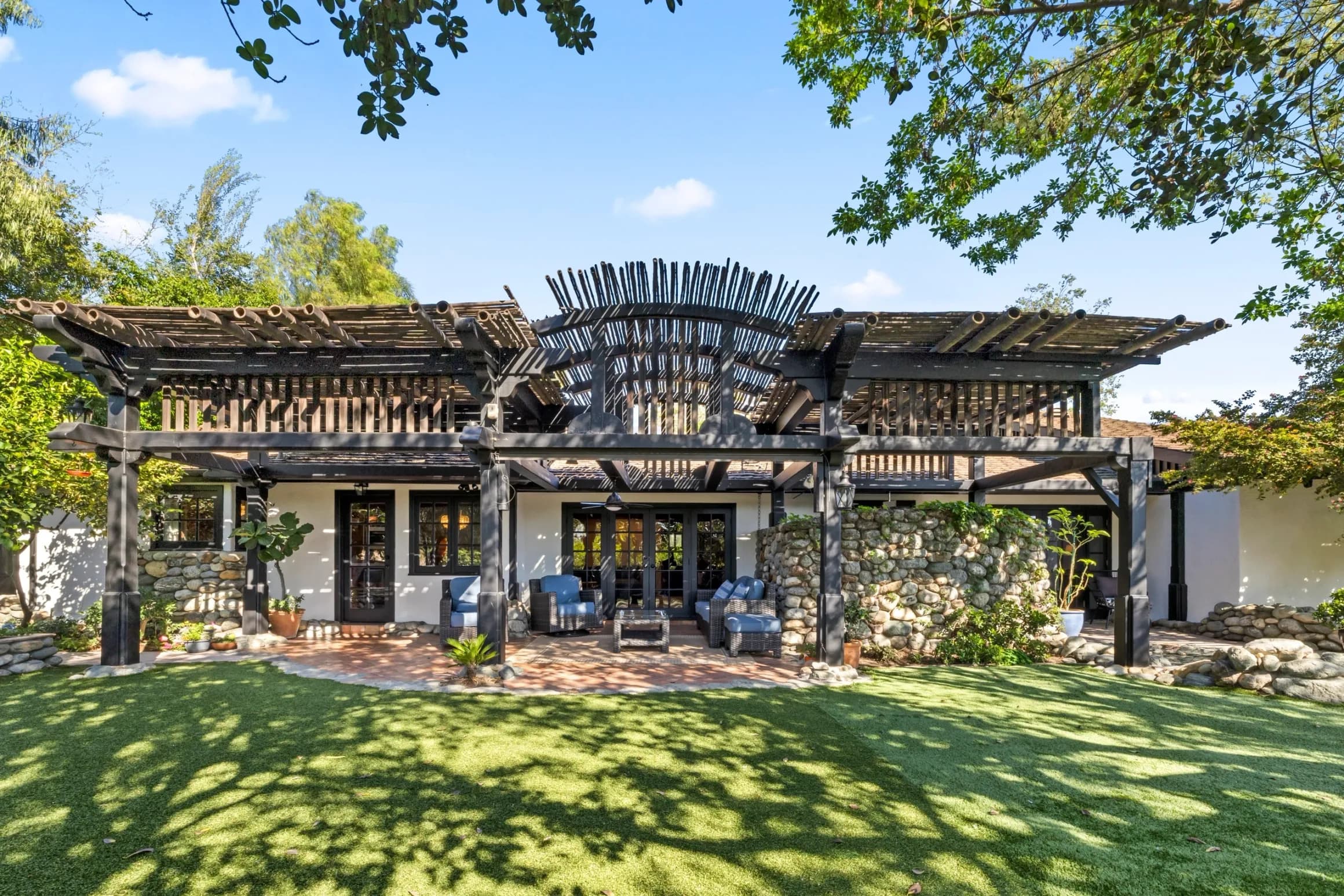
Shade is a cooling system. A canopy over a west-facing wall changes the afternoon temperature inside an older house measurably, which matters a great deal in a stock that often lacks modern insulation. The piece on cooling an old Claremont house treats this as a working strategy rather than a nicety.
Shade also makes outdoor rooms usable in months when an unshaded patio is not. That is directly connected to how much of the lot you actually get to use.
And the canopy is a large part of why the streets here look and feel the way they do. That is not sentiment; it is one of the physical features attached to what buyers pay for, as discussed in the lifestyle premium.
What to check on tour
Six things, and they take about five minutes.
WHERE THE CANOPY SITS RELATIVE TO THE ROOF. Limbs directly over the structure mean recurring pruning and a standing conversation with an insurer.
THE SIDEWALK AND DRIVEWAY. Lifted, cracked, or patched concrete near a trunk tells you the roots are already doing work. Trip hazards on a public sidewalk can also become an owner's problem depending on the situation.
THE HARDSCAPE NEAR THE TRUNK. Heaving patio pavers or a bulging garden wall are the same story at a smaller scale.
DRAIN BEHAVIOR. In an older house with a mature tree, ask directly about the sewer lateral and consider a camera inspection during your inspection period. It is inexpensive relative to what it can find.
THE TREE'S CONDITION. Deadwood, a lean that looks new, fungal growth at the base, or bark that is coming away are all reasons to have an arborist look before you close, not after.
THE NEIGHBOR SITUATION. A large tree near a boundary affects two properties, and the leaves, roots, and shade do not respect the fence. Where a tree overhangs, it is worth knowing what the existing arrangement is.
If you are the seller
The tree is an asset in your listing and a question in the buyer's mind. Both can be handled.
Have the pruning current. An unkempt canopy reads as deferred maintenance and invites a larger discount than the work would have cost.
Know the answer to the ownership question before someone asks it. Being able to say clearly which trees are street trees and which are yours removes a whole category of uncertainty.
If the sewer lateral has been repaired or replaced, keep the paperwork where a buyer can see it. In a town of old houses and big trees, that document is worth more than most upgrades in the same price range.
The honest framing
A mature tree is infrastructure, not decoration. It has a maintenance schedule, a failure mode, and a real effect on the cost of running the house.
It is also the single feature most responsible for why a Claremont street feels the way it does, and it cannot be bought new. Buyers who understand both halves of that keep the tree, budget for it, and get the benefit. Buyers who see only the photograph tend to meet the other half in the first big wind.
More on the daily texture of owning here is collected in the Claremont lifestyle guide.
Anthony Grynchal has been licensed in California since November 2009.
Frequently asked questions
Do I own the tree in front of my Claremont house?
Often not. A tree in the parkway between the sidewalk and the curb is generally a public street tree managed by the city, while a tree inside the property line is yours. Confirm the category and the current city requirements before pruning or removing anything.
What is the most expensive risk from a mature tree?
Roots. They lift sidewalks and driveways, push at hardscape and foundations, and find older sewer laterals. A slow drain in an old house with a large tree nearby is a familiar and costly pattern worth investigating during the inspection period.
Should I get a tree inspected before closing?
If there is deadwood, a new-looking lean, fungal growth at the base, or limbs over the roof, have an arborist look before you close rather than after. A camera inspection of the sewer lateral is also worth considering on older properties.
Is a big tree worth the maintenance?
For most owners here, yes. Shade over a west wall measurably changes the afternoon temperature in an older house, it makes outdoor space usable for more of the year, and mature canopy cannot be replaced quickly. Budget for pruning and debris as recurring costs.

Written by
Anthony Grynchal
Anthony Grynchal is a California real estate professional with eXp Realty, licensed since November 2009 (California DRE# 01873626), and the Designated Local Expert™ for Claremont — where he has lived for more than 33 years.
More about AnthonyPublished · Updated