Buyers tour a yard the way they tour a kitchen: they look at it, they like it, they move on. A kitchen is a room. A yard is a schedule.
The difference matters more here than in a lot of places, because this valley has a long growing season, a long dry season, and a mature tree canopy that did not maintain itself. Every lot in this town is somewhere on a spectrum between low-input and genuinely demanding, and almost nothing about where it sits is visible in a listing photograph taken in April.
This is the honest version of what a Claremont lot asks of you across a year, and how to read that before you sign for it.
The long green stretch
Late winter and spring are the easy months to fall in love with a property here and the hardest months to judge one. Everything is growing. Everything looks maintained, because growth hides neglect for a while. Lawns are green with almost no help.
What is actually happening is that the yard is banking work for later. Growth in the cool months becomes fuel, weight, and shade demand in the hot ones. The rosemary that looks charming now is the rosemary that needs cutting back later. The volunteer seedlings along the fence line are next year's problem if nobody pulls them this year.
SPRING IS ALSO THE MONTH BUYERS SEE THE MOST HOUSES. Which means most people form their picture of a yard's workload at the single point in the year when that workload is lowest and its appearance is highest. It is worth naming that bias out loud while you are standing in one.
The long dry stretch
Then the valley turns. The rain stops for a long stretch, the heat settles in, and a yard here stops being self-sustaining. Anything that stays alive from here on stays alive because someone is watering it, and someone is paying for that water.
This is where the difference between lots becomes enormous. A yard planted around drought-adapted material, decomposed granite, and shade coasts through the dry months on a modest schedule. A yard built around lawn, thirsty ornamentals, and full sun exposure does not coast at all. Both can look identical in a spring photograph.
Practical version of the question: how much of this landscape dies if nobody touches it for three weeks in August? On some lots the answer is nothing. On others the answer is most of it.
The leaf months
The tree canopy is the single best thing about this town and it is also the reason a lot of residents own a rake they use seriously.
Deciduous street trees and yard trees drop, and they drop heavily, and they drop into gutters, onto roofs, into pool filters, and along the strip between the sidewalk and the curb that is legally ambiguous and practically yours. On a heavily treed lot this is not a weekend; it is a recurring chore across a season.
Nobody regrets the shade. Plenty of people are surprised by the volume. The trade is real and it is worth making with your eyes open, which is most of what the gardening culture guide is about.
What a mature tree actually costs
A large old tree is an asset, an amenity, and a liability at the same time, and the third part is the one buyers underweight.
Mature trees need periodic professional attention. Limbs over a roof, over a driveway, or over a neighbor's fence are not a homeowner-with-a-ladder job, and the cost of ignoring them arrives all at once during a wind event rather than gradually. A yard with several large old specimens carries a standing obligation that has nothing to do with whether you enjoy gardening.
The right questions on a walkthrough: when were these last worked on, is there anything overhanging a structure, and is anything obviously stressed or leaning. You will not always get an answer. Asking still changes what you notice.
Reading a lot before you own it
A few things tell you more than the photographs do.
WHERE THE SUN LANDS. Walk the yard and work out which parts get full afternoon exposure. Those are the parts that will need the most water, the most heat-tolerant planting, and the most shade structure if you want to use them in summer. Full sun on the west side of a house is a different property from full sun on the north side.
WHAT IS ALREADY IRRIGATED. An existing, working irrigation system is worth real money and a lot of Saturdays. An old system nobody can find the valves for is a project. Ask, and ask where the controller is.
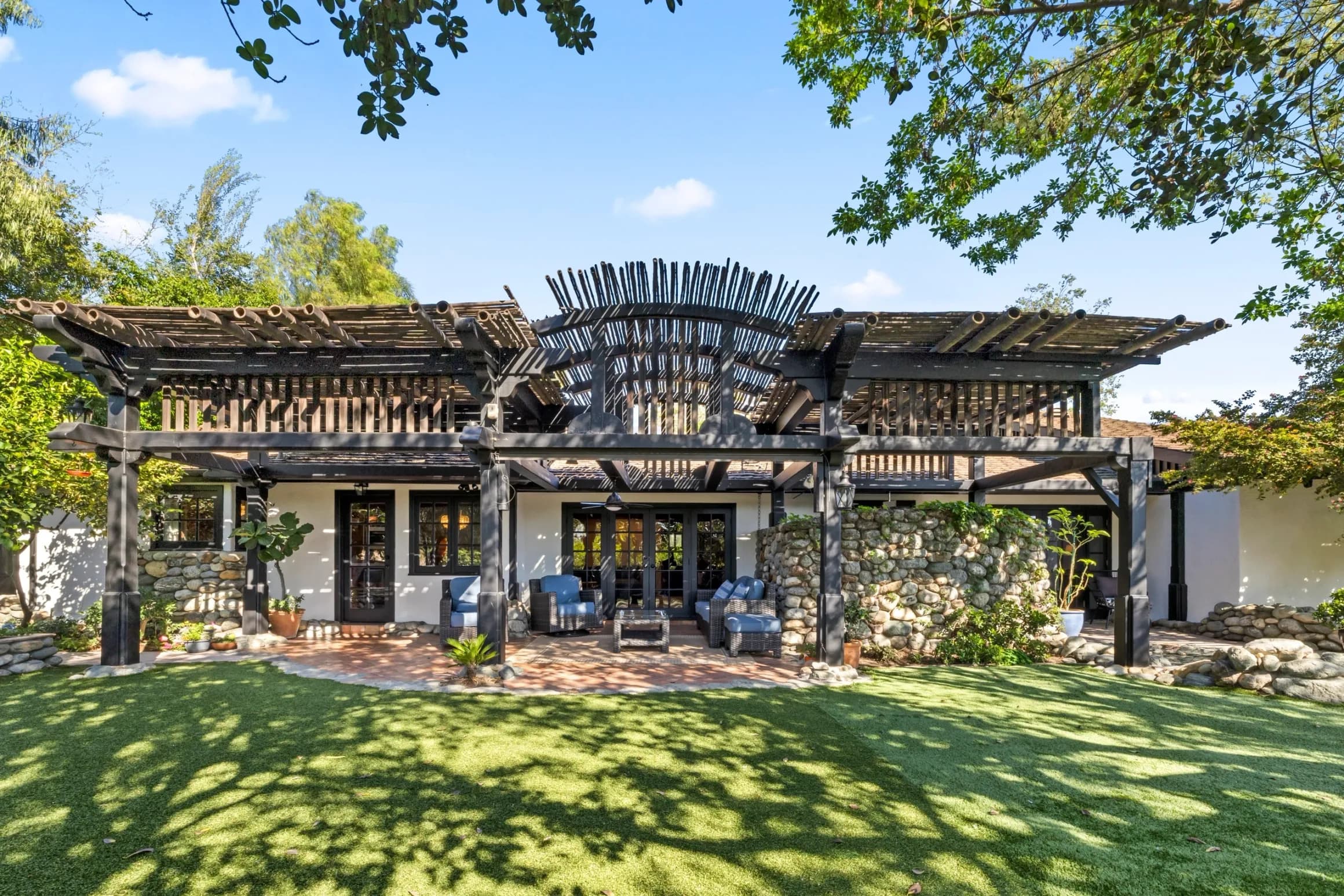
THE HARDSCAPE-TO-PLANTING RATIO. Patio, gravel, and paths do not grow. The higher that share, the lower the standing workload, and the more of the yard stays usable through a hot month.
SLOPE AND DRAINAGE. A foothill town has grade. Where the water goes when it finally does rain is a question worth answering before you learn the answer by watching it.
THE FENCE LINE. Shared fences, shared trees, and shared roots are shared conversations. Not a reason to walk away from anything. A reason to look.
Matching the yard to the life
The useful reframe is that there is no correct amount of yard. There is only the amount that matches how you actually spend a Saturday.
Some households want the work. Growing things is the point, the season is generous here, and a demanding lot is a feature rather than a cost. For those buyers, a bare low-input yard is the disappointing one.
Other households want the outdoor space and none of the obligation. That is entirely available in this town, and it usually looks like a smaller planted footprint, mature shade already established, and hardscape doing the heavy lifting. It is a design decision, not a compromise.
The failure mode is buying the first while living the second. That is the yard that looks tired by the second summer, and it is the most common quiet regret attached to a house here.
The part nobody puts in the listing
A yard is the only part of a house that changes on its own while you sleep. Everything else in a property is static until you act on it. The landscape is not, and this climate gives it a long runway to act.
That is worth budgeting for the way you would budget for a roof, in hours as well as in money. The households that are happiest with their outdoor space here are almost always the ones who were honest at the outset about which of those two currencies they had.
The lifestyle guide covers the rest of what daily life here actually asks for, and if the outdoor question is the one you are weighing, the seasons of light guide explains why so much of this town's outdoor life happens at the ends of the day rather than the middle.
Anthony Grynchal has been licensed in California since November 2009. On second showings, the yard is worth more of your attention than the kitchen, because it is the part of the property you cannot fully evaluate from inside the house.
Frequently asked questions
How much maintenance does a Claremont yard need?
It depends almost entirely on what is planted and how much sun the lot gets. A drought-adapted landscape with mature shade and a high share of hardscape can run on a modest schedule year-round. A lawn-heavy yard in full afternoon sun needs consistent watering and attention through the long dry stretch, and heavily treed lots add a real leaf-clearing season on top of that.
What should I look at in a yard during a showing?
Where the afternoon sun lands, whether there is a working irrigation system and where its controller is, the ratio of hardscape to planting, how the lot drains given the grade, and whether any large limbs overhang a roof, driveway, or shared fence. Those five answers predict the workload better than the overall appearance does.
Are mature trees a benefit or a liability when buying here?
Both, and that is the honest answer. Mature canopy is one of the best features of this town, providing shade that measurably changes how usable a property is in summer. It also carries a standing obligation for periodic professional care, particularly for limbs over structures, and that cost tends to arrive suddenly rather than gradually.
Is spring a misleading time to evaluate a property's landscaping?
Somewhat, and it is worth knowing. Spring is when most homes are shown and when yards look their best with the least help, so buyers often form their impression of a landscape's workload at the exact point in the year when that workload is lowest. Ask what the same yard looks like in late summer.

Written by
Anthony Grynchal
Anthony Grynchal is a California real estate professional with eXp Realty, licensed since November 2009 (California DRE# 01873626), and the Designated Local Expert™ for Claremont — where he has lived for more than 33 years.
More about AnthonyPublished · Updated