
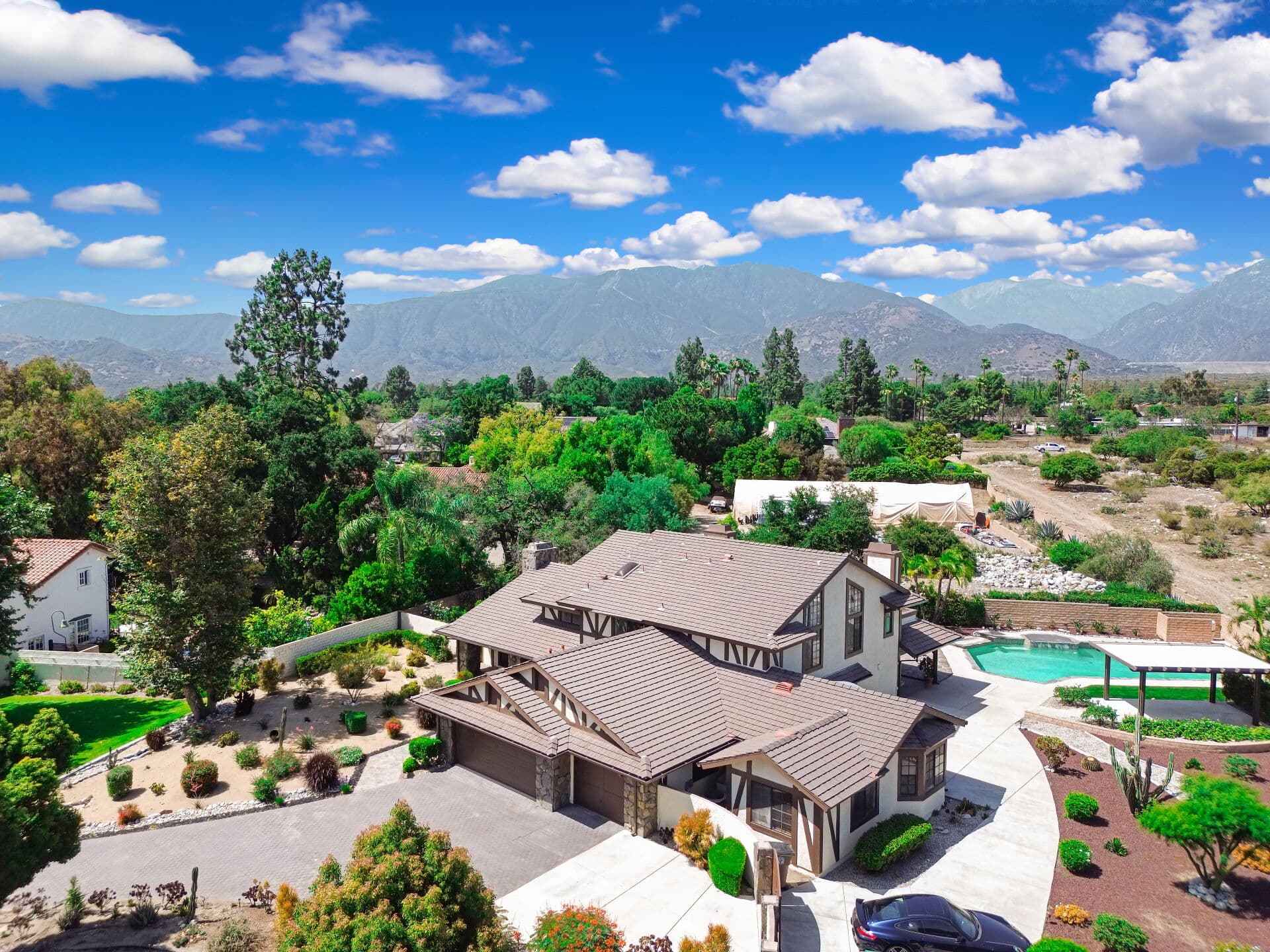
Claremont is a good bike town for reasons that have nothing to do with marketing: a compact core, an old street grid, a flat southern half, a paved path along the northern edge, and a set of campuses generating thousands of people who would rather ride than park. Plenty of households here own a car and start it two or three times a week. For a buyer, that possibility is a housing question as much as a fitness one, because the street a house sits on decides whether a bike gets used or stored. This guide covers what riding here is actually like, how to do it safely and courteously, and what a cycling household should look for in a home. It deepens the parks cluster; the paved spine most riders use is Thompson Creek Trail, and the outdoor-life guide puts the whole system together.
The terrain: a town tilted north
Claremont sits on an alluvial slope, and that single fact organizes every ride. Head north and you climb — gently at first, then seriously as the foothills approach — which means the ride out is work and the ride home is free. Head south and it is flat and fast, on an old grid that offers a rider several parallel options rather than forcing everyone onto one arterial. East-west runs are gentlest of all. Practically, a north-side household rides differently from a south-side one: the northern rider gets a climb out the door and a coast home, while the southern rider gets easy distance in every direction. WIND and SURFACE are the other two variables. The dry offshore winds that arrive in the cooler months can turn an easy northbound ride into work and a southbound one into a sprint, and pavement quality varies street by street in a town whose grid was laid down across many decades. The paved creek trail along the northern edge is the town's car-free spine, flat and shared with walkers and strollers, and it is the natural warm-up or cool-down for anything harder. Beyond town, the foothill roads draw serious road riders, and the dirt above town draws the mountain-bike crowd toward the wilderness park's fire roads — where what is permitted on which trail is a rules question to verify with the city rather than assume.
Riding it well
THE LEGAL FLOOR first, at concept level: in California a bicycle is treated as a vehicle, riders travel in the same direction as traffic, and lighting is required after dark. The specifics — helmet requirements by age, where sidewalk riding is allowed, e-bike classes and where each may go — are set by state law and local ordinance, both of which change, so verify the current versions rather than relying on what was true when you learned to ride. THE LOCAL CRAFT: the Village is a dismount-and-walk kind of place at busy hours, and treating it that way makes you a good neighbor rather than a hazard. The paved trail is genuinely shared, so announce your pass, ride at neighborly speed, and expect a toddler on training wheels to do something unpredictable, because that is what the trail is FOR. Watch the town's own hazards: root-lifted pavement under the big street trees, low sun angles on east-west streets, and the debris the canopy drops in season. RIDING WITH CHILDREN deserves its own thought: the residential grid and the paved trail are the confidence-building ground, the arterials are not, and the route between the two is the piece worth scouting on foot before anyone rides it. And ride the academic calendar, because the streets near campus have a rhythm the colleges set, which the college-town rhythm guide explains in full.
The house side of a cycling life
This is where a hobby becomes a housing criterion. STORAGE is the first question and the one buyers forget: bikes need a dry, secure, accessible place that is not the middle of a garage floor. If the garage is the plan, note that garages in Claremont are increasingly spoken for, since conversion to living space is among the most common projects on this housing stock — the garage-conversion guide lays out those trade-offs, of which where the bikes go is a genuine one. An electrical outlet reaching that storage space matters more every year, since an e-bike needs somewhere sensible to charge and a garage wall with no power is a small renovation waiting to happen. THE STREET MATTERS as much as the house. A candidate address on a quiet grid street with sidewalks and a shaded route to the core is a different daily life from one on an arterial, and the way to test it is to ride the commute you intend to actually ride, at the hour you intend to ride it. CHECK THE APPROACH to the places you would go — the core, the trail access points, the campuses, the schools — and count the arterial crossings, because one bad crossing decides whether a household rides or drives. Look at the DRIVEWAY AND STREET PARKING situation too, since a household keeping bikes, cars, and a converted garage inside the same footprint runs out of room in a hurry. And weigh SLOPE honestly, because the northern premium buys foothills and trailheads and it also buys a climb home with the groceries. The neighborhood guides are where the geography gets specific, and the heat-and-daylight reality belongs to the seasonal cluster.
Anthony Grynchal has been licensed in California since November 2009, and thinks a bike is the most underrated way to see a neighborhood you are considering — slow enough to read a street, fast enough to cover the whole of it. This is general information; current traffic law, e-bike rules, and trail regulations belong to their own authorities.
Frequently asked questions
Is Claremont a good town for cycling?
Structurally, yes: a compact core, an old grid offering parallel routes, a flat southern half, a paved trail along the northern edge, and campuses that generate a large riding population. The main constraints are inland summer heat, short winter daylight, and a few arterials worth planning a route around rather than riding down.
Where can you ride without traffic?
The paved creek trail along the town's northern edge is the car-free spine — flat, shared with walkers and strollers, and the natural warm-up or cool-down for a harder ride. It is genuinely shared space, so announce your passes and ride at neighborly speed rather than at training pace through the middle of it.
What are the rules for bikes and e-bikes here?
At concept level, California treats a bicycle as a vehicle: ride with traffic, and use lights after dark. Helmet requirements by age, where sidewalk riding is allowed, and e-bike class rules are set by state law and local ordinance, both of which change — verify the current versions rather than relying on memory.
What should a cycling household look for in a home?
Dry, secure, accessible storage that is not the middle of a garage floor, since garages here are often converted to living space. Then the street itself: a quiet grid block with a shaded route to the core, and as few arterial crossings as possible between the front door and the places you actually ride.

Written by
Anthony Grynchal
Anthony Grynchal is a California real estate professional with eXp Realty, licensed since November 2009 (California DRE# 01873626), and the Designated Local Expert™ for Claremont — where he has lived for more than 33 years.
More about AnthonyPublished · Updated