People relocating into the eastern San Gabriel Valley often end up holding two towns in their hand at once. Claremont and San Dimas sit on the same foothill shelf, share the same mountain backdrop, and photograph almost identically from a freeway offramp. Then you spend a weekend in each and discover they are organized around completely different ideas.
This is a comparison of CHARACTER and BUILT FORM, not of numbers. Prices, inventory, tax rates and travel times move constantly, and anything I wrote here about them would be stale by the time you read it. Pull current figures from live sources: the MLS for market data, the county assessor for tax detail, and your own drive at your own hour for anything about traffic.
The organizing idea of each town
Claremont is built around a college campus cluster and a walkable center attached to it. That single fact explains most of the town: the deep street tree canopy, the density of small independent storefronts in a compact footprint, the year-round calendar of lectures and concerts, and the housing stock that was laid out over more than a century to sit near all of it.
San Dimas is built around open space and the horse. Its identity runs through Frank G. Bonelli Regional Park and Puddingstone Reservoir on one side and the trail network up into the hills on the other. The downtown carries a deliberate Western frontier look, and equestrian easements and trail access are a real, physical part of how parts of town are laid out.
Neither idea is better. But you will be living inside one of them daily, and they ask different things of you.
How the housing feels different
Claremont's residential fabric is layered by era. You can drive a few minutes and pass early bungalows, mid-century tracts on generous flat lots, and newer hillside construction, each with its own street width, setback and tree cover. Older neighborhoods near the center trade square footage for walkability. The complete relocation guide walks through how that variation plays out block by block.
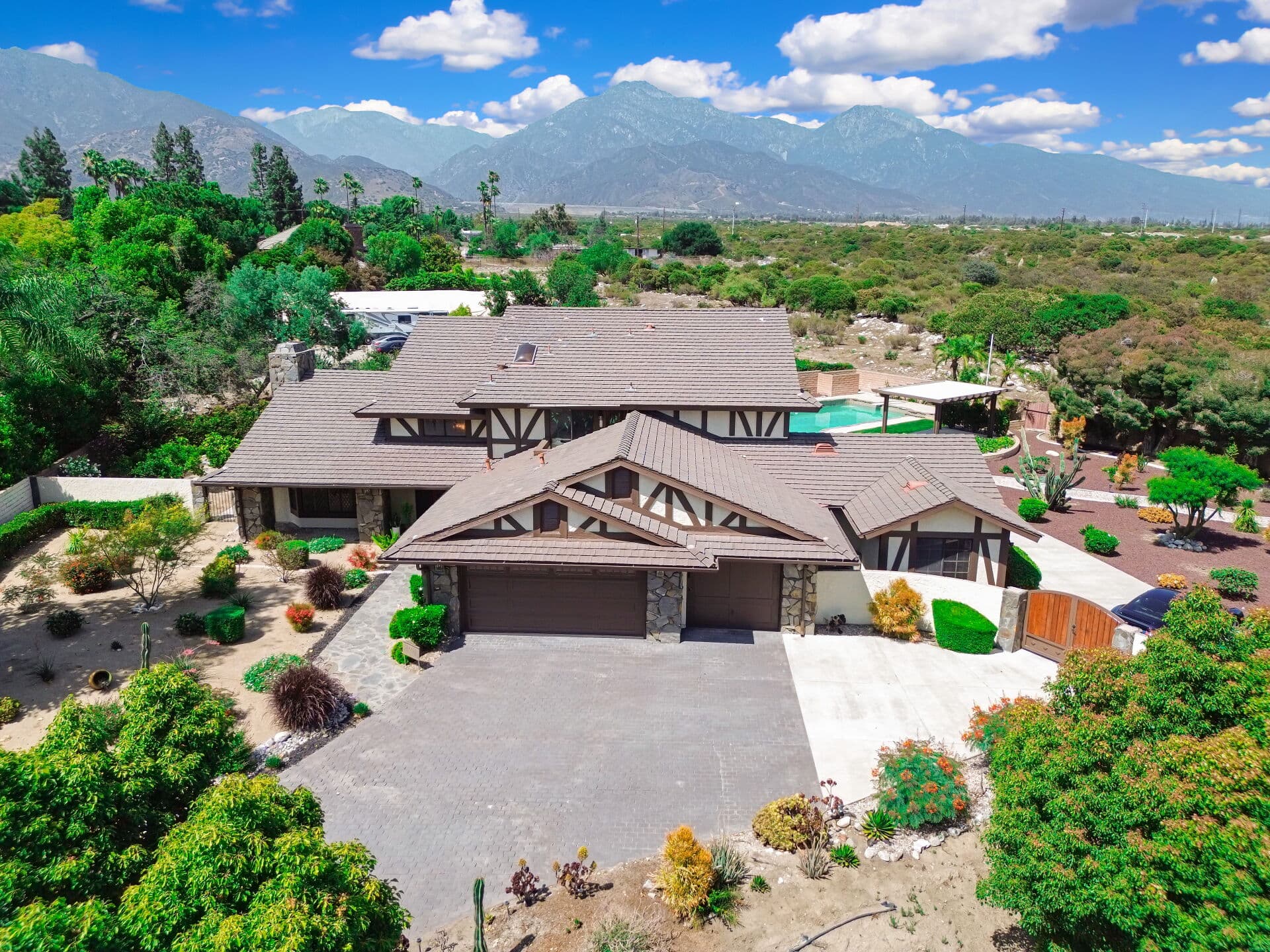
San Dimas leans more toward the hillside and canyon side of the equation. Larger, less regular parcels appear more often as you go north and east, and horse-keeping properties genuinely exist rather than being a marketing phrase. The flatter neighborhoods read as classic postwar Southern California suburb with a wider street grain than Claremont's older core.
If your mental picture of the move is a garage full of tack and a truck with a trailer hitch, San Dimas will speak to you faster. If it is walking to coffee and a bookstore on a Saturday morning, Claremont will.
Town centers, side by side
This is the sharpest difference and the one worth testing in person.
- Claremont Village. A compact, continuous, genuinely walkable district of small shops, restaurants, a theater and a farmers market, with the colleges immediately adjacent and a Metrolink platform inside the same walk. You can park once and be done.
- Downtown San Dimas. Smaller in footprint and more themed in its architecture, with a friendly, low-key main street feel. It is a place you visit rather than a place that absorbs a whole afternoon by default.
Go stand in both, mid-week, at the same hour. A town center on a festival Saturday is a town in costume.
Open space and what you do on weekends
Claremont's outdoor life runs up the slope: the Wilderness Park, the trails at the north edge of town, and the flat, tree-lined streets that make walking and cycling ordinary rather than an outing. It is quiet, dry-country hiking with the mountains right there.
San Dimas's outdoor life runs to water and trail. Bonelli Park and the reservoir put boating, fishing and large-scale picnic and camping space inside the city, which is unusual. If you own a boat or ride, that is not a nice-to-have; it is the reason to choose the town.
Honest drawbacks, both directions
What people dislike about Claremont: it is inland Southern California, and August is hot and long. The older housing stock means older systems, and character arrives with maintenance attached. The pace is deliberately slow, which reads as peaceful to some newcomers and as sleepy to others. Parking near the Village on a busy evening tests patience. And the town's planning culture is protective, so changing a house is not always fast.
What people dislike about San Dimas: it is quieter still in the evening, with less to walk to once dinner is over. Freeway noise is a real consideration in some pockets and worth listening for at the specific address, not the general area. Hillside living brings its own homework around access, drainage, brush clearance and insurance, and none of that should be discovered after closing.
How to actually decide
Do not decide from listings. Decide from a Tuesday.
Spend a normal weekday evening in each town. Walk the center after dinner. Drive the route you would genuinely drive, at the hour you would genuinely drive it, because an app's optimistic estimate is not your commute. Park in two residential areas per town and walk a block in each, noticing lot size, street width, canopy and how the houses meet the sidewalk.
Then ask one question: which town's ORGANIZING IDEA do I want to live inside? A walkable college town with a dense calendar, or a trail-and-water town with more room and more quiet. Most people know within an hour, and the honest answer usually arrives before the spreadsheet does.
If Claremont wins, the next question is which part of it, and that is where choosing a neighborhood from a distance becomes the real work. If you are still weighing more than two towns, the relocation hub collects the other side-by-side comparisons, and the candid local answer is the least flattering thing I have written about my own town on purpose.
Anthony Grynchal has been licensed in California since November 2009.
Frequently asked questions
Are Claremont and San Dimas really that different?
They look similar from the freeway and feel quite different on foot. Claremont is organized around a walkable center attached to a college cluster; San Dimas is organized around regional open space, a reservoir and a trail and equestrian network. Both are foothill towns, but the daily experience differs.
Which town is better for horses?
San Dimas has genuine equestrian infrastructure, including trail access and properties laid out with horse-keeping in mind. Claremont has some rural-edge parcels but is not built around riding in the same way. Confirm what any specific property allows with the city before you rely on it.
How should I compare costs between the two?
Use live sources rather than any article. Ask an agent for current MLS data on both cities, check the county assessor for tax detail on a specific parcel, and get an insurance quote for the exact address, especially on hillside properties.
Can I decide without visiting?
You can shortlist without visiting, but you should not choose without it. The difference between these towns is sensory: street canopy, evening activity, how far a walk gets you. Spend a normal weekday in each before committing.
What do newcomers most often regret?
Choosing on a weekend impression. A town center on a festival Saturday and the same street on a Tuesday night are different places, and you will live in the Tuesday version far more often.

Written by
Anthony Grynchal
Anthony Grynchal is a California real estate professional with eXp Realty, licensed since November 2009 (California DRE# 01873626), and the Designated Local Expert™ for Claremont — where he has lived for more than 33 years.
More about AnthonyPublished · Updated