
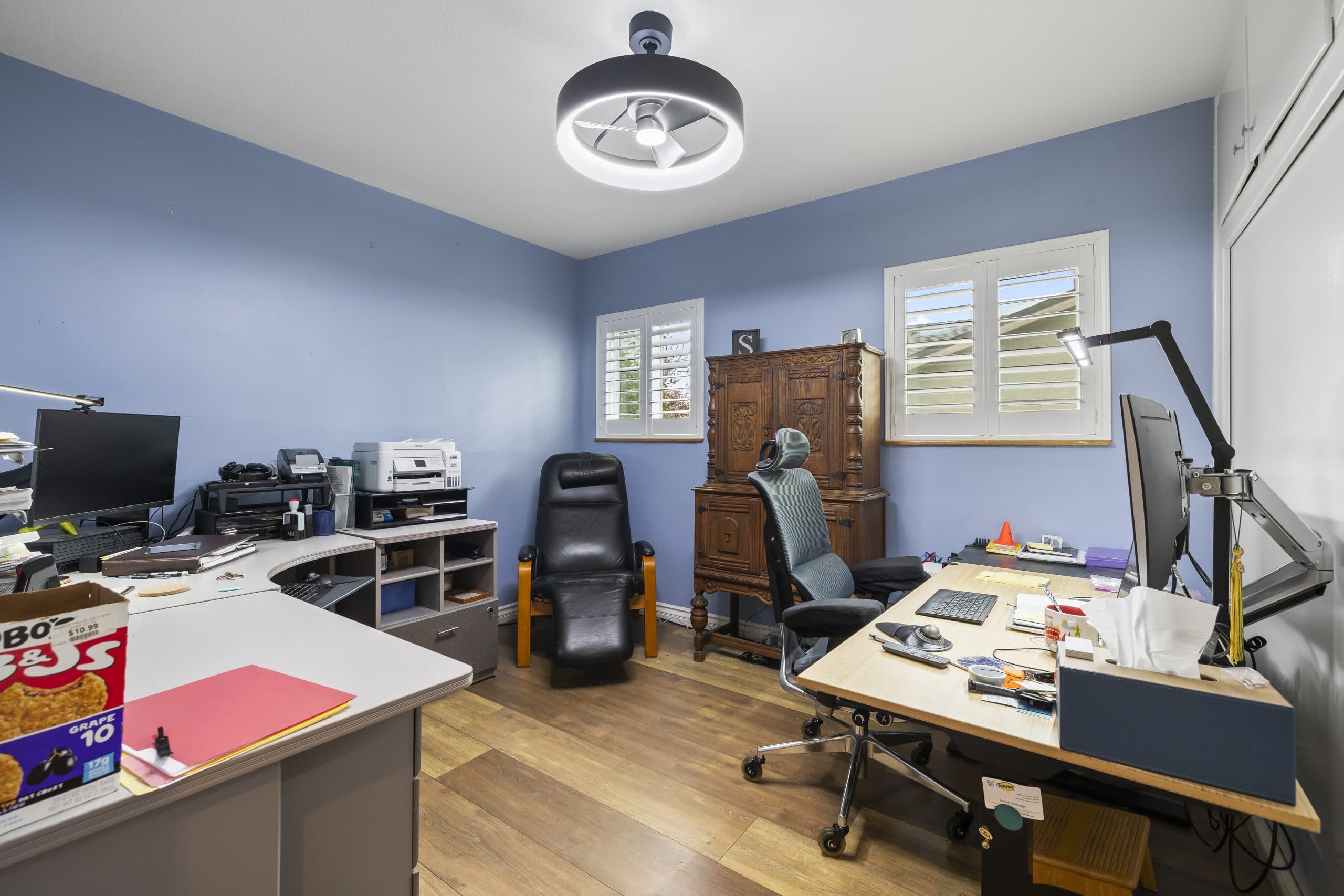
An audit is not a verdict. Walking your own house and writing down what might be awkward in ten years does not commit you to a renovation, a move, or anything else. It just replaces a vague worry with a list, and a list is far easier to live with — and to act on slowly, in your own time, at your own expense, with contractors you chose rather than ones you found in a hurry.
What follows is that walk, room by room, written for a Claremont house in particular. Do it on an ordinary afternoon with a notepad. Nothing here needs to be fixed today.
Start outside: the approach
Begin in the driveway and walk to the front door the way a visitor would. Count the steps. Note whether there is a handrail on both sides or only one, and whether the surface is level, cracked, or sloped. Look at the lighting between the car and the door after dark, because that path is where a surprising share of falls happen.
Then ask the question that matters most on older Claremont lots: if a step-free entry were ever wanted, where would it go? Many homes here have a side or garage entrance with a gentler grade than the front, which is often the cheapest and least disruptive answer. Knowing that in advance is worth more than doing anything about it now.
The bathroom, which is the whole ballgame
If you audit only one room, audit this one. The bathroom concentrates every risk factor at once — hard surfaces, water, small clearances, and tasks that require balancing on one foot.
- The shower or tub entry. Stepping over a tub wall is the single most demanding motion in most houses. Note the height of that wall. A curbless or low-threshold shower is the modification families most often wish they had made earlier.
- Something solid to hold. Look at what a person actually grabs when they slip: usually a towel bar, a soap dish, or a shower door, none of which are engineered for it. Properly anchored grab bars are undramatic, inexpensive relative to almost anything else in this article, and genuinely effective.
- Floor surface. Polished tile that is fine dry can be treacherous wet. Note the finish rather than assuming.
- Toilet height and clearance. Standing from a low seat with nothing to push against is harder than it looks, and both problems have simple fixes.
- Light. Older bathrooms are often the darkest rooms in the house. Aging eyes need substantially more light than young ones to see the same edge.
The companion article on modifications and priorities ranks this work by what actually earns its keep, which is the right next read once the list exists.
The bedroom and the night path
Walk from the bed to the bathroom in the dark. That specific trip, made half-asleep, is where a great many nighttime falls occur. Note every obstacle on it: a rug edge, a door that swings the wrong way, a cord, a low piece of furniture. Note whether a light can be reached without crossing the room first, and whether the switch is where a hand naturally goes.
Then ask the bigger structural question, which is really about the house rather than the room: is there a bedroom and a full bathroom on the ground floor, or could there be? A two-story Claremont home that can live as a single-story home when it needs to is a keeper. One that cannot is not a failure — it just means the honest conversation about options happens sooner, and the aging-in-place guide covers how that trade-off tends to play out in this town's housing stock.
The kitchen
Look for the step stool. Almost every kitchen has one, and it usually exists because the things used most often live above shoulder height. Moving daily items down to reachable shelves is free, takes an afternoon, and removes the most common reason anyone climbs anything indoors.
Beyond that: check the lighting over the counter where knives are used, note whether the stove controls are at the front or across the burners, and look at the flooring for the same slip question as the bathroom. Kitchens also accumulate small trip hazards — mats, mail piles, pet bowls — that are worth a second look precisely because they are invisible from familiarity.
Stairs, halls, and transitions
Interior stairs need handrails on both sides, uniform step heights, good light at the top and bottom, and no runner that has started to lift at an edge. In halls, the enemy is usually the floor transition: the little threshold strips and rug edges that mean nothing at sixty and everything at eighty-five. Rugs in general deserve honesty; a beloved rug can stay, but it should be secured rather than floating.
The yard, which Claremont makes generous
The lots here are one of the town's real pleasures and eventually one of its real chores. Audit the yard as a maintenance question rather than a safety one: what does this landscape require every month, who does it now, and what happens when that person does not want to any longer? Establishing a relationship with a gardener and a handyman BEFORE either is urgently needed is one of the highest-return moves in this entire article, and it costs nothing to start.
Also walk the yard's own paths after dark. Uneven flagstone, a hose across a walkway, and a dim side gate are all ordinary until they are not.
What to do with the list
Sort it into three columns: free, cheap, and structural. The free column — moving items to reachable shelves, securing rugs, adding lamps, clearing the night path — is usually half the list and can be done this weekend. The cheap column, mostly grab bars and lighting, is a single visit from a handyman. The structural column is the one to think about slowly, ideally alongside the wider question of whether this house is the long-term house.
For a professional version of this walk, ask a physician about an occupational-therapy home assessment. A trained set of eyes evaluating a specific person in a specific house beats any general checklist, including this one, and it is the right route when there is an actual mobility or health change in play rather than a general planning exercise.
Whatever the list says, remember the frame: this is preparation, not a countdown. Plenty of Claremont households do this audit, make three small changes, and stay happily in the same house for another twenty years. That is a completely successful outcome.
The senior living and housing guide puts this alongside the other pieces of the picture, and the piece on late-life renovations is the natural companion when the structural column turns out to have something in it. If you would like a second pair of eyes on how your particular house is shaped for the long term, that conversation carries no agenda and no cost. Anthony Grynchal has been licensed in California since November 2009.
Frequently asked questions
Where should a home safety audit start?
The bathroom, without much competition. It concentrates hard surfaces, water, tight clearances, and balance-demanding motions in one small room. After that, the night path from bed to bathroom and the approach from the driveway to the front door are the two highest-value walks to make.
Do I have to change anything after doing the audit?
No. The purpose is to replace a vague worry with a specific list you can act on slowly and by choice. Many households make two or three free changes — moving items to reachable shelves, securing rugs, adding light — and stay comfortably where they are for years.
Is a professional assessment worth it?
When there is an actual mobility or health change in play, yes. Ask a physician about an occupational-therapy home assessment; a trained evaluator judging a specific person in a specific house is far more useful than any general checklist. For ordinary forward planning, a careful self-audit is usually enough.
What if my Claremont home is two stories?
The question is whether it can live as a single-story home when it needs to — a bedroom and full bathroom on the ground floor, existing or creatable. If yes, it is a strong long-term candidate. If not, that is worth knowing early, while every option is still open and nothing has to be decided in a hurry.

Written by
Anthony Grynchal
Anthony Grynchal is a California real estate professional with eXp Realty, licensed since November 2009 (California DRE# 01873626), and the Designated Local Expert™ for Claremont — where he has lived for more than 33 years.
More about AnthonyPublished · Updated