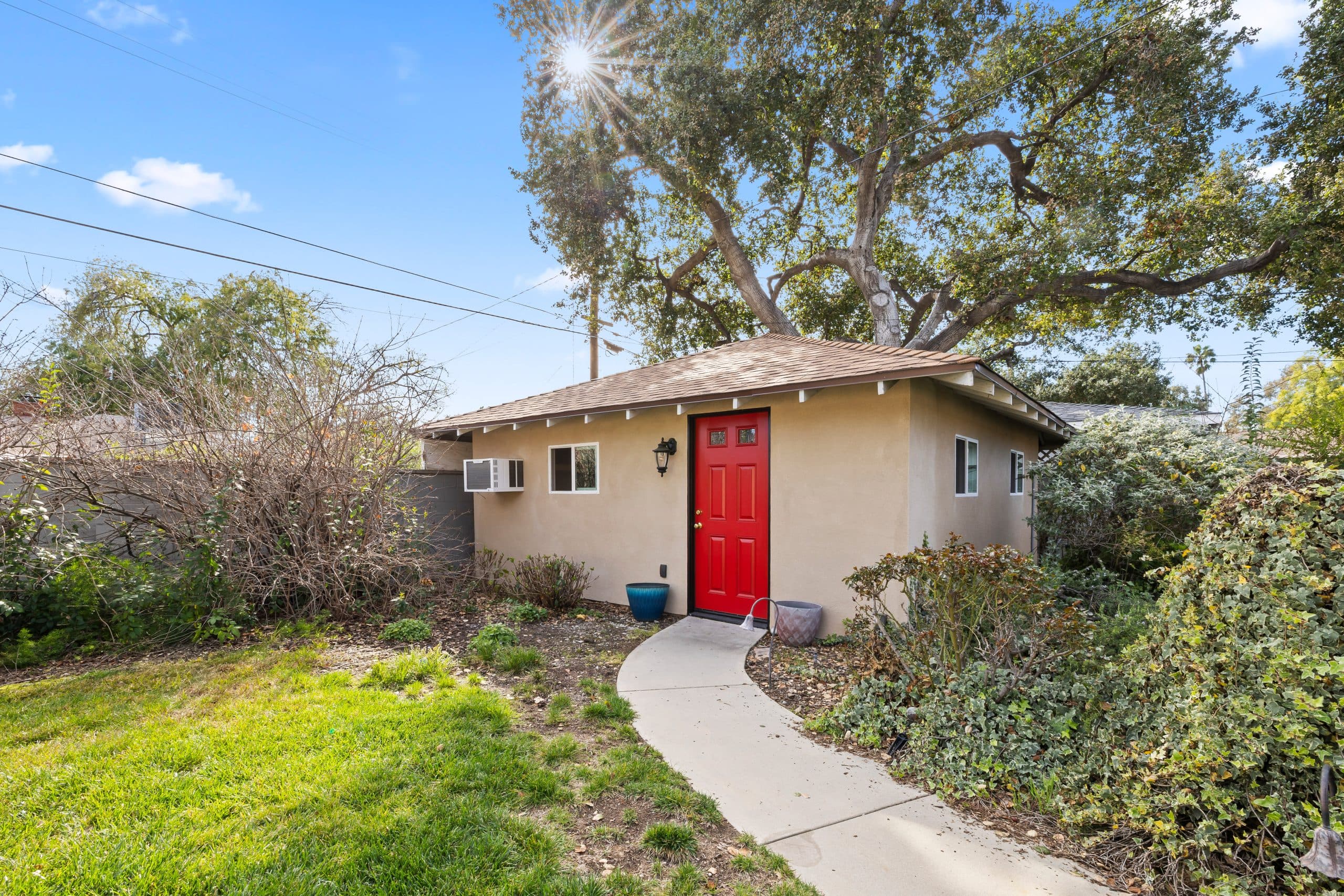
A kitchen remodel takes over a room. An ADU takes over the YARD, and unlike a room, the yard is what you look at from every window, park in, walk through, and rely on for the pleasant part of living in this town. Most owners plan the building thoroughly and the experience of building it not at all, then spend several months discovering that a construction site outside the back door has a texture nobody described. This article describes it. It deepens the ADU guide and follows the sequence the permit timeline lays out, picking up where the paperwork ends and the trucks arrive.
The usual caution applies to anything regulatory below. Construction hours, noise provisions, street use, and permit conditions are local rules that change, and they can also carry project-specific conditions. Nothing here states a rule, an hour, or a permission. The City of Claremont holds the current answers, along with your permit's own conditions. Verify before you rely on it.
Work out where everything goes before it arrives
The logistics questions are boring and they are the ones that determine whether the build is tolerable. Answer them with the contractor before mobilization, not on the first morning.
Where do materials get stored, and is that location out of the weather, off the root zones you are protecting, and not on the path you use daily. Where do crews park, and does that arrangement work for a street where your neighbors also park. How does a delivery reach the back of the lot, and does anything have to come through a gate that has to be widened or a fence panel that has to come out. Where does debris accumulate and how often does it leave. Where is the sanitary facility, which is a real question people are too polite to ask and then regret. Where is the power tap and the water source.
On a typical Claremont lot with a house at the front and the unit going in behind, everything has to travel down one side yard or a driveway. That single route is the project's bottleneck, and treating it as a designed element rather than an accident makes months of difference.
What you lose, for how long
Be honest in advance about the temporary losses, because the surprise is worse than the loss. The yard is unusable. Some or all of the driveway may be unavailable. Outdoor entertaining is over for the season. Depending on utility work, there will be planned interruptions to water or power at the main house, and those are worth scheduling around rather than absorbing.
Dust reaches indoors regardless of intentions. Noise begins early, because trades start early. If anyone in the household works from home, takes calls, sleeps during the day, or is young enough to nap, that is a genuine planning input and not a minor preference, and it should be raised with the contractor at scheduling rather than complained about later.
Pets deserve their own sentence. Open gates, unfamiliar people, and equipment are how animals get out, and a written protocol about gates and containment is worth having.
Neighbors, again, and earlier than feels necessary
The neighbors did not choose this project, and they will live with several months of it. A short conversation before work starts, covering roughly when it will begin, roughly how long it should run, what the noisiest phases are likely to be, and how to reach you directly, converts most potential complaints into tolerance.
Give them a phone number and answer it. That single act does more than any amount of goodwill accumulated in the abstract, because a neighbor with a direct line raises an issue with you, and a neighbor without one raises it with the city. When something genuinely disruptive is scheduled, tell them beforehand. When something goes wrong, say so first. These are the same relationships the privacy article argues you should be protecting at the design stage, and the construction period is where that investment is either confirmed or spent.
Working hours and street use
Confirm with the city what construction hours apply and whether anything about your project requires additional permission, such as street or sidewalk use, temporary closures, deliveries by large vehicles, or equipment placement. Ask rather than assume, and get the answers to the contractor in writing so that compliance is their obligation under the contract rather than your discovery later.
Note that a genuine violation is not only a neighbor-relations problem; it can become an enforcement matter that pauses work, which is the most expensive kind of delay because the crew is idle and the schedule is already committed.
Protect what you are keeping
The lot contains things you value and the crew has no reason to identify. Mature trees and their root zones, fenced and marked. Irrigation lines, which are shallow, invisible, and cut constantly. Existing hardscape and any surface you do not want equipment on. The main house exterior, where scaffolding and material handling can do incidental damage. Anything sentimental in the yard, which should simply be moved out.
Written into the scope, walked before mobilization, and photographed beforehand, all of this becomes straightforward. Left implicit, it becomes a conversation about who owes whom for a broken sprinkler zone.
Expect the schedule to move
Inspections, weather, materials, and the discovery of what is actually under the ground all move dates, and an ADU project sits on a lot with fifty years of undocumented history under it. The useful posture is not pessimism but a schedule you can absorb slippage into: do not book the family gathering for the week after the projected finish, and do not commit the unit to an occupant before there is a final.
That last point matters practically as well as emotionally. Promising a move-in date to a parent or a tenant before the inspection process has concluded creates pressure at exactly the point where patience is most valuable, and it is a common source of decisions made for the wrong reason. Handle occupancy planning the way the rental rules article and, where family is involved, the multigenerational guide suggest: with dates that follow the permit, not dates the permit has to catch up with.
Keep the record as you go
Photograph the site before work begins and at each stage, particularly anything that will be buried. Keep permits, inspection cards, correspondence, product documentation, and warranties together from day one. The people who need this later are an appraiser, a lender, a buyer, and possibly you at two in the morning trying to work out where a valve is. Assembling it afterward is a bad afternoon; keeping it as you go is nothing at all. This is general information and not legal or construction advice; the City of Claremont, your permit conditions, and your licensed contractor govern. Anthony Grynchal has been licensed in California since November 2009.
Frequently asked questions
What is it actually like living through an ADU build?
The yard is unusable, some or all of the driveway may be unavailable, dust reaches indoors, and trades start early. There will also be planned water and power interruptions at the main house during utility work. Anyone working from home, sleeping during the day, or napping is a genuine scheduling input.
How should ADU construction logistics be planned?
Settle them with the contractor before mobilization: material storage, crew parking, delivery access to the rear of the lot, debris removal, sanitary facilities, and power and water taps. On a typical lot everything travels down one side yard or driveway, and that single route is the project's bottleneck.
What should I tell neighbors before an ADU build starts?
Roughly when work begins, how long it should run, which phases are noisiest, and how to reach you directly. Give a phone number and answer it. A neighbor with a direct line raises issues with you; a neighbor without one raises them with the city.
Should I promise a move-in date before the ADU is finished?
No. Inspections, weather, materials, and what turns up underground all move schedules on a lot with decades of undocumented history. Committing a date to a tenant or a parent before final inspection creates pressure exactly where patience matters most, and it drives decisions made for the wrong reason.

Written by
Anthony Grynchal
Anthony Grynchal is a California real estate professional with eXp Realty, licensed since November 2009 (California DRE# 01873626), and the Designated Local Expert™ for Claremont — where he has lived for more than 33 years.
More about AnthonyPublished · Updated