Single-story homes attract an unusually wide range of buyers. Young families who do not want stairs with a toddler, households planning to age in place, anyone with a mobility consideration, and buyers who simply prefer the layout. Several different groups want the same product for different reasons.
In a small, largely built-out city, that overlapping demand is the whole story. Here is what it means practically.
Where single-story homes are in Claremont
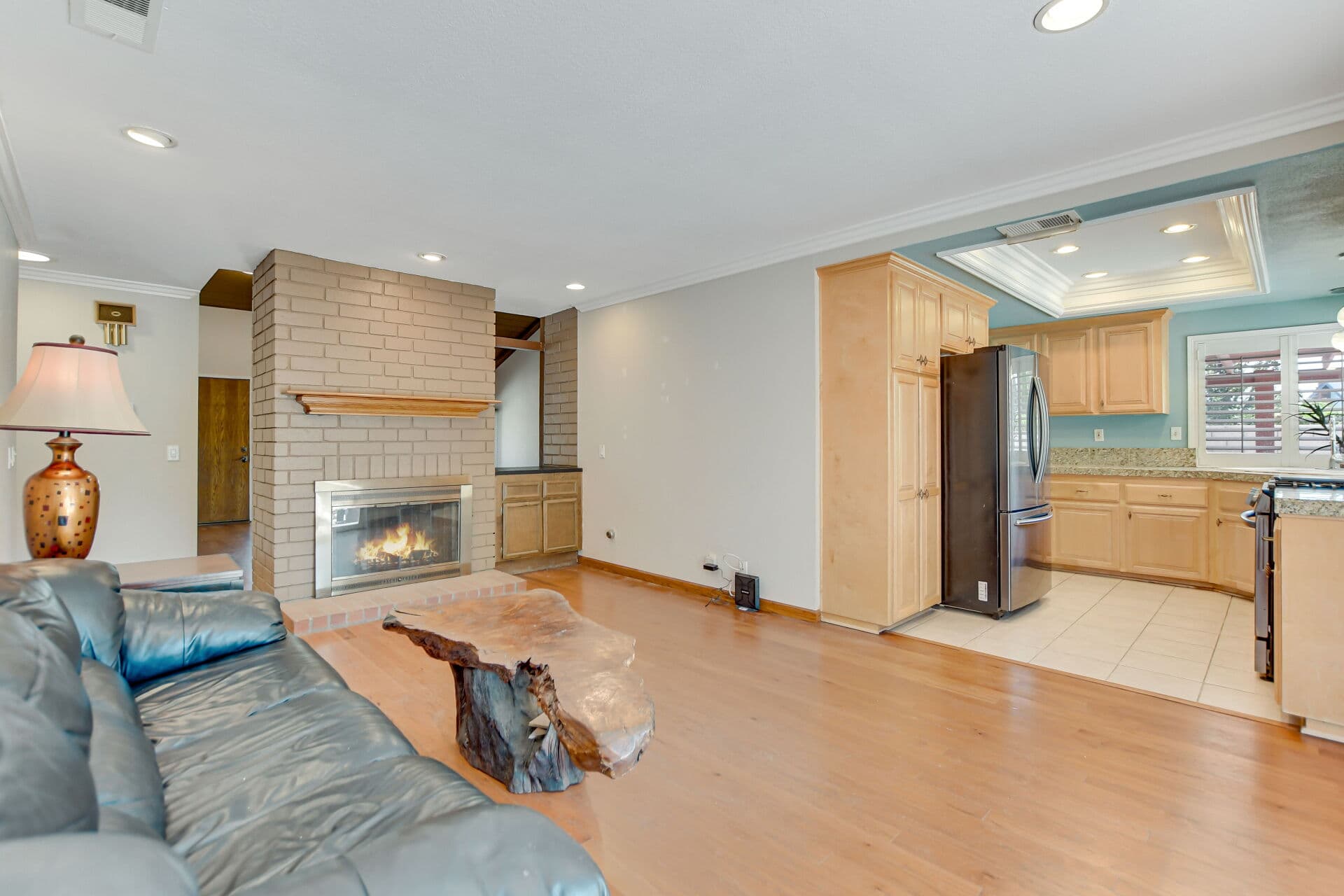
The city's mid-century tract housing is the main source. Those neighborhoods were built when single-level ranch layouts were the standard product, and much of that stock is still standing largely as built.
Around the Village and the older blocks, you find single-story bungalows and early cottages, generally on modest lots and generally with the room sizes of their era. In north Claremont, single-level homes are common in the tracts, often on larger lots than the central neighborhoods.
On the hillside, single-level is less predictable. A house can present as one story from the street and step down the slope behind, which is a different thing entirely from a flat single-level floor plan. Look at the actual plan rather than the elevation.
Why the buyer pool is wide
It is not one preference, it is several stacked on each other.
- Households planning to stay long term and avoid a future move.
- Buyers purchasing for or with a parent, which is a distinct project covered in buying a Claremont home for aging parents.
- Anyone with a current mobility consideration, or anticipating one.
- Buyers who want the living space and the bedrooms on one plane for everyday reasons that have nothing to do with age.
Add to that the simple supply fact: Claremont does not build much new housing, so the single-story stock is largely fixed. Existing homes get remodeled and occasionally get a second story added, which moves inventory in one direction only.
What to inspect, specifically
Single-story does not mean simpler. It means a different set of questions.
Slab or raised foundation. Much of the mid-century stock here is slab-on-grade. That affects how plumbing runs, how a leak presents, and what a repair looks like. Ask which you are buying and ask your inspector to speak to it directly.
Roof area is proportionally larger. Spread the same square footage across one level and you have more roof per square foot of house than a two-story of the same size. That matters for replacement cost, for insulation performance and for how much of the structure sits under mature trees.
Original plumbing and electrical. Older single-level homes frequently still carry original supply lines and an original panel. Neither is automatically a problem and both are things you want identified before your inspection period closes. The framework for handling findings is in Claremont home inspections.
Additions and conversions. Single-story homes get added to more often than two-story homes, because there is somewhere to add. Look for where an addition meets the original structure, look at roof-line transitions, and ask whether permits exist. A converted garage and a permitted accessory dwelling unit look similar from the yard and are entirely different on paper.
Actual accessibility, not assumed accessibility. A single-story home is not automatically accessible. Check for steps at the entries, doorway widths, hallway turns, bathroom layout and threshold heights at exterior doors. If accessibility is the reason you want one story, measure rather than assume.
Competing for one without overreaching
When several buyer groups want the same product in a city that produces very little of it, good listings draw more than one offer. That is a preparation problem.
Preparation means your financing is genuinely underwritten before you tour, not pre-qualified in a phone call. It means you have decided in advance which terms you can flex and which you will not. It means you have read your own contract before you are under pressure to sign one.
What it should not mean is abandoning your protections. Every buyer feels the pull to strip contingencies when they want a house, and every buyer should read the real risk of waiving contingencies before acting on that feeling. The structural approach to a strong offer is in writing a winning offer on a Claremont home.
One more thing worth saying plainly: buyer-agent compensation is negotiable and is agreed in writing between you and your agent. It is not automatically paid by a seller, and how it is handled is a term in your transaction like any other. Have that conversation early, in writing, before you are choosing between two houses.
What single-story does to resale
The same wide demand that makes one harder to buy tends to make it easier to sell later. That is not a promise about price, which depends on the market at the time, the specific home and its condition. It is an observation about the size of the audience.
The related point is about changing one. Adding a second story converts a single-level home into a two-story home and moves it out of the pool that wanted it for the layout. That may still be the right decision for a household, and it is worth making with the trade understood rather than discovered afterwards.
The short version
Look in the mid-century tracts and north Claremont first. Verify slab versus raised foundation, panel and plumbing age, and the permit history of anything that looks added. Measure actual accessibility instead of assuming it. Arrive with financing that is done rather than started.
For the wider sequence, start at the Claremont home buying hub. Anthony Grynchal has been licensed in California since November 2009.
Frequently asked questions
Where are most single-story homes in Claremont?
Primarily in the mid-century tract neighborhoods, which were built when single-level ranch layouts were standard, plus older bungalows near the Village and single-level homes in the north Claremont tracts.
Is a single-story home automatically accessible?
No. Check entry steps, doorway widths, hallway turns, bathroom layout and exterior threshold heights. If accessibility is the reason for the preference, measure rather than assume one level solves it.
What should I inspect that is specific to single-level homes here?
Whether the foundation is slab-on-grade or raised, the age of original plumbing and the electrical panel, roof condition across a proportionally larger roof area, and the permit history of any addition or garage conversion.
Does adding a second story make sense?
It can, but understand the trade. Adding a second story moves the home out of the buyer pool that specifically wanted a single level. Make that decision knowingly rather than discovering it at resale.

Written by
Anthony Grynchal
Anthony Grynchal is a California real estate professional with eXp Realty, licensed since November 2009 (California DRE# 01873626), and the Designated Local Expert™ for Claremont — where he has lived for more than 33 years.
More about AnthonyPublished · Updated