
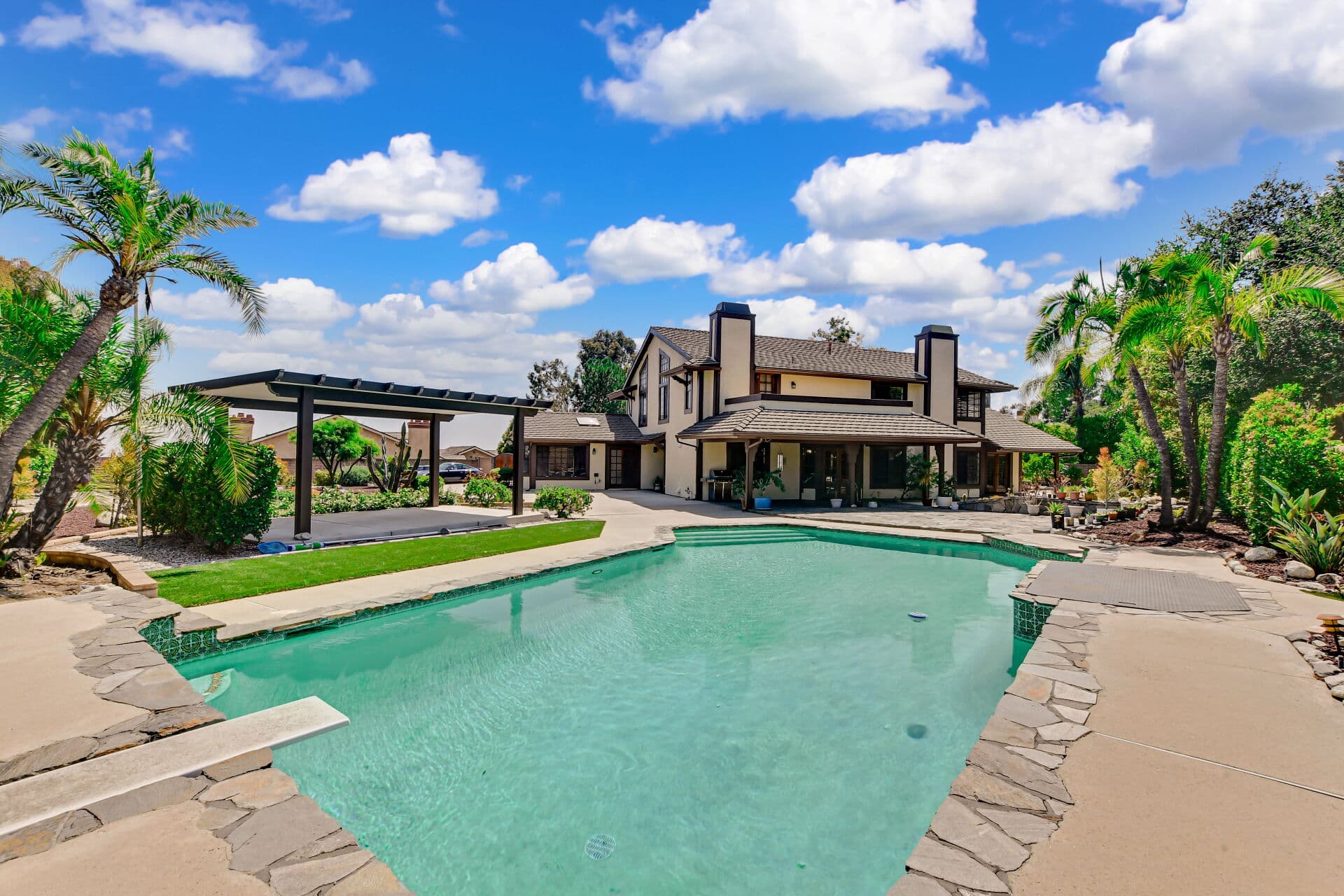
A Claremont pool is a twelve-month responsibility in a climate generous enough to make that a fair trade — but the pools that stay beautiful and the pools that become money pits are separated less by luck than by RHYTHM. Water chemistry is a system that rewards small, regular attention and punishes neglect exponentially: a pool maintained weekly costs a fraction, in money and grief, of the same pool rescued quarterly. This article is the owner's operating rhythm — the weekly basics, the seasonal calendar, the equipment lifecycle, and the honest do-it-yourself-versus-service decision. It deepens the maintenance guide; what a BUYER should check before inheriting a pool is the pool due-diligence guide's subject, and this article is the life that starts after those keys change hands. No chemical dosages or cost figures appear here by design — your test readings, your pool's volume, and your service quotes supply the numbers.
The weekly rhythm: chemistry, circulation, cleaning
Pool health rests on three C's in a loop. CHEMISTRY: test the water regularly — sanitizer level and pH are the workhorse readings, with alkalinity and the rest on a slower cadence — and adjust in small steps; balanced water protects swimmers first and the pool itself second, because chronically corrosive or scaling water quietly eats surfaces, seals, and heat exchangers (the expensive stuff). One Claremont-relevant note: this region's water tends hard, which makes calcium and scale management a real long-term theme here — a local pool store's water test or your service tech can tell you what your fill water starts with. CIRCULATION: the pump's daily run moves water through filtration and distributes chemistry — dead water is where algae starts — and run time is a settings question that shifts by season (longer in the heat of summer, shorter in winter; a variable-speed pump makes the whole conversation cheaper and quieter, the classic efficiency upgrade). CLEANING: skim, brush the walls and waterline, empty baskets, and vacuum or let the robot do it — the mechanical removal of debris is what keeps the chemistry's job small, and in tree-blessed Claremont, canopy neighborhoods pay a real leaf tax that makes netting and skimming a genuinely local sport (the same canopy the roof guide manages from above).
The seasonal calendar — Claremont edition
This is a no-closure climate: Claremont pools run year-round, which changes the calendar from the freeze-belt scripts online. SUMMER is the high season for everything — heat and sun burn through sanitizer faster, evaporation concentrates the water, bather load peaks, so testing tightens, run times lengthen, and the water level wants watching. FALL is the leaf campaign: stay ahead of the drop, because a mat of leaves on the bottom is both an algae banquet and a stain risk. WINTER is the light-duty season — shorter run times, slower chemistry, but never abandonment; a mild-winter pool left untended until spring is the classic green-pool origin story, and the one freeze-adjacent note this climate does occasionally serve is protecting exposed equipment plumbing on the rare hard-frost night (your equipment's freeze-protection settings, if present, are worth knowing). SPRING is inspection season: as temperatures climb, algae pressure returns, so chemistry snugs back up — and it is the natural annual moment to walk the equipment pad, check for leaks and seal weep, service the filter, and look hard at the water line and surface condition before the high season leans on them.
Equipment, water, and the hire-it-out decision
THE LIFECYCLE VIEW: every pool's big components age on rough schedules — pumps, filters, heaters on their cycles, the interior surface on its own longer one — and the maintenance owner's advantage is converting those from surprises into a plan: know each item's age (the due-diligence guide's paper-trail habit, continued), budget for the next replacement rather than discovering it, and treat rising noise, pressure drift, or heating decline as early signals worth a look while repairs are still small. WATER ITSELF AGES in this climate: years of evaporation and refill concentrate dissolved solids and calcium until chemistry stops behaving, and the periodic partial-or-full water replacement (or the specialty filtration alternatives) is a normal maintenance event here, not a failure — your test numbers and a trusted pool professional time it. SAFETY RIDES ALONG: barriers, gates, and covers are maintenance items too (gate and latch hardware lives in the curb-function guide's fleet) — the same drowning-prevention features California's transfer rules check are only protective while they actually latch. AND THE HONEST DIY-VERSUS-SERVICE CALL: weekly service buys expertise, consistency, and vacation-proofing at a monthly cost worth quoting locally; DIY buys savings and control at the price of genuine consistency — and the failure mode is not choosing DIY, it is choosing DIY and then delivering service-level attention only in June. Many owners land on a hybrid: DIY rhythm, professional eyes seasonally and for equipment work. Whatever the model, the rhythm is the product. This is general information; your test readings, your equipment's manuals, and your pool professional govern the specifics.
Anthony Grynchal has been licensed in California since November 2009 and can read a pool's maintenance history from the deck in about thirty seconds — clear water, tight waterline, quiet pad — and so, at showing time, can every buyer.
Frequently asked questions
How often should a pool be maintained?
Weekly, as a rhythm: test and adjust chemistry in small steps, run the pump daily on a season-appropriate schedule, and skim, brush, and empty baskets so the chemistry's job stays small. Water chemistry rewards regular small attention and punishes neglect exponentially — a weekly pool costs a fraction of a quarterly-rescued one.
Do Claremont pools close for winter?
No — this is a year-round climate. Winter is light duty (shorter run times, slower chemistry) but never abandonment; the mild-winter pool left untended until spring is the classic green-pool origin story. The rare hard-frost night is worth knowing your equipment's freeze-protection settings for.
Why does pool water need replacing?
Years of evaporation and refill concentrate dissolved solids and calcium — especially with this region's hard fill water — until chemistry stops behaving. Periodic partial or full water replacement (or specialty filtration alternatives) is normal maintenance here, timed by your test numbers and a trusted pool professional.
Is a weekly pool service worth it?
It buys expertise, consistency, and vacation-proofing at a monthly cost worth quoting locally. DIY buys savings and control — and fails only when June-level attention meets a January commitment. Many owners land on a hybrid: DIY rhythm with professional eyes seasonally and for equipment work.

Written by
Anthony Grynchal
Anthony Grynchal is a California real estate professional with eXp Realty, licensed since November 2009 (California DRE# 01873626), and the Designated Local Expert™ for Claremont — where he has lived for more than 33 years.
More about AnthonyPublished · Updated