
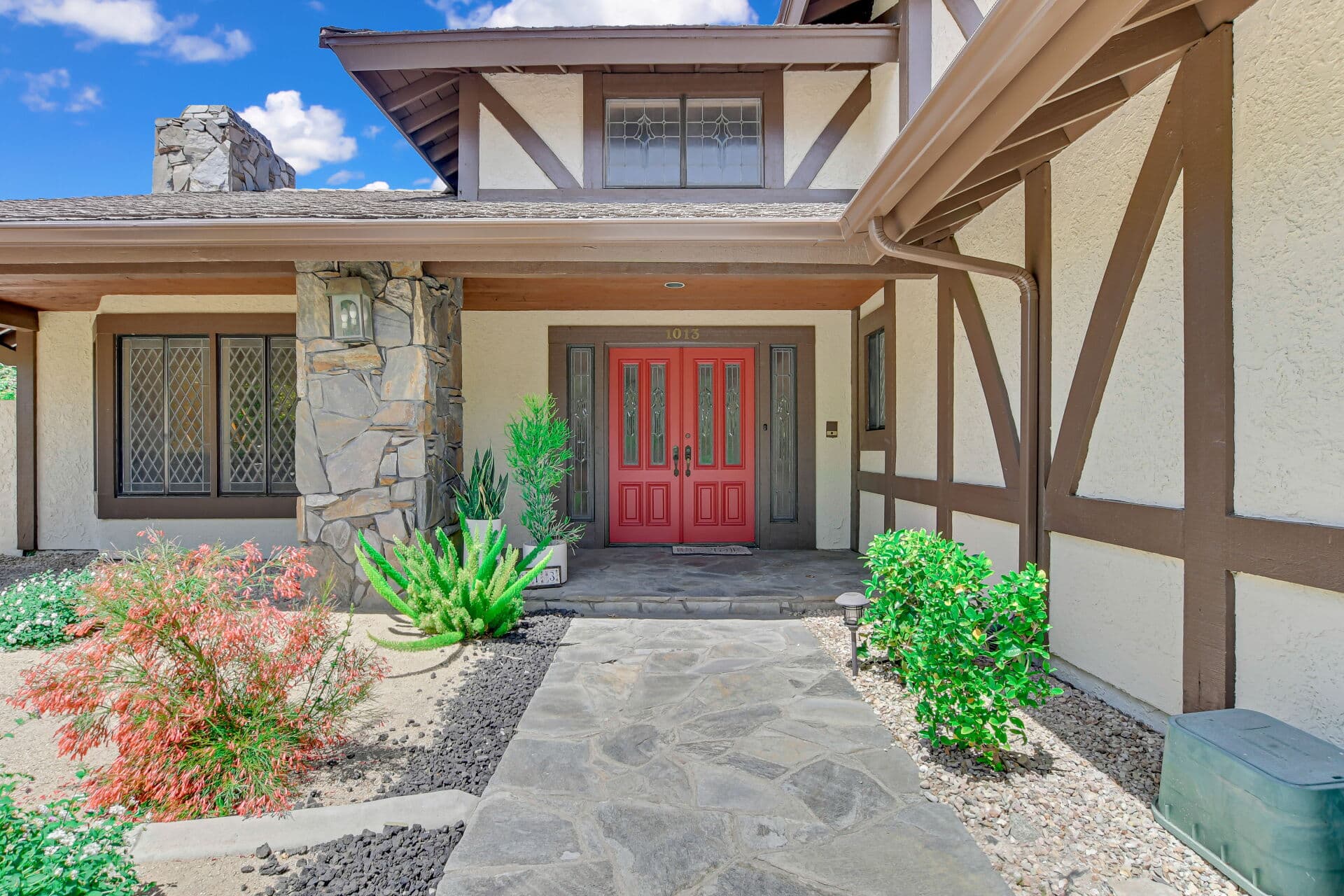
Stucco is the most common exterior in Claremont and easily the least understood. It wraps the Spanish and Mediterranean revival houses near the Village, the enormous postwar ranch inventory that fills the tracts between them, and a good deal of what has been built since. Owners tend to treat it as paint on concrete: hard, permanent, and alarming the moment it cracks. It is neither as permanent nor as fragile as that instinct suggests. Stucco is an ASSEMBLY, not a surface, and reading it correctly means knowing what sits behind it, which cracks are conversation and which are warning, and where water is getting in. This article covers all three, plus the practical question of when to patch, when to repaint and when a wall has genuinely reached the end. It deepens the maintenance hub and its owner's guide. Anything structural or involving old coatings belongs to a licensed contractor, not to an article.
What is behind the surface, and what the cracks mean
Traditional cement plaster is applied in three coats over metal lath, with a weather-resistive membrane behind the lath and a WEEP SCREED — a perforated metal edge — running along the bottom of the wall. That detail is the whole design philosophy in one piece of trim: the system assumes some water will get behind the stucco, and its job is to drain that water back out at the base. Stucco is not a raincoat. It is a reservoir cladding with an escape route. One-coat and synthetic systems, common on newer construction, behave differently and should be diagnosed on their own terms. Now the crack vocabulary. FINE MAP CRACKING, the shallow web of hairlines you see across a broad wall in raking afternoon light, is shrinkage. It is normal, it is cosmetic, and it happens to nearly every stucco wall eventually. DIAGONAL CRACKS RADIATING FROM THE CORNERS of windows and doors are the wall relieving stress at its weakest points; they are extremely common, usually benign, and worth photographing and dating so you can tell later whether they moved. WHAT DESERVES A CALL: cracks that are noticeably wider at one end, cracks with the two faces offset from each other, long horizontal cracks, bulging or wavy areas, and any patch of wall that sounds HOLLOW when you tap it, which means the coat has lost its bond or the lath and framing behind it are wet. Stair-step cracking that runs down toward the foundation should be read as a foundation question that happens to be visible in the stucco, not as a stucco defect, and that reading belongs to a structural engineer.
Water is the actual enemy
Almost every serious stucco failure in Claremont traces to water arriving somewhere it was not designed to go, and four culprits account for most of it. THE WEEP SCREED BURIED AT THE BASE is the classic older-home defect: decades of raised planting beds, added mulch, new hardscape and generous landscaping have brought the grade up against the wall until the drainage edge sits below soil level, at which point the wall cannot dry and the bottom of the assembly stays permanently damp. Keeping soil and mulch clear of that edge costs nothing, and it is worth checking whenever a yard is replanted or converted. SPRINKLER OVERSPRAY is second and is the most preventable of all: a head that hits stucco daily produces staining, efflorescence — the white mineral bloom of water passing through cement — and eventually a soft, failing area. Aim the heads away from the house and check them after any irrigation change. FLASHING IS THIRD. Head flashing over windows and doors, and the KICK-OUT FLASHING where a roof edge meets a wall, are small pieces of metal doing enormous work; a missing kick-out sends an entire roof plane's runoff into the wall cavity, and the damage is invisible from outside until it is expensive. That intersection is one to inspect whenever the roof is inspected, which under Claremont's canopy should be regularly — the canopy and roof guide covers the rhythm. FOURTH IS SHADE AND MOISTURE: north and east elevations under mature trees stay damp long after the sun has dried the rest of the house, holding algae and growth that keep the surface wet. That is a trimming and airflow problem more than a stucco problem.
Patch, repaint, or re-stucco
Patching stucco is not difficult. MATCHING IT IS. Color and, more importantly, texture are the craft, and a technically sound patch in the wrong texture reads across a wall from the street. Two disciplines help: have the contractor do sample panels on an inconspicuous elevation before committing, and expect that a wall with meaningful repairs will need a unifying finish coat afterwards — either a fog coat, which is a thin cementitious wash that recolors without hiding texture, or a full repaint. On coatings, ELASTOMERIC PAINT is a genuine trade-off rather than an upgrade. It bridges hairline cracks and sheds water well, and it also reduces the wall's ability to dry outward, which is a problem if moisture is already getting in from behind. That decision belongs to a contractor who has looked at your wall and your flashing, not to a product page. Full re-stucco is the answer when large areas have delaminated, when the lath or the membrane behind it is compromised, or when repeated patching has produced a quilt nobody can unify. Timing matters too: cement plaster wants moderate conditions to cure, and a good contractor will have firm opinions about applying it in Claremont's dry heat or a windy afternoon. One safety note that is not optional — older exterior coatings may contain materials requiring testing before aggressive sanding, grinding or demolition, so have the surface assessed rather than attacking it with a power tool on a hunch. Finally, the sale angle: stucco is among the first things a buyer's inspector photographs, and a wall with maintenance invoices behind it reads very differently from the same wall wearing fresh paint over unrepaired cracks. Fresh paint on a moving crack is not a repair; it is a countdown, and the selling guide's disclosure discipline applies.
Anthony Grynchal has been licensed in California since November 2009 and has watched buyers walk past hairline map cracking without blinking and stop cold at a single hollow-sounding panel. They are right to. This is general information; a licensed contractor governs the specifics of your wall.
Frequently asked questions
Are cracks in stucco a serious problem?
Usually not. Fine map cracking is shrinkage and is cosmetic, and diagonal cracks radiating from window and door corners are the wall relieving stress at its weakest points. What deserves a call is a crack that is wider at one end, offset faces, long horizontal cracks, bulging, or any area that sounds hollow.
Why does the bottom of my stucco wall stay damp?
Often because the weep screed is buried. That perforated metal edge at the base of the wall is how the assembly drains water back out, and decades of raised planting beds, added mulch or new hardscape can bring grade above it. Clearing soil and mulch away from that edge costs nothing and matters enormously.
Should I use elastomeric paint on my Claremont stucco?
It is a trade-off, not an upgrade. Elastomeric coatings bridge hairline cracks and shed water well, and they also reduce the wall's ability to dry outward, which becomes a problem if moisture is already entering from behind the stucco. Let a contractor who has examined your wall and flashing make that call.
When does a Claremont house need re-stuccoing rather than patching?
When large areas have lost their bond and sound hollow, when the lath or the weather-resistive membrane behind the stucco is compromised, or when repeated patching has left a quilt of mismatched textures that no finish coat can unify. Sample panels on an inconspicuous elevation are the way to test a match first.

Written by
Anthony Grynchal
Anthony Grynchal is a California real estate professional with eXp Realty, licensed since November 2009 (California DRE# 01873626), and the Designated Local Expert™ for Claremont — where he has lived for more than 33 years.
More about AnthonyPublished · Updated