A listing says two-car garage. The garage was built when cars were narrower, the driveway is a single strip, and the household owns two vehicles plus whatever a visitor arrives in. That gap between the stated number and the working number is one of the most common surprises in the first month of ownership here.
It is worth measuring before it becomes a daily problem.
The vintage garage problem
Older Claremont houses came with garages sized for the vehicles of their era. Many of them are detached, sitting at the back of the lot at the end of a long drive. The footprint is honest and the clearance is not.
Two numbers matter more than the label. The clear DOOR OPENING, measured between the jambs, and the clear INTERIOR WIDTH between whatever is stored along the walls. A garage that measures as a two-car on paper often works as a one-car plus storage, because the second bay is where the bikes, the bins, the tools, and the seasonal boxes went. That is not a failure of tidiness. It is the direct consequence of houses built with very little closet space, which the storage guide covers at length.
If the garage is going to hold a car, something else has to hold the overflow. Decide which before you close.
The driveway is the real capacity
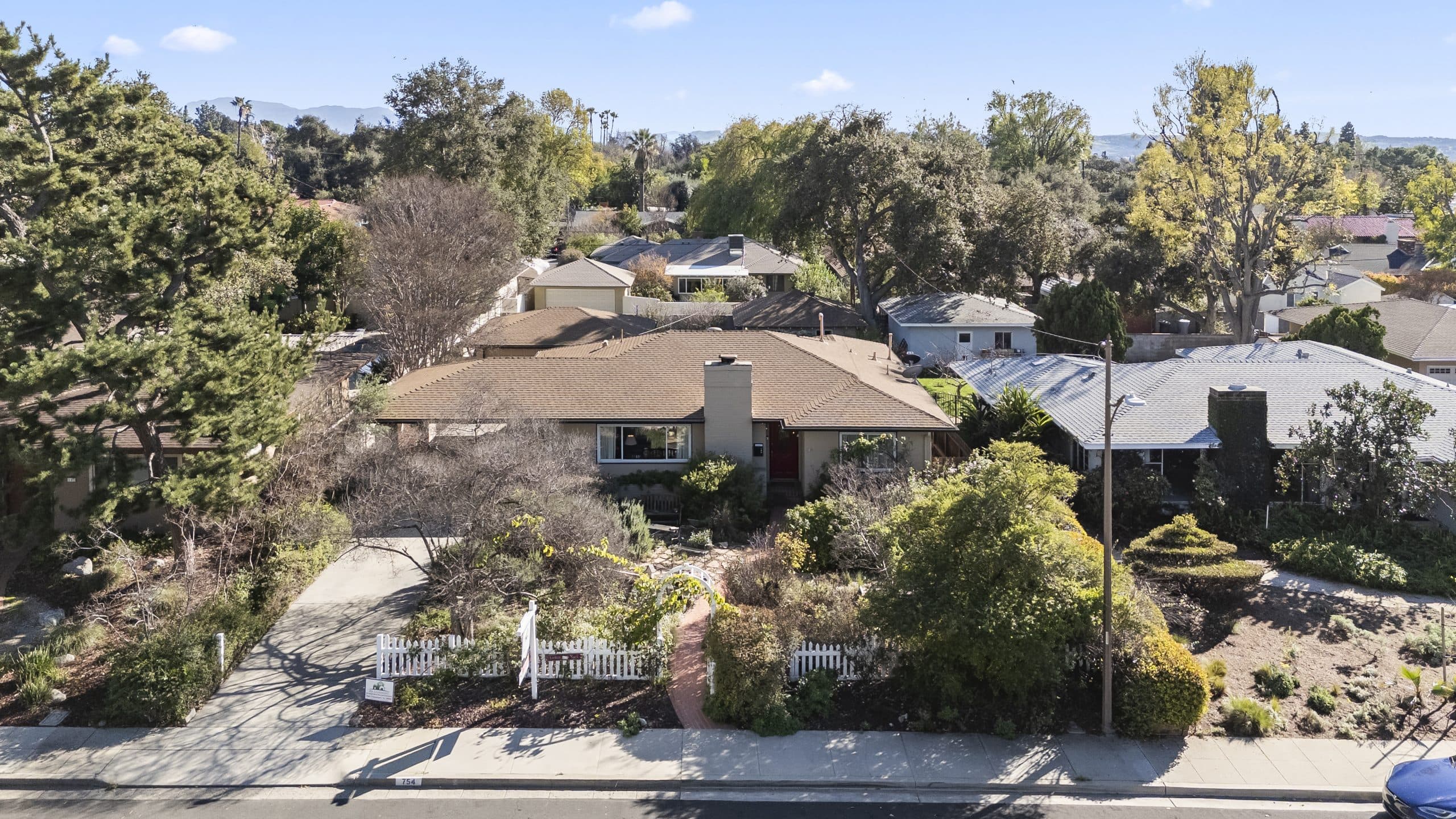
On a lot of these blocks the driveway does more work than the garage. Measure three things.
- WIDTH. A single strip drive fits one vehicle and a person walking sideways past it. Two abreast needs meaningfully more, and the older lots frequently do not have it.
- DEPTH. A long drive to a rear garage can stack two or three vehicles nose to tail, which is genuine capacity as long as the household can tolerate shuffling.
- APRON. Where the drive meets the street, a shallow apron means the last car in the stack overhangs the sidewalk. That is a problem for pedestrians and for you.
Stacked parking works fine for a household that leaves in a predictable order and badly for one that does not. If two people depart at unpredictable hours, a deep stacked drive is functionally one space, not three.
Then the curb, and the curb has a schedule
Street parking is the release valve, and it has conditions attached. Sweeping days, posted restrictions, and on some blocks a genuine shortage of frontage per house. Read the signs on the specific street rather than assuming, and check overnight rules directly with the city before counting on the curb as a permanent third space.
Then look at the block itself in the evening. If every curb space is occupied at nine on a weeknight, that is your answer regardless of what the regulations permit. The curb-life guide covers what the frontage does to the front of a property, which is the other half of this question.
Households that need fewer cars than they think
The interesting case runs the other direction. Within the walkable core, a household can genuinely drop a vehicle, and some do.
Whether that works is not a matter of intention. It is a matter of the ERRAND MIX. If the routine trips are groceries, a counter, the library, and a park, a walk covers them and a bike covers them faster. If the routine trips include a job in another county, a specialist appointment, and a weekly haul of something heavy, the second car is not optional and no amount of charm will make it so. The walkability guide is the honest map of what the radius absorbs, and the bike guide covers what two wheels extend it to.
The commuting household is a separate calculation entirely, and the vehicle count usually follows the commute rather than the house.
What to actually measure at a showing
Bring a tape. It takes four minutes.
- Garage door opening, jamb to jamb, and header height if anything you own is tall.
- Interior clear width and depth, with the current owner's storage still in place, so you see the working number rather than the theoretical one.
- Driveway width at its narrowest point, which is usually beside the house.
- Driveway length from apron to garage door.
- The side gate, if you intend to roll bins or bikes through it.
Then park your own car in the drive during the second showing. Nothing substitutes for that. A drive that looks generous can turn out to require a three-point turn to leave, which you will do twice a day for as long as you own the house.
The conversions question
A detached garage is an obvious candidate for other uses, and plenty of them here have already become a workshop, a studio, or an office. That is a real gain and a real loss at the same time, because the vehicle capacity goes with it.
If you are buying a house whose garage already holds something other than cars, price the parking honestly and check what any conversion required in the way of permits. The daily-use case for those buildings is covered in the studio-space guide. Permit history and current standards are a question for the City of Claremont, not for a listing description.
Where to go next
This cluster lives under the lifestyle guide. The closest neighbor is the storage guide, because in practice the parking question and the storage question are the same question fighting over one building. For the numbers at a specific address, that is a tape measure and a walkthrough. Anthony Grynchal has been licensed in California since November 2009.
Frequently asked questions
Why does a two-car garage in an older Claremont house often hold one car?
Because it was built for narrower vehicles and because the house has little closet space, so the second bay fills with bins, tools, bikes, and seasonal storage. Measure the clear door opening and the interior width with the current storage in place to see the working capacity rather than the label.
What should I measure at a showing to judge parking?
Garage door opening jamb to jamb, header height, interior clear width and depth, driveway width at its narrowest point, driveway length from apron to garage, and the side gate if you plan to roll bins or bikes through. Then park your own vehicle in the drive at a second showing.
Can a Claremont household get by with one car?
Some can, within the walkable core, but it depends on the errand mix rather than on intent. Groceries, a library trip, a counter, and a park are all walkable or bikeable. A job in another county, a heavy weekly haul, or unpredictable departure times usually keep the second vehicle.
What happens to parking when a garage has been converted?
The vehicle capacity goes with it, so price the parking honestly against the driveway and the curb. Also confirm the permit history for any conversion with the City of Claremont rather than relying on a listing description or a seller's summary.

Written by
Anthony Grynchal
Anthony Grynchal is a California real estate professional with eXp Realty, licensed since November 2009 (California DRE# 01873626), and the Designated Local Expert™ for Claremont — where he has lived for more than 33 years.
More about AnthonyPublished · Updated