This town has an unusual density of people who own a lot of books, and an unusual density of houses that were not designed to hold them. That collision is a real and under-discussed part of buying here.
A serious collection is not decor. It is weight, it is wall area, it is a light and humidity problem, and in a region that plans for seismic movement it is a safety question. All of that is answerable, and all of it is easier to answer before an offer than after a move.
Wall, not square footage
The first surprise for anyone moving a collection is that floor area is nearly irrelevant. What you need is UNINTERRUPTED VERTICAL WALL, and older houses are frequently generous with rooms and stingy with wall.
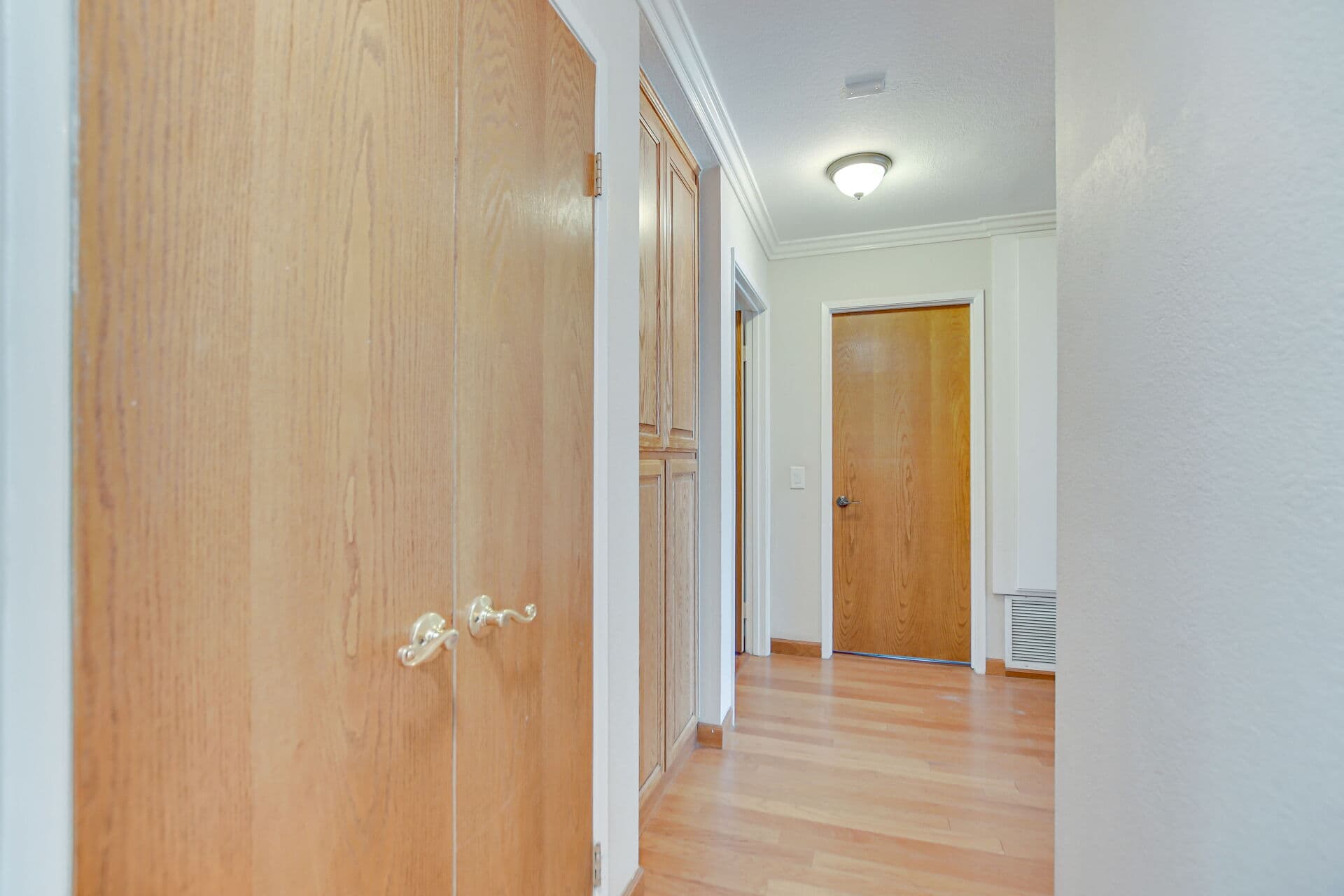
Count the interruptions. Windows on multiple elevations, which the older stock has in abundance because cross-ventilation was the cooling strategy. Doorways, often more of them than a modern plan would use. Fireplaces and their chimney breasts. Radiators, vents, and built-ins. Sloped ceilings in an upper storey. By the time you subtract all of it, a pleasant twelve-by-fourteen room may offer one usable run.
The counterweight is that these houses often come with BUILT-INS already — bookcases flanking a fireplace, a den lined out, a hall with cabinetry. Original built-ins are worth real money to a book-owning buyer and nothing to anyone else, which is a useful asymmetry when you are competing for a house.
Hallways, stair walls, and the blank side of a room that faces a neighbor are all under-used and all excellent. So is the room nobody wants, which in this climate is frequently the north-facing one — and north is also the best exposure for books, for reasons below.
The structural part, said plainly
Books are heavy, and a full wall of them is a concentrated load rather than a distributed one.
Much of Claremont's older housing sits on a raised wood foundation. That is a good system with real advantages, and it is also a system where a heavy, concentrated, permanent load along one wall is worth an actual professional opinion rather than an assumption. If you are planning a wall-to-wall, floor-to-ceiling installation, or a collection that runs to many hundreds of volumes in one room, have someone qualified look at the floor framing and the support below it. This is a modest cost against the alternative.
The related question is ANCHORING. In this region, tall furniture should be secured to structure, which means finding studs, using appropriate hardware, and accepting that lath-and-plaster walls behave differently from drywall when you go looking for something to screw into. Plaster is unforgiving of casual hardware and rewards a careful hand. This is the same era-of-construction constraint that shapes the electrical discussion in the studio-space guide.
Light, heat, and the local climate
Three environmental factors, and this climate makes two of them sharper than average.
DIRECT SUN is the enemy. It fades spines and bindings quickly, and a west-facing wall in an inland valley gets a lot of it. Books go on the north wall, or behind a treatment, or behind glass.
HEAT accelerates everything unpleasant that happens to paper and adhesive. An uninsulated attic, an uninsulated garage, or a west room without cooling is a poor home for anything you care about. This is the same thermal reality that runs through most decisions about older houses here.
HUMIDITY is the one this region gets right. The dry inland climate is genuinely kind to paper compared with damper places, and mildew is far less of a concern here than it would be near the coast. That is a real advantage and worth knowing if you are moving a collection from somewhere wetter.
The living-with-it question
A home library is also a room-use decision. Reading needs a chair, a lamp, and quiet, and quiet is a location variable as much as a wall variable — the sound guide is the better guide to that than any listing.
It is worth asking, too, how much of the collection needs to be at home at all. This is a town with real institutional library access, and a household that reads at a public table rather than in a private room needs a very different house. That is the same substitution the third-place guide runs through for the rest of domestic life.
A short walkthrough list
Measure the longest uninterrupted wall in each candidate room. Note which way it faces. Look for original built-ins and value them properly. Ask what the foundation type is and, for a large installation, get a professional read on the framing. Check the wall construction so you know what you will be anchoring into. And find the north room, because it is very often the answer.
And plan the move itself, which is the part people skip. Books travel badly in large boxes and well in small ones, and a collection that took a weekend to pack will take considerably longer to shelve in the right order. If the shelving is going to be built or installed after the move, arrange somewhere dry, shaded, and off the floor for the boxes to wait, and do not make that place the garage in the warm months. A collection sitting in an uninsulated garage through a hot stretch is the most common avoidable damage this town inflicts on books, and it usually happens in the first month of ownership.
Where to go next
The lifestyle guide covers the rest of the ways daily habits meet a floor plan here. If your household's other space-hungry habit is making rather than reading, the studio guide above is the closest companion. Anthony Grynchal has been licensed in California since November 2009.
Frequently asked questions
Do older Claremont houses have room for a home library?
They have rooms; the constraint is uninterrupted wall. Windows on multiple elevations, extra doorways, chimney breasts, and built-ins all eat wall area, so a pleasant room may offer only one usable run. The offsetting advantage is that many period houses come with original built-in bookcases already.
Is a heavy book collection a structural concern in an older home?
It can be. A full wall of books is a concentrated rather than distributed load, and much of the older local stock sits on a raised wood foundation. For a floor-to-ceiling installation or a collection running to many hundreds of volumes in one room, get a qualified opinion on the framing and support.
Where should books go in a house in this climate?
Away from direct sun, which fades bindings quickly, and away from heat. A north-facing wall is usually the best answer, and a west wall without treatment is the worst. Uninsulated attics and garages are poor storage. The dry inland climate is genuinely kind to paper otherwise.
How do you anchor tall bookcases in an older Claremont house?
Secure them to structure rather than to the wall surface, which means locating studs and using appropriate hardware. Lath-and-plaster walls behave differently from drywall and are unforgiving of casual fastening, so plan the anchoring before the shelving rather than after.

Written by
Anthony Grynchal
Anthony Grynchal is a California real estate professional with eXp Realty, licensed since November 2009 (California DRE# 01873626), and the Designated Local Expert™ for Claremont — where he has lived for more than 33 years.
More about AnthonyPublished · Updated