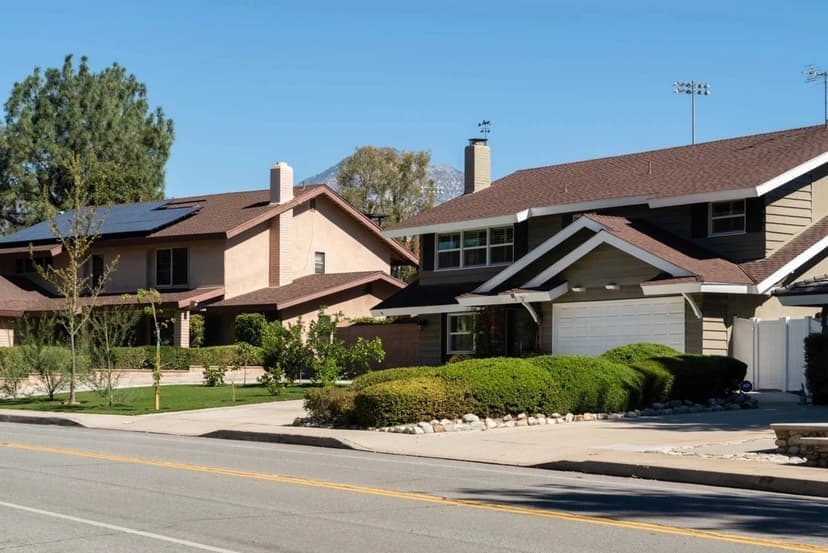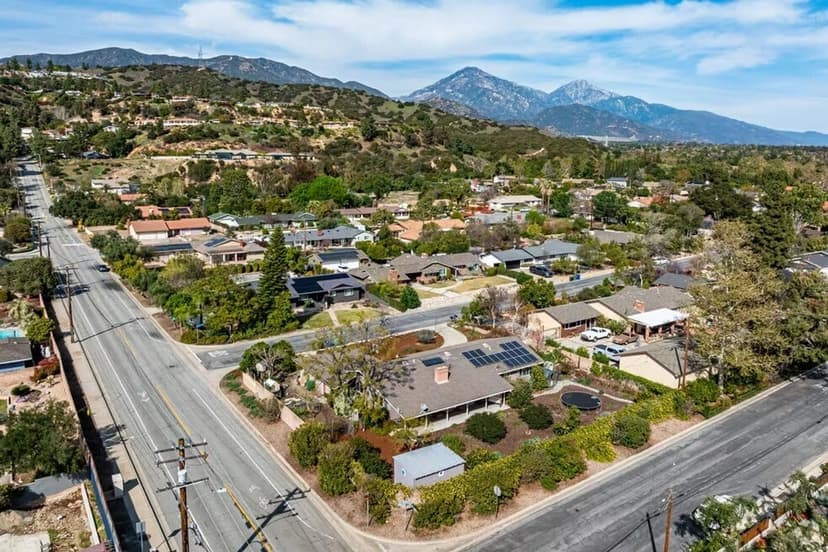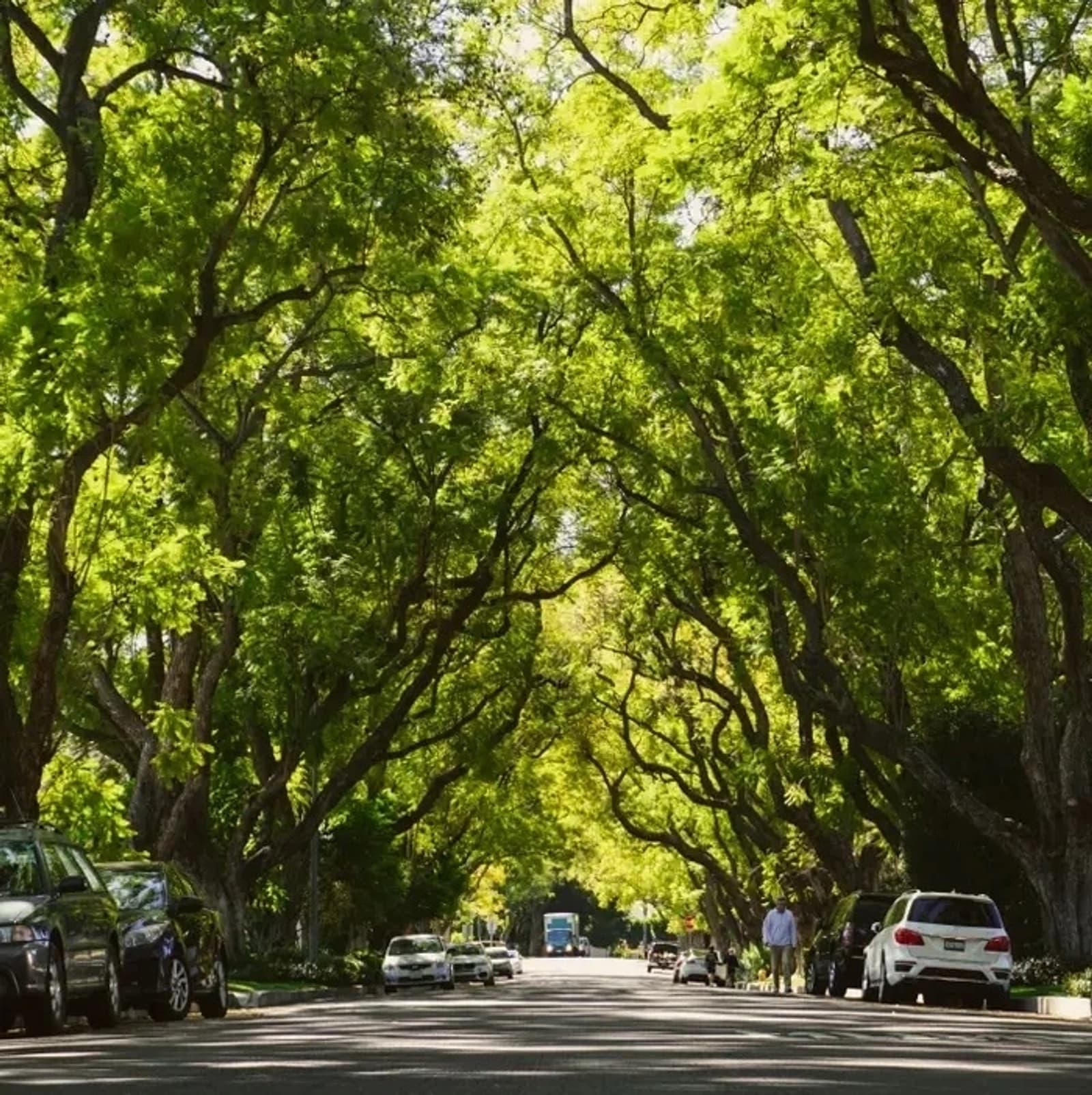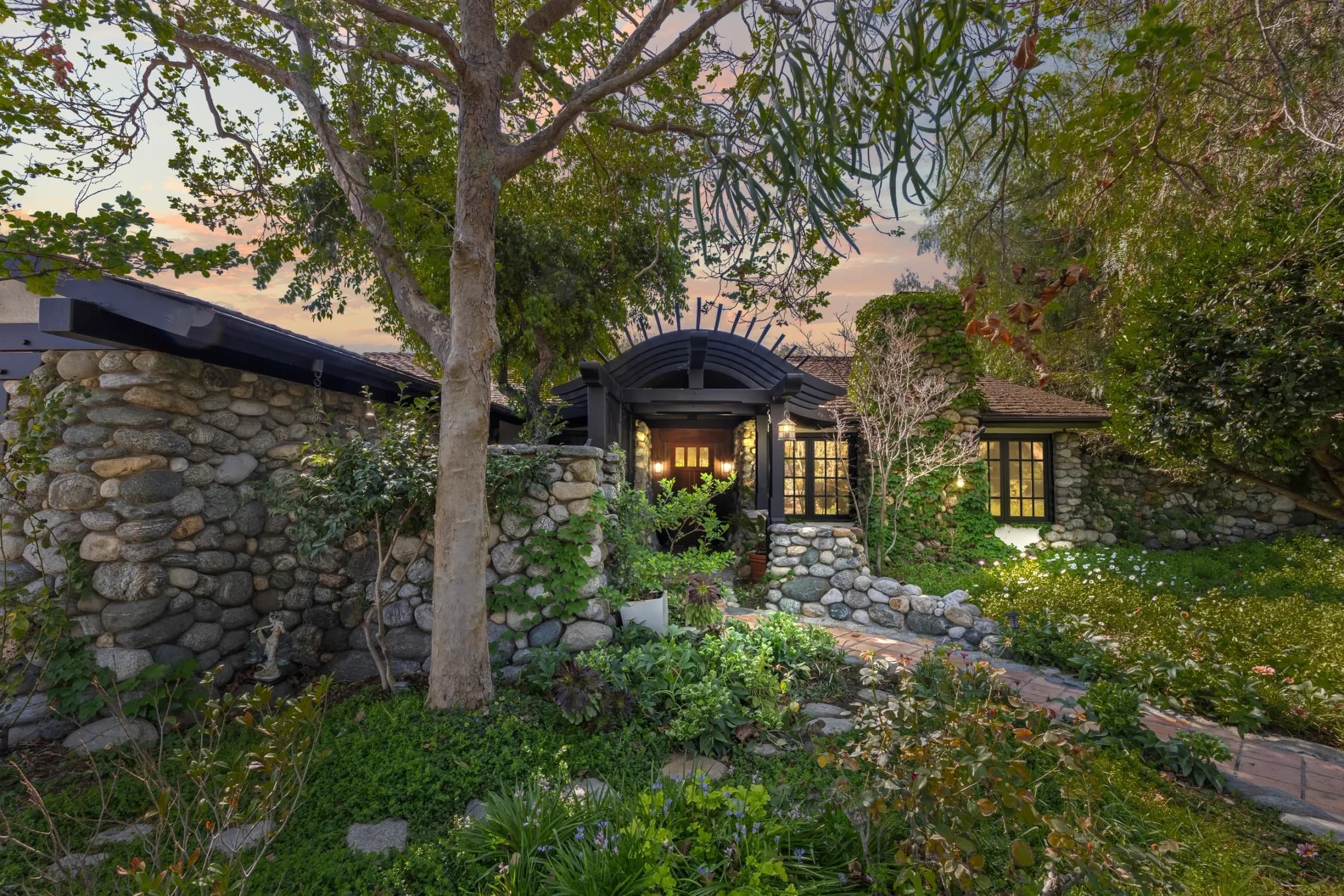
A house on a quiet cul-de-sac is seen by almost nobody. A house near a place where a town gathers is seen by everybody, continuously, by people who are not looking at it.
Those two conditions call for completely different answers, and most owners arrive at the second one carrying habits formed in the first.
The useful frame is not security versus privacy. It is which of the two you are actually short of, because near public space they are rarely short in the same direction.
Foot traffic is protective, up to a point
Start with the counterintuitive part.
Continuous informal presence on a street is one of the oldest protective features there is. People coming and going, dog walkers at consistent hours, residents who know which cars belong on the block. That web of ordinary attention is real, and it is a genuine benefit of living where people are, as described in dog walkers, runners, and Claremont's informal public life.
Where it stops working is at scale. Informal surveillance depends on strangers being noticeable. On a day when the block is full of strangers by design, nobody is noticeable, and the protective effect that operates the other three hundred days a year is temporarily switched off.
That is the honest security profile: better than average most of the time, weaker than average on the days the block fills.
Privacy is the scarcer resource
Security is manageable with equipment. Privacy is a function of geometry, and geometry is expensive to change.
Look at the property in these terms.
- Sightlines into living space. Which rooms can be seen into from the sidewalk, and at what hours. Evening is the answer, because interior light makes glass transparent from outside and opaque from inside.
- Outdoor space that is genuinely private. A rear yard with a solid boundary is worth a great deal here. A side yard open to a path is decorative rather than usable.
- Elevation. A lot below grade of a public walk is exposed in a way a lot above grade is not.
- Approach. Whether someone at the front door is visible from inside before you open it.
Of those, the private outdoor space is the one owners report caring about most after a year of living with it. A yard you will not sit in is a yard you did not really buy.
Cameras: useful, and regulated
Video at a residence is ordinary, and near a busy street it is reasonable. Two considerations that owners frequently get wrong.
Aim and coverage. A camera pointed at your own entry, driveway, and property line does the job. A camera framing a neighbor's windows or the interior of their yard invites a dispute you do not need, and it is a poor use of the equipment anyway.
Audio is a separate question from video. California treats the recording of confidential communications differently from video, and the rules are not intuitive. Many residential devices record audio by default. Anyone installing equipment where conversations may be captured should understand the applicable law, and that is a question for a California attorney rather than for a manufacturer's marketing page.
Beyond the legal point, there is a practical one. Cameras document; they do not deter much on their own. The things that actually reduce opportunity are lighting, sightlines, solid locks, and the appearance of occupancy.
Gates and walls: what they buy
Gates solve some problems well and others not at all.
A gate at the side yard stops casual pass-through and is usually the single highest-value addition on a lot near foot traffic. It is cheap, it is unobtrusive, and it removes the most common form of unwanted access.
A front wall or fence is a bigger decision. It buys privacy at the front, it stops cut-through at a corner, and it changes the character of the property in a way that is visible from the street. It is also subject to height, setback, and sightline rules that come from the City of Claremont and that vary by location, so the design conversation should start with what is permitted rather than with what is desired.
A driveway gate is the largest commitment. It addresses vehicle access and blocking, it costs real money, it needs power and maintenance, and it changes daily life more than owners expect. Worth considering on a property where the driveway is genuinely contested; overkill on most.
Deliveries and packages
The mundane problem, and the one that actually recurs.
On a street with heavy pedestrian traffic, an unattended parcel at an open front door has a different risk profile than the same parcel on a quiet block. The solutions are unglamorous: a secure receptacle, a gate that closes the approach, a delivery location that is not visible from the sidewalk, or a redirect to a pickup point.
Owners near busy blocks generally solve this within a few months. Buyers should simply know it is a solvable problem with a small cost rather than a reason to think differently about the location.
Neighbors first, hardware second
The best security arrangement on any street is a set of neighbors who know each other and who notice what is out of place. That is not sentiment; it is the mechanism, and it is why blocks with strong social structure report fewer problems than comparable blocks without one.
On a street near public space, that structure tends to already exist, because shared pressure organizes people. Learning it early is worth more than any device, which is the argument in your street has its own social norms.
What to assess before you buy
- Walk the property line and find every point where someone could pass through. Count the gates.
- Stand on the sidewalk after dark and look at the lit windows.
- Identify one genuinely private outdoor space. If there is not one, ask what it would cost to create.
- Look at where a parcel would sit and who can see it.
- Ask a neighbor what changes on a busy day. A specific routine is an honest answer.
Most of what you find is addressable for modest money. The one thing that is not is geometry, which is why the private outdoor space question deserves the most weight.
Where to take it next
The local events and civic life hub covers the rest of the questions about living near where a town gathers.
Rules on fence and wall height, gates, setbacks, and corner sightlines are set by the City of Claremont and change over time, so confirm current standards before designing anything. Questions about recording law belong with a qualified California attorney. Anthony Grynchal has been licensed in California since November 2009.
Frequently asked questions
Is a home near heavy foot traffic less secure?
Not usually. Continuous informal presence tends to be protective, since strangers are noticeable and neighbors know which cars belong. The exception is a day when the block is full of visitors by design, which temporarily removes that effect.
Can I point a security camera at the street?
Video of public areas from your own property is common, but aiming equipment into a neighbor's windows or yard invites a dispute. Audio recording is governed by different rules in California, so raise any recording setup with a qualified California attorney.
What is the single best security improvement near a busy block?
For most properties, a gate that closes off side-yard pass-through. It is inexpensive, unobtrusive, and removes the most common route for unwanted access, which no camera does on its own.
Are there limits on how tall a front fence can be?
Yes, and they vary by location and by whether the fence affects corner sightlines. Height, setback, and material standards come from the City of Claremont, so confirm the current requirements for the address before designing anything.

Written by
Anthony Grynchal
Anthony Grynchal is a California real estate professional with eXp Realty, licensed since November 2009 (California DRE# 01873626), and the Designated Local Expert™ for Claremont — where he has lived for more than 33 years.
More about AnthonyPublished · Updated