The most common late problem in a high-end Claremont escrow is not the appraisal and not the loan. It is insurance.
A buyer who has insured several houses assumes coverage is a phone call. On a custom or hillside property it is frequently not, and the gap between assuming and discovering tends to appear in the last ten days, when there is no room left to solve it calmly.
What follows is about the specific problem of insuring bespoke construction. Coverage decisions common to all Claremont homeowners, including fire zone questions and the timing of binding a policy, are separate matters worth reading alongside this.
The core idea: two different numbers
Market value is what the property would sell for, and it includes land. Replacement cost is what it would take to rebuild the structure to its current specification, and it includes no land at all.
On a standard tract house those numbers are close enough that nobody thinks about it. On a custom home they can diverge sharply in EITHER direction, and both directions cause problems.
Underinsure and a total loss leaves the owner short of the money required to rebuild what they had. Overinsure and premium is being paid on a figure that will never be claimed. The insurable number is a construction estimate, not a real estate opinion, and the two disciplines arrive at it differently.
Why custom construction is hard to estimate
Standard replacement cost calculators work from square footage, general quality tier, and regional cost data. They handle a conventional house well and a bespoke one badly.
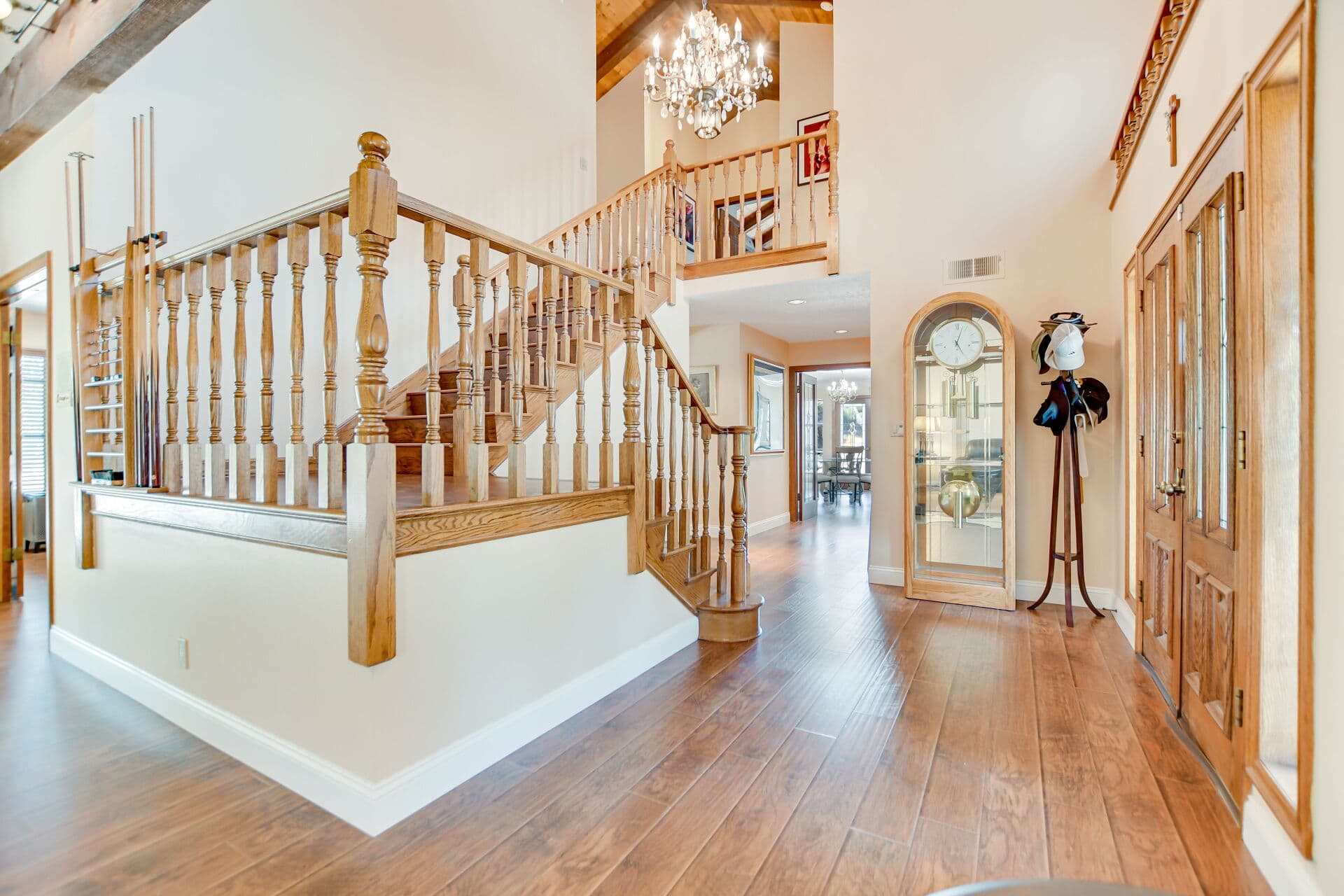
The things that break the model are the things that make the house what it is. Millwork produced for the building rather than ordered from a catalog. Plaster and specialty finishes. Structural glazing. Stone that was specified, sourced, and cut for the project. Roofing systems that a small number of contractors in the region can execute. Architectural detailing that would require drawings to reproduce.
Add site conditions. Rebuilding on a slope with limited access is not the same job as rebuilding on a flat lot with a wide street, and the difference is real money.
The result is that carriers writing high-value homes generally want an actual appraisal or a detailed reconstruction estimate rather than a calculator output, and producing one takes time.
The other structures problem
Estates rarely consist of one building. Guest quarters, pool houses, studios, garages built to a finish standard, gates, walls, and hardscape all cost money to reinstate.
A standard policy structure treats detached structures as a percentage of the main dwelling limit. On a property where the outbuildings were built to the same standard as the house, that default percentage can be badly wrong. It is worth listing every structure and asking specifically how each is limited.
The same features that drive the amenity discussion in Claremont amenity premiums drive the coverage question here, and for the same reason: they are real buildings with real reconstruction costs.
Contents, and the things a homeowner policy handles poorly
Standard personal property coverage carries internal limits on certain categories, and items above those limits are typically scheduled individually, usually with an appraisal.
The categories that matter in this context are art, wine, and anything else where the value is specific rather than generic. A wine room with meaningful contents is not covered as furniture, and the collection question is closely connected to the transfer question raised in the piece on what conveys.
Worth clarifying too whether the policy covers the cost to bring a rebuild up to current code, which on an older significant home can be a substantial addition, and whether loss-of-use coverage is adequate for a rebuild that may take considerably longer than a conventional one.
Timing, which is the part that actually derails escrows
Start the insurance conversation in the first week, alongside inspections rather than after them.
The sequence that works: identify a broker experienced with high-value homes at the start; give them the property details early, including construction type, roof, systems, and every structure; expect that a reconstruction estimate may be required and allow time for it; confirm what the carrier needs by way of inspection, since many will want to see the property; and get a written indication before the contingency period ends.
Where a property has features that complicate placement, that is information a buyer needs while they still have a contractual right to act on it. Insurance is one of the failure points named in negotiating an estate purchase, and it is avoidable almost entirely by starting early.
For sellers
If your property has been insured continuously and without difficulty, that is useful information to have available, because it removes a question from a buyer's mind before it becomes an objection. Knowing your own carrier, coverage structure, and any relevant history lets you answer rather than speculate.
None of this is a substitute for advice from a licensed insurance professional, who should confirm every specific for your property. The point here is narrower: on a custom home, insurance is a real workstream with its own timeline, not an errand for the week before closing.
For the wider picture, start with the Claremont luxury homes guide, then read the luxury escrow for how this sits in the closing sequence. Anthony Grynchal has been licensed in California since November 2009.
Frequently asked questions
Why is my insurance amount different from what I paid for the house?
Because they measure different things. Market value includes land and reflects what a buyer would pay. Replacement cost is a construction estimate for rebuilding the structure to its current specification and excludes land entirely, so the two figures can diverge substantially on a custom home.
Why do standard replacement cost calculators struggle with custom homes?
They work from square footage, a general quality tier, and regional cost data. Bespoke millwork, specialty finishes, structural glazing, specified stone, and difficult site access on a slope all fall outside that model, which is why carriers often want a detailed reconstruction estimate instead.
Are guest houses and pool houses covered automatically?
They are usually covered as other structures, but often at a default percentage of the main dwelling limit. On a property where the outbuildings were built to the same standard as the house, that default can be well short. List every structure and ask how each is limited.
When should I start the insurance conversation on a luxury purchase?
In the first week of escrow, alongside inspections. A high-value placement can require a reconstruction estimate and a carrier inspection, both of which take time. Aim for a written indication before your contingency period ends, while you still have a right to act on it.

Written by
Anthony Grynchal
Anthony Grynchal is a California real estate professional with eXp Realty, licensed since November 2009 (California DRE# 01873626), and the Designated Local Expert™ for Claremont — where he has lived for more than 33 years.
More about AnthonyPublished · Updated