You can learn more about a Claremont estate street in a twenty-minute walk than in a week of looking at listings. Not about the houses — about the STREET, which is the thing you cannot renovate and cannot move. This page is a field method: what to look at, in what order, and what each observation actually tells you. The town-wide map of where these streets are is in the Claremont luxury neighborhoods guide; this is what to do once you are standing on one.
Start at the entrance
Walk in from the intersection rather than parking in front of the house. The first thing to establish is whether the street CONNECTS. Look down its length. If you can see a through-intersection at the far end, this street carries traffic that has no reason to be here. If it ends in a bulb, a bend into another quiet street, or nothing at all, the only cars on it live on it.
Claremont's most settled estate blocks are almost always the second kind, and it is not an accident. The town's foothill subdivisions were laid out to discourage through movement, which is why the quiet is structural rather than a matter of luck.
Second thing at the entrance: pavement width and parking. A street with cars parked continuously on both sides behaves like a narrow street regardless of its dimensions. A street with empty curbs has enough off-street parking on the parcels, which is itself a strong signal about lot depth and garage capacity.
Read the setbacks
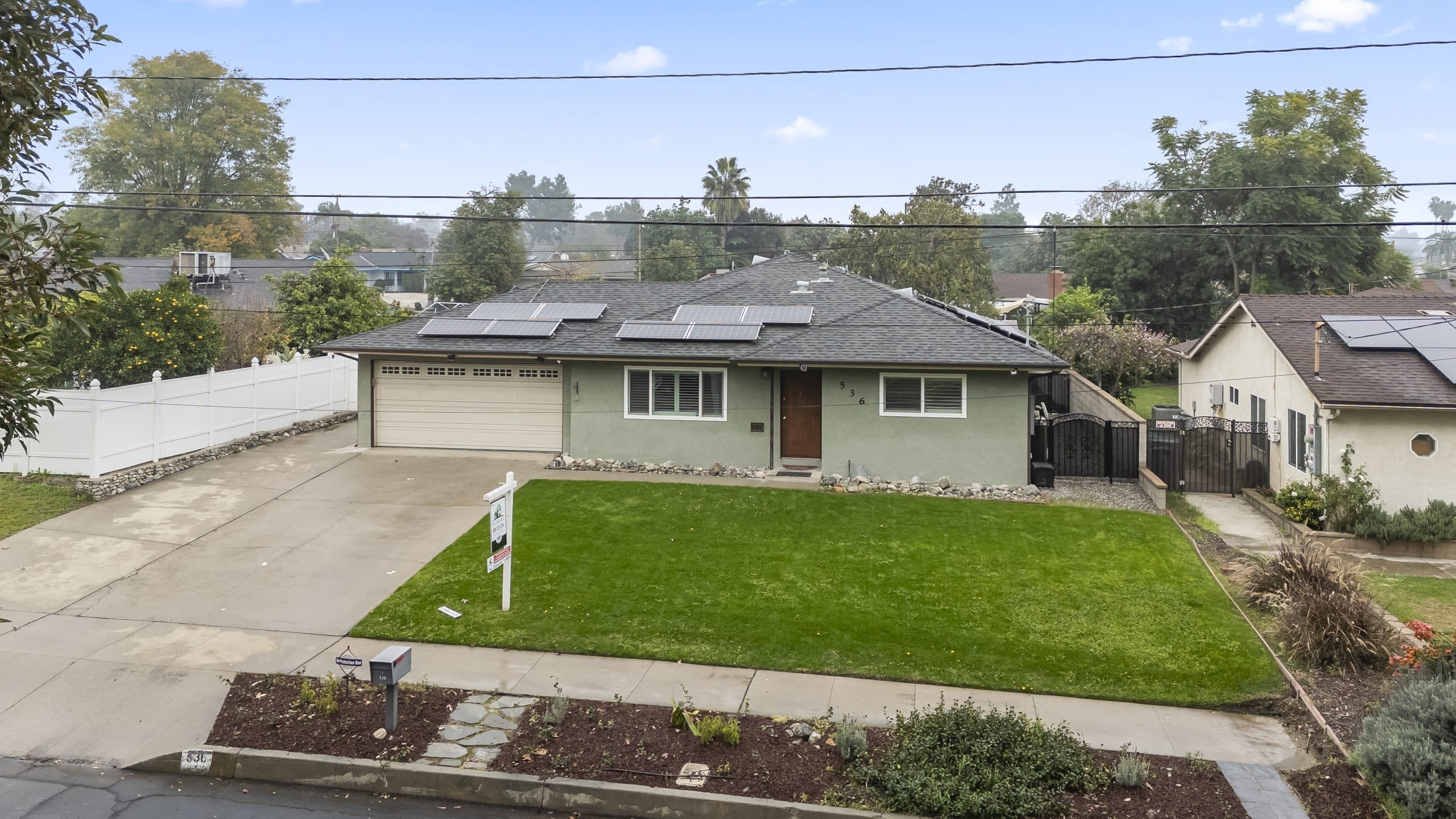
Walk the block and watch the front building line. On a well-composed estate street, the houses sit at roughly a consistent distance from the pavement, and that consistency is what makes the street read as one place instead of a row of unrelated buildings.
Where a setback breaks — one house pushed forward, another pulled far back — find out why. Sometimes it is terrain. Sometimes it is a later infill on a subdivided parcel, which tells you something about how the block has changed and may change again.
Deep uniform setbacks do three things at once: they put distance between living space and pavement, they create room for the planting that does the privacy work, and they establish the visual rhythm people are responding to when they say a street feels established. The mechanics of that planting layer are covered in the privacy screening guide.
Look up, then look down
THE CANOPY. Stand in the middle of the block and look at the trees. Ask two questions. Is the canopy CLOSED — do the crowns meet over the pavement? And whose trees are they? Street trees in the public right-of-way are maintained by the city under its own rules; trees on private parcels are the owner's asset and the owner's obligation. A street that looks magnificent because of parcel trees can change substantially if one owner takes several out.
Also note SPECIES CONSISTENCY. A block planted at one time with one species will age as a unit, which is beautiful for decades and then becomes a shared problem all at once. A mixed block ages unevenly and is more resilient.
THE GROUND. Look at the gutter line and the low points. Where does water go? On sloped estate streets, look for area drains at the base of driveways, curb outlets, and evidence of past flow — silt lines, gravel wash, patched pavement. If several driveways on the low side of a block have drainage hardware, water has been a topic here. That is not a reason to walk away; it is a reason to ask specific questions.
Count the curb cuts
Driveway openings are one of the most informative things on a street and almost nobody counts them. A block with few, wide curb cuts has generous parcels with turnarounds. A block with many narrow ones has been subdivided at some point, or was platted more tightly than it appears.
Look also at whether driveways are circular, side-entry, or straight back-out. Side-entry and circular drives tell you the parcel has width to spare. Straight back-out drives on a quiet cul-de-sac are fine; on anything carrying movement they become a daily consideration, which is one reason corridor properties are their own product — see the corridor guide.
Check what is behind and above
Walk to the end of the block and, if there is public access, look at what the rear parcels back onto. This is the single most consequential fact about any lot and the hardest to determine from a listing. Rear boundaries in the foothill tier can adjoin open space, a flood-control channel, a trail alignment, another street of homes, or an institutional site. Each of those produces a completely different property.
Then look UPHILL. What sits above a street determines what drains onto it, what overlooks it, and what could be built where. A street with nothing above it but open space has a permanent condition. A street with vacant sloped parcels above it has a variable one.
The two-hour rule
Come back at a different time. The block you walked at eleven on a Tuesday is a different block at six on a Friday, and different again after dark. Three things change: traffic, sound, and light. Estate streets in this town are generally quiet at all three hours, but the exceptions matter enormously and they are invisible in daylight — headlights sweeping a front room, a service route that only activates at certain hours, a nearby facility with an evening rhythm.
After dark also tells you about the night sky, which is a real amenity in the upper foothill streets and a subject in its own right. See the dark skies guide.
What the street cannot tell you
Two things, and it is worth being clear about them so you do not over-read a good walk.
It cannot tell you about the CONDITION of any individual house. Streets and structures are separate assessments and a beautiful block contains deferred maintenance like any other.
It cannot tell you your obligations. Vegetation clearance, hillside development standards, tree protections, and access requirements are parcel-specific and revised over time. Get them from the City of Claremont and, for fire-related standards, from the fire authority with jurisdiction. A neighbor's account of the rules is a starting point, not an answer.
Where to go next
For the map of which streets belong to which pocket, see the neighborhood atlas. For the terrain bands these streets sit in, see the foothill tier guide. Anthony Grynchal has been licensed in California since November 2009.
Frequently asked questions
What is the first thing to check on an estate street?
Whether it connects through. A street with a through-intersection at the far end carries traffic that has no reason to be there; a street ending in a bulb or a bend carries only residents. That single fact drives most of how quiet a block feels.
Why does canopy ownership matter?
Street trees in the public right-of-way are maintained by the city under its own rules, while trees on private parcels belong to the owner. A street that reads as magnificent because of parcel trees can change if one owner removes several.
What do curb cuts tell you about a block?
Few wide driveway openings suggest generous parcels with turnarounds. Many narrow ones suggest tighter platting or later subdivision. Circular and side-entry drives indicate a parcel with width to spare.
Why walk the same street at a second time of day?
Traffic, sound and light all change. Headlights sweeping a front room, an evening service pattern, or a nearby facility with a night rhythm are invisible during a midday visit and obvious after dark.

Written by
Anthony Grynchal
Anthony Grynchal is a California real estate professional with eXp Realty, licensed since November 2009 (California DRE# 01873626), and the Designated Local Expert™ for Claremont — where he has lived for more than 33 years.
More about AnthonyPublished · Updated