Buyers asking for a big lot in Claremont are usually asking for one of four different things without knowing it: room to build, room to garden, distance from neighbors, or the feeling of a property rather than a house. Those wants point to different parts of town, because Claremont's large parcels come from several unrelated histories and they do not behave alike. This page maps the sources. The wider prestige map is in the Claremont luxury neighborhoods guide.
Where wide lots come from
THE RANCH INHERITANCE. Parts of north Claremont were laid out on former grove and ranch ground, and the subdivisions that replaced them kept a generous grain — broad frontages, deep rear yards, houses centered on their parcels rather than pushed to one side. Blaisdell Ranch is the clearest expression of this pattern, and the way houses sit apart there is a direct consequence of what the land was before.
THE TERRAIN REMAINDER. On sloped ground, parcels get larger because they have to. A hillside lot has to include the slope that supports the building pad, so the recorded area can be substantial while the usable area is modest. This is the most common source of a surprisingly large number on a hillside listing, and it is the one buyers most often misread.
THE EARLY ESTATE PLAT. Some of Claremont's oldest residential ground was subdivided at a time when a house was expected to sit within grounds. These parcels tend to be closer to the older parts of town, carry mature specimen trees, and come with structures of a particular era. The historic homes guide covers this stock in detail.
THE OPEN-SPACE EDGE. At the top of town, parcels adjoining undeveloped land often carry depth that ends at a fence with nothing beyond it. The perceived size is far larger than the recorded size, because the borrowed landscape does the work. That trade is the subject of the trail-edge guide.
Recorded area versus usable area
This is the distinction that matters most and the one listings obscure. A parcel's recorded area includes everything inside the boundary: slope, easements, setbacks, drainage courses, driveway, and structures. What an owner experiences is the FLAT, UNENCUMBERED, PRIVATE portion of that — which on some hillside parcels is a fraction of the total and on some flat parcels is nearly all of it.
The practical test is simple. Walk the boundary. Stand at each corner. Note where the ground stops being level, where an easement is visibly reserved, and where the neighbor's windows look in. What is left after those subtractions is the yard.
A second test for anyone thinking about future building: ask where the buildable envelope actually is. Setbacks, slope limits, and hillside development standards can constrain a large parcel severely. Those standards are set by the City of Claremont, they are specific to a zone and sometimes to a parcel, and they get revised — so the answer has to come from the city rather than from an assumption based on size.
What a wide parcel gives you
DISTANCE, which is the only privacy device that works in every direction at once and never needs pruning.
QUIET, because sound falls off with distance and because a large parcel usually means the neighbors also have one.
CANOPY CAPACITY. Big trees need root room. Claremont's most impressive private specimens are on parcels that could accommodate them, and a mature tree is not something you can install.
OPTIONALITY. Room for a detached structure, a pool, a garden, a workshop, or simply nothing at all. Whether any specific option is available depends on the rules above, not on the acreage.
What it asks in return
MAINTENANCE THAT SCALES. Irrigation, planting, hardscape, and tree care all scale roughly with area. This is the honest cost of a large parcel and it is continuous rather than occasional.
WATER STRATEGY. Large landscapes in this climate need a deliberate approach. The most successful Claremont properties tend to be zoned — a smaller intensively planted area near the house, and drought-adapted or native planting beyond it. Fighting the climate across an entire parcel is expensive and rarely looks as good.
VEGETATION MANAGEMENT NEAR THE EDGE. Parcels closer to open space carry clearance obligations. What they are, and how far they extend, is set by the fire authority with jurisdiction and the city, and should be confirmed for the specific address.
TREE OBLIGATIONS. Claremont takes its canopy seriously and there are protections around removal. Before assuming a mature tree can be taken out to make room for something, ask the city.
Choosing between the sources
If you want to BUILD, favor flat ground and confirm the envelope before you commit. Recorded size on a slope is not buildable size.
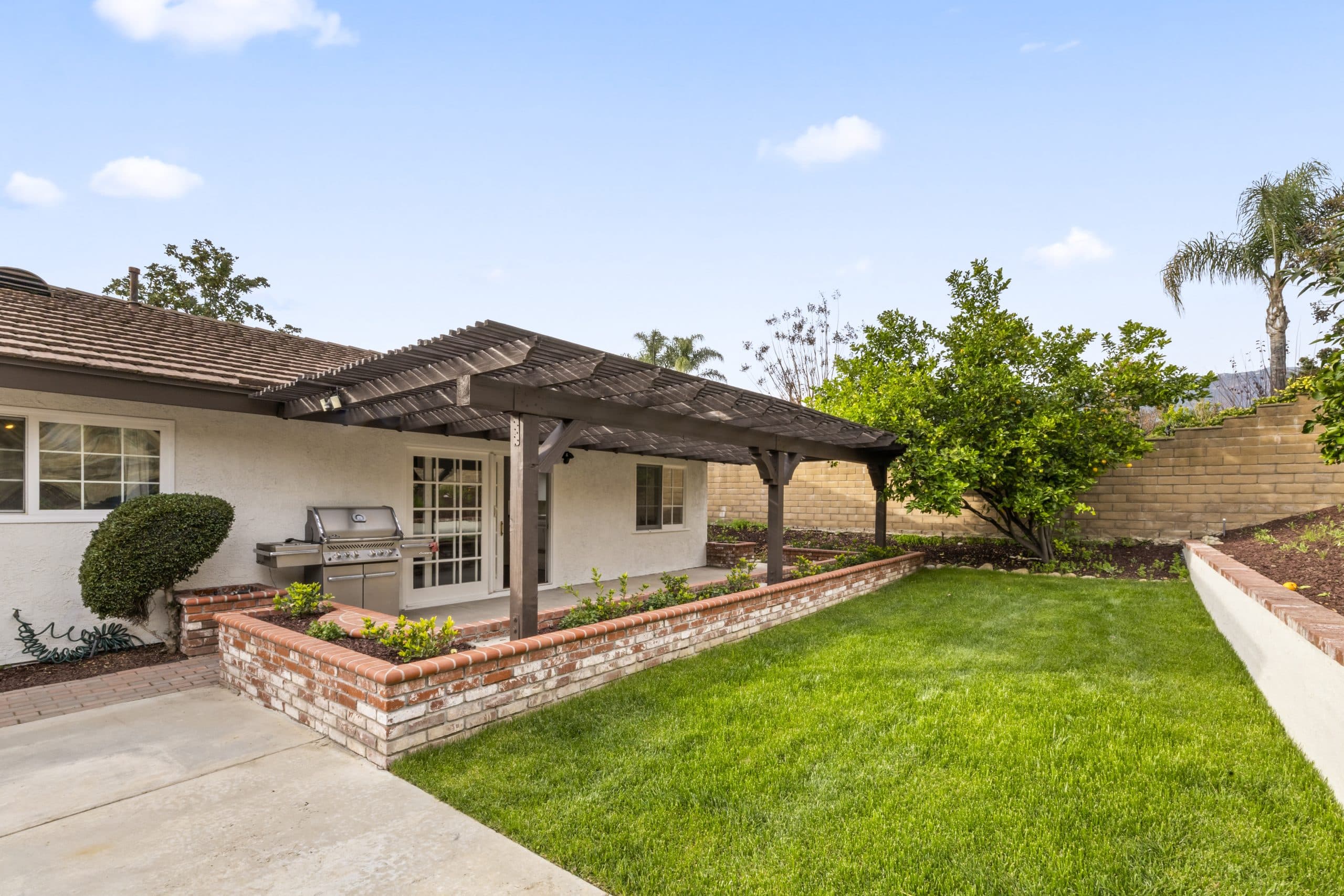
If you want to GARDEN, favor the ranch-grain streets or the older estate plats, where the flat area is real and the soil has been worked for decades.
If you want DISTANCE FROM NEIGHBORS, the open-space edge gives you the most for the least recorded area, because one boundary simply has no one behind it.
If you want the FEELING of a property, the older streets with mature specimen trees deliver it faster than raw dimension does. A generous new parcel with young planting takes twenty years to feel like grounds.
Where to go next
For how these pockets sit relative to one another, see the neighborhood atlas. For the terrain bands that determine how much of a parcel is level, see the foothill tier guide. Anthony Grynchal has been licensed in California since November 2009.
Frequently asked questions
Why do hillside parcels in Claremont look so large on paper?
A hillside lot has to include the slope supporting its building pad, so recorded area includes ground that is not level or usable. The flat, private portion can be a small share of the total, which is why walking the boundary matters more than reading the number.
Does a large parcel mean I can build a second structure?
Not automatically. Setbacks, slope limits and hillside development standards can constrain a large parcel severely. Buildable envelope is set by the City of Claremont for the specific zone and parcel and should be confirmed there before you rely on it.
What is the ongoing cost of a large Claremont landscape?
Irrigation, planting, hardscape and tree care scale roughly with area, and it is continuous rather than occasional. Most successful large properties here zone the landscape, with intensive planting near the house and drought-adapted planting beyond.
Can I remove mature trees on a large lot to make room?
Not without checking. Claremont has protections around tree removal, and obligations vary. Ask the city about the specific trees before assuming a parcel can be cleared for a new use.

Written by
Anthony Grynchal
Anthony Grynchal is a California real estate professional with eXp Realty, licensed since November 2009 (California DRE# 01873626), and the Designated Local Expert™ for Claremont — where he has lived for more than 33 years.
More about AnthonyPublished · Updated