Claremont's estate map has names on it, and buyers search by those names. Which means a substantial amount of the town's best residential ground gets skipped entirely, because it sits on streets that belong to no named pocket at all. These are not lesser blocks. They are simply UNLABELLED, and a label is a marketing artifact rather than a geographic fact. This page is about finding them. The named map itself is in the Claremont luxury neighborhoods guide.
Why the gaps exist
Neighborhood names in this town come from three sources: a tract that was marketed under a name and kept it, a geographic feature that gave rise to a common usage, or a historic association attached to a particular area. None of those is comprehensive, and the ground between them was developed in ordinary increments — a few blocks at a time, by different builders, in different decades, with no coordinated identity.
The result is a patchwork. A street can sit directly between two well-known pockets, share their terrain, their canopy age, and their lot grain, and have no name anyone uses. Search portals organize by name. So the street is invisible to a search that starts with one.
Where the unlabelled ground is
Three general locations, all of them predictable once you know to look.
THE SEAMS. Wherever two named tracts meet, there is usually a strip of earlier or later development between them, often on the older side. These seam streets frequently have the most mature canopy on the block, because they were planted first, and the most irregular parcels, because they were platted to fit whatever was left.
THE FIRST BLOCKS OFF A CORRIDOR. Immediately east or west of a north-south spine, the street grid goes quiet but the setting stays the same — same trees, same lot depth, same era. Buyers searching by pocket name never see these, and they are among the most consistently underrated addresses in town. The corridor logic behind that is in the corridor guide.
THE INFILL POCKETS. Small subdivisions of a few streets, developed later on land that had been held back, sitting inside an older fabric. These carry newer construction inside a mature setting, which is a combination that is genuinely hard to find and almost never named.
How to search when the name is missing
Stop searching by neighborhood and start searching by ATTRIBUTE. The attributes that actually define an estate street are all observable and none of them require a name.
STREET CONNECTIVITY. Look at a map and find the streets that do not connect through. Cul-de-sacs, loops, and dead ends are visible on any map and they are the single strongest predictor of a quiet block. The field method for confirming it is in the estate street field guide.
CANOPY DENSITY. Aerial imagery shows canopy closure clearly. A street where the crowns meet over the pavement has decades of growth on it, and canopy age correlates with almost everything else people mean by an established street.
PARCEL GRAIN. On an aerial, count the rooflines per block. Fewer, more widely spaced structures means wider parcels, regardless of what the area is called.
SETBACK CONSISTENCY. Look at the front building line across a block from above. A consistent line is a coordinated plat; a ragged one is incremental development, which may be fine but tells you the block will not read as a single composition.
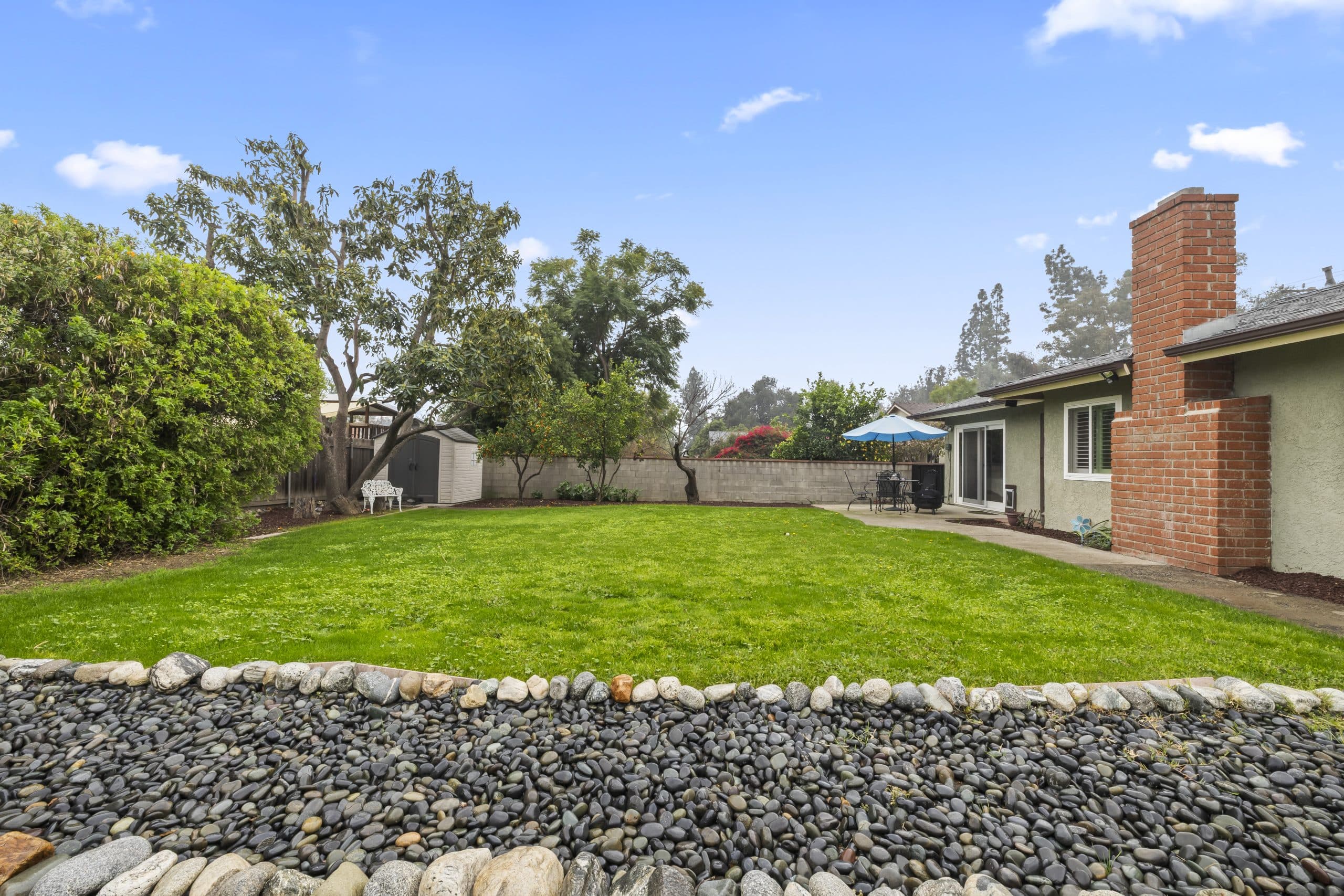
WHAT ADJOINS THE REAR. Aerials show whether rear boundaries meet other houses, a channel, a school site, open space, or a commercial edge. This is the highest-value fact you can extract without leaving your desk.
The advantage of buying unlabelled
Two things, and they are worth stating plainly without straying into market claims.
LESS COMPETITION FROM NAME-DRIVEN SEARCH. A buyer who has decided they want a specific named pocket will not see a street that is not in it, even if that street is a hundred yards away and materially similar. Fewer buyers looking at a property is simply a structural fact of how portals organize inventory.
MORE ROOM TO JUDGE ON MERIT. Without a name doing part of the work, you evaluate the actual block: the trees, the setbacks, the grade, the rear boundary. That is a better basis for a decision, and it tends to produce fewer regrets.
The honest disadvantage
When you SELL, the same dynamic runs in reverse. A property in a named pocket carries a search term that buyers type. A property one street outside it does not, and the listing has to do more work to be found and more work to be understood. That is a real consideration and it is worth going in with your eyes open about it.
The mitigation is straightforward and it is geographic rather than promotional: an unlabelled street with genuinely strong fundamentals — closed canopy, deep setbacks, no through-traffic, a good rear boundary — presents well in person even when it presents poorly in a search filter. The properties that struggle are the ones that were only ever borrowing a name.
A method for a weekend
Open an aerial map of north Claremont. Trace every street that does not connect through and mark it. Cross out the ones already inside a named pocket. What remains is a short list, usually shorter than people expect, and every street on it is worth a walk.
Then drive them. Not to look at houses — to look at streets. You will eliminate most of the list in an afternoon and be left with three or four blocks you would genuinely live on, which is a far more useful position than a list of neighborhoods you have heard of.
Where to go next
For the named map these streets sit between, see the neighborhood atlas. For the terrain bands that determine what each unlabelled street is actually like, see the foothill tier guide. Anthony Grynchal has been licensed in California since November 2009.
Frequently asked questions
Why do some good Claremont streets have no neighborhood name?
Names come from marketed tracts, geographic features or historic associations, none of which covers the whole town. Ground developed in small increments by different builders in different decades simply never acquired a shared identity.
Where should I look for unlabelled estate streets?
At the seams between two named tracts, in the first blocks off a north-south corridor, and in small later infill subdivisions sitting inside older fabric. All three are predictable once you know the pattern.
How do I search without a neighborhood name?
Search by attribute instead. Street connectivity, canopy closure, parcel grain, setback consistency and what the rear boundaries adjoin are all visible on maps and aerial imagery and matter more than a label.
Is there a downside to buying on an unnamed street?
Yes, at resale. A named pocket carries a search term buyers type; a street outside it does not, so the listing has to work harder to be found. Streets with genuinely strong fundamentals still present well in person.

Written by
Anthony Grynchal
Anthony Grynchal is a California real estate professional with eXp Realty, licensed since November 2009 (California DRE# 01873626), and the Designated Local Expert™ for Claremont — where he has lived for more than 33 years.
More about AnthonyPublished · Updated