A few Claremont blocks sit directly against the edge of the college grounds. They are among the most walkable addresses in the region and among the most misjudged, because the things that make them excellent and the things that make them demanding are the same things.
This is not about who lives there. It is about what the BLOCK does across a year, and how a house on it should be chosen.
The permanent advantage: porous ground
The grounds are open and crossable in a way that a fenced institution never is. Practically, that means an adjacent house borrows a large amount of usable outdoor space it does not have to own, maintain, or water.
Lawns, shaded walks, benches, and long routes that do not require crossing a road. For a household that walks in the evening, reads outside, or simply wants somewhere to go that is not the living room, this is the strongest version of what the town offers, and it is durable in a way commercial amenities are not, because it is backed by institutions and a street plan rather than a lease.
The consequence for a purchase is the one covered in the third-place guide: a house here can be smaller and still work, because the town is holding part of the load.
The seasonal rhythm is real
These blocks have a calendar. Traffic, parking pressure, and evening activity are not constant through the year; they rise and fall with the academic seasons, and the swing is larger than on almost any other kind of street.
What this means for a buyer is that a SINGLE VISIT tells you very little. A block viewed during a quiet stretch reads as extraordinarily peaceful. The same block at a peak reads differently. Neither is the truth on its own.
The way to handle it is to ask directly what the year looks like, visit more than once if the timing allows, and treat the quiet visit as the floor rather than the average. The broader seasonal pattern is in the academic-seasons guide.
Parking is the practical constraint
This is the item that most often turns into a daily annoyance, and it is entirely checkable.
- Read the posted signs on the actual block. Restrictions near institutional edges are frequently specific to a few streets, and they vary.
- Confirm any permit program, overnight rule, or event restriction with the City of Claremont rather than with an assumption.
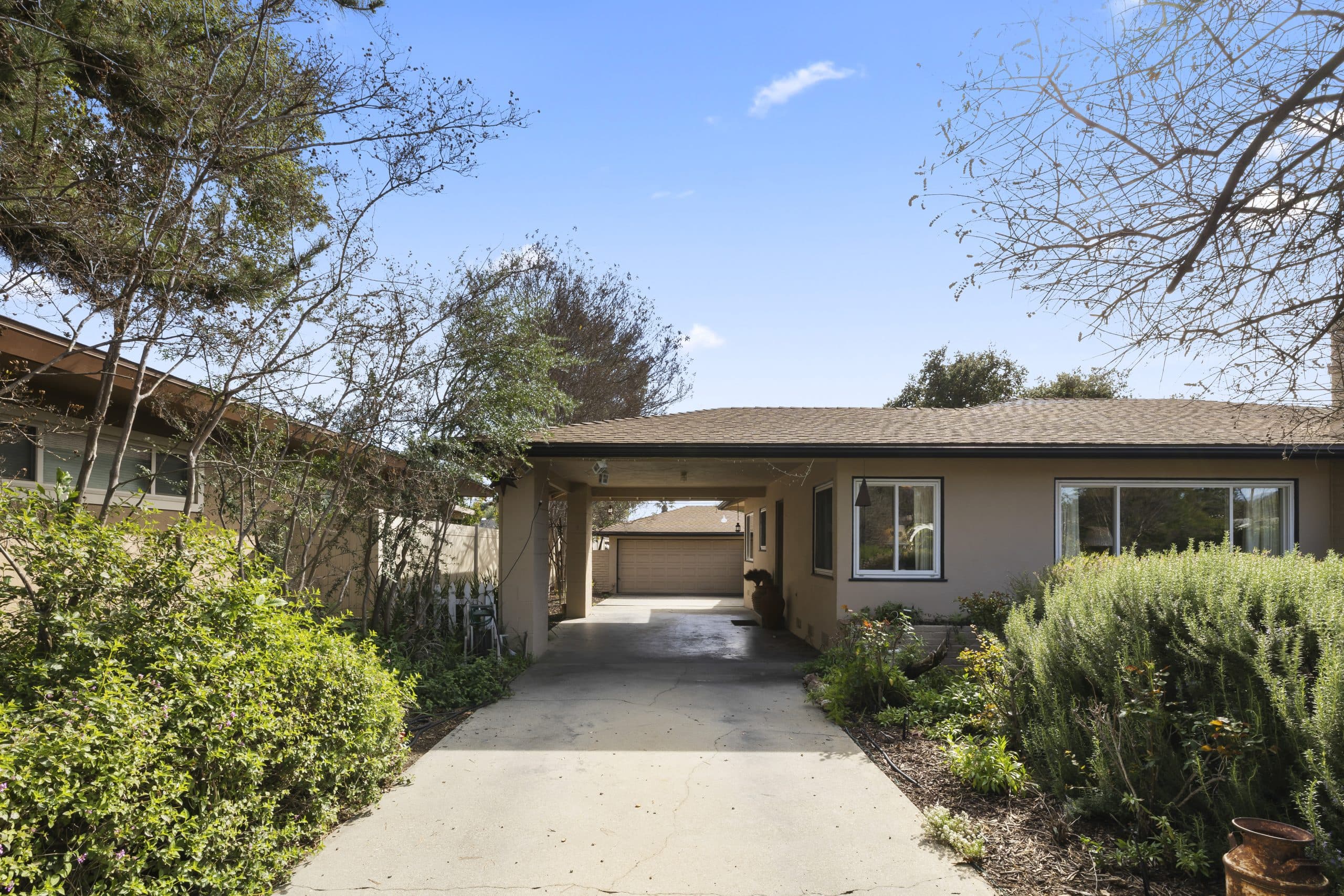
- Count the on-site capacity of the house itself, because a property with real driveway and garage capacity is largely insulated and one without it is not.
That last point is the whole decision in one line. On these blocks, on-site parking is worth more than it is anywhere else in town. The measuring exercise is in the parking-capacity guide, and the frontage consequences are in the curb-life guide.
Event evenings
Campus edges host things: performances, lectures, gatherings, athletics. Most of it is welcome and part of why people want to be there. It does produce a handful of evenings a year when the street is full and the surroundings are busier than usual.
The honest framing is that this is a feature with a cost attached, not a defect. If you would attend those things, proximity is worth paying for. If you want a street that behaves identically every night of the year, this is the wrong block, and there are many quieter ones a short distance away.
For current schedules and what is actually happening on any given week, check the institutions and the city directly. That information changes constantly and no article should be your source for it.
Lighting and the night
Institutional edges are generally better lit than an interior residential block, which cuts both ways.
Walking at night is easy and the routes are legible. On the other hand, spill from path and lot lighting reaches front bedrooms on some of these parcels, and older single-pane windows with light window coverings do very little about it. Check at night, look at which rooms face the light, and treat window coverings as part of the purchase rather than an afterthought. The night guide covers the whole subject.
The walk is shorter than the map suggests
One practical point that gets lost in the discussion of costs. Because the grounds are crossable, the walking distance from a campus-edge address to the Village and to other parts of town is often much shorter than a street map implies, since the route cuts through rather than around.
That is worth testing on foot rather than estimating. Walk the actual route you would use, once in the evening and once in the middle of a warm afternoon, and note whether it is shaded and whether the crossings are casual. A shaded through-route is a genuinely different proposition from an exposed detour of the same length, and it is the thing that decides whether the walking life actually happens or stays theoretical.
What kind of house works here
Given all of the above, a few features carry more weight on these blocks than they would elsewhere.
- Real on-site parking, ideally more than one space.
- Bedrooms at the rear of the plan rather than facing the street.
- A private, enclosed rear yard, since the front is a more public frontage than most.
- A usable side gate, because bikes and gear get used far more from an address like this.
- Enough setback or planting to give the front rooms some separation.
A house with those things takes the advantages and absorbs the costs. A house without them takes the costs at full strength.
Where to go next
The full cluster is indexed at the lifestyle guide, and the nearest companion is the walkability guide, since the whole case for a campus-edge address rests on what the walking radius genuinely covers. For how a particular block behaves across a full year, that is a conversation with someone who has watched it. Anthony Grynchal has been licensed in California since November 2009.
Frequently asked questions
Why is one visit not enough to judge a campus-edge block?
Because these blocks follow an academic calendar, and traffic, parking pressure, and evening activity swing more across the year than on almost any other street. A visit during a quiet stretch reads as extremely peaceful. Treat that as the floor rather than the average and ask what a full year looks like.
What is the single most valuable house feature near the college edge?
Real on-site parking, ideally more than one space. Curb availability varies with the calendar and with posted restrictions, so a property with genuine driveway and garage capacity is largely insulated from the issue while one without it is exposed to it daily.
Where do I confirm parking restrictions near the campus?
Read the posted signs on the specific block, since restrictions near institutional edges are often street by street, then confirm any permit program, overnight rule, or event restriction with the City of Claremont directly rather than relying on a general assumption.
What does campus lighting do to nearby houses?
It makes walking at night easy and the routes legible, which is a genuine benefit. It can also spill into front bedrooms on some parcels, and older single-pane windows with light coverings do little about it. Check at night and treat window coverings as part of the purchase.

Written by
Anthony Grynchal
Anthony Grynchal is a California real estate professional with eXp Realty, licensed since November 2009 (California DRE# 01873626), and the Designated Local Expert™ for Claremont — where he has lived for more than 33 years.
More about AnthonyPublished · Updated